
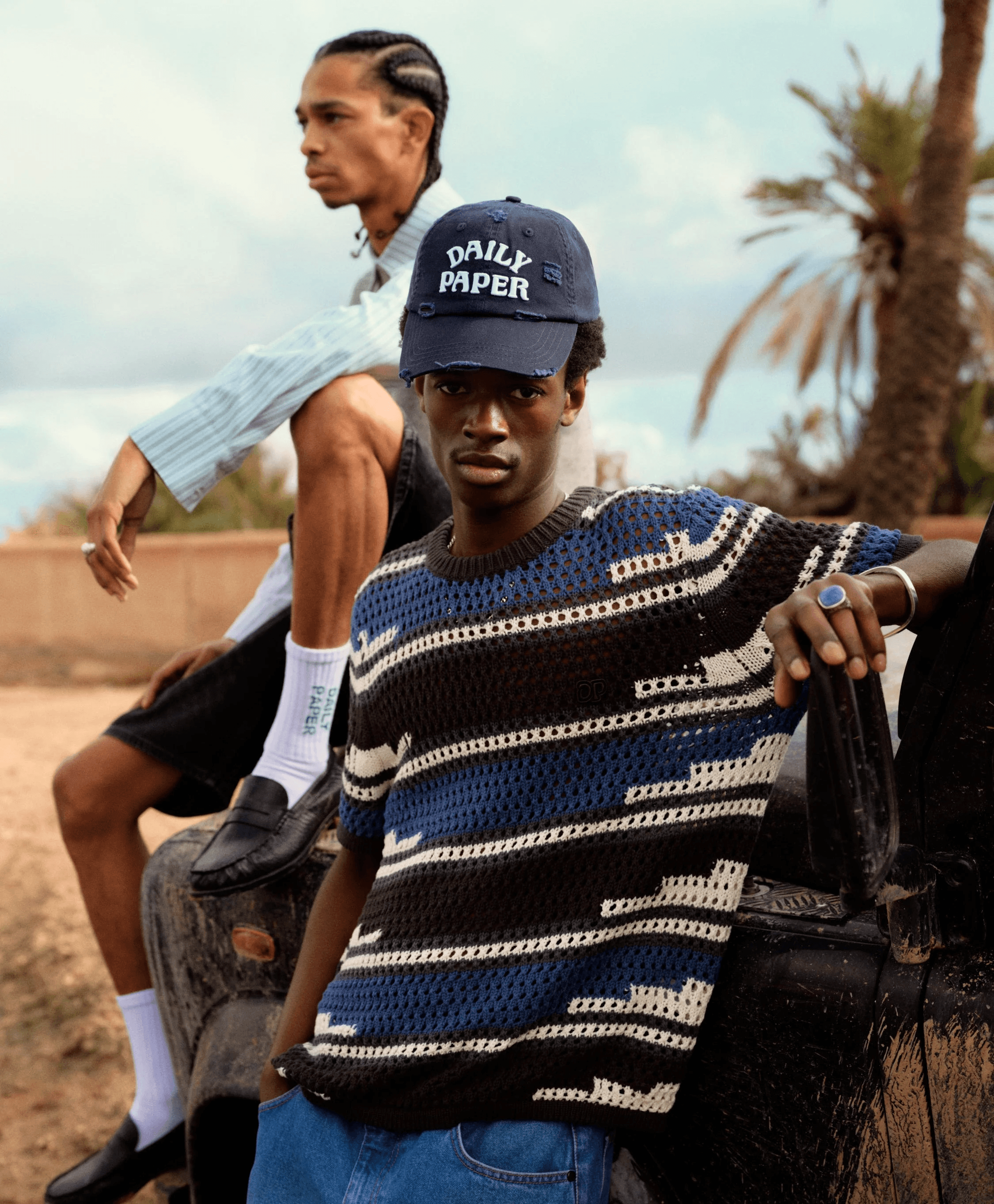
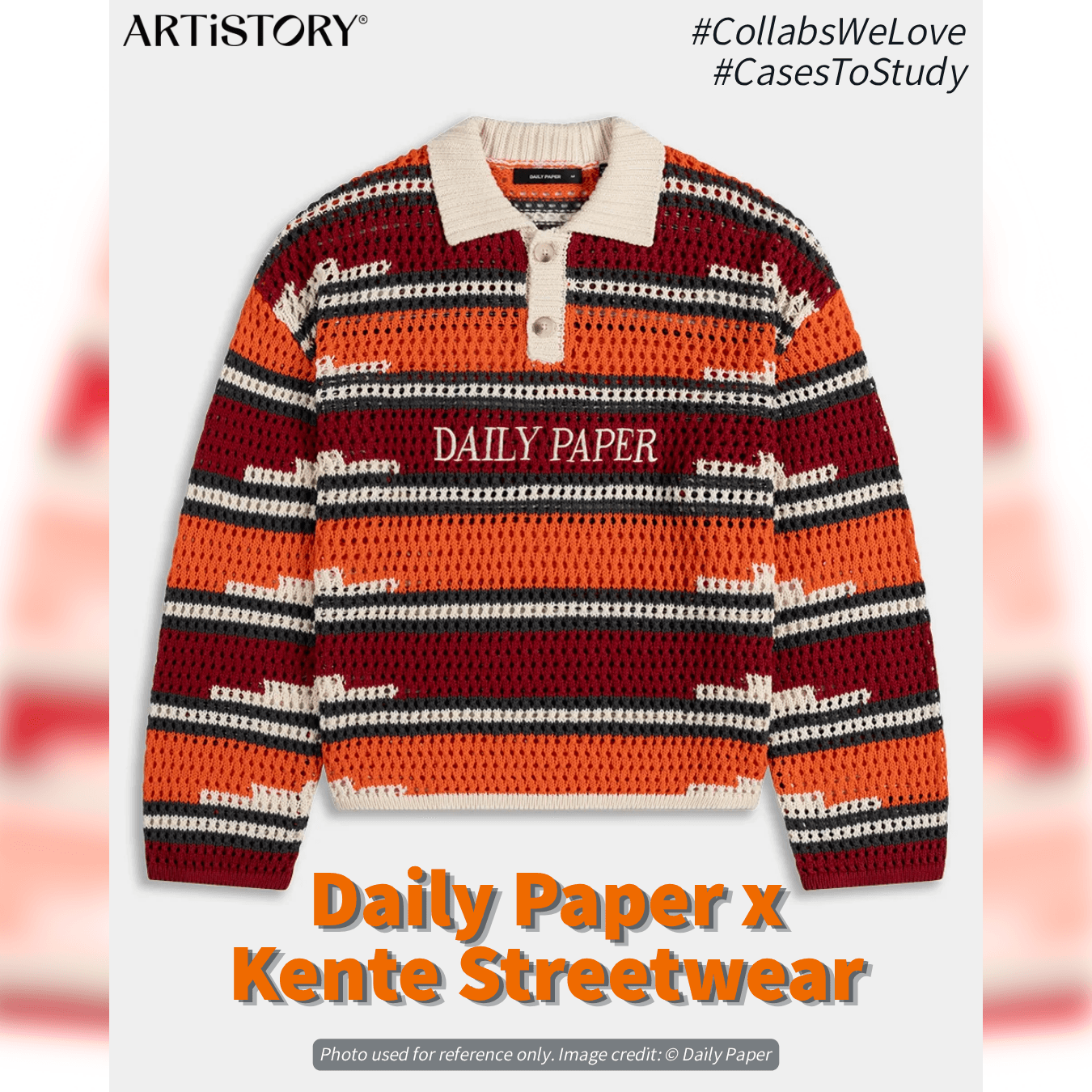
Woodland Grey Kente Stripe Knit Shirt by Daily Paper.
Photo used for reference only. Image credit: © Daily Paper
Daily Paper x Kente: Heritage Becomes Everyday Streetwear
Key Takeaway
Daily Paper shows how Kente can enter contemporary fashion when the reference is translated through product category, audience relevance, founder/diaspora context, and source literacy. The critical nuance is technique: traditional Kente is woven on horizontal strip looms, while Daily Paper's garment is a 100% cotton crochet-knit streetwear translation with a Kente stripe pattern. Because Kente is UNESCO-recognized Living Cultural Heritage of Ghana, the design story should acknowledge living Asante/Akan and Ewe weaving traditions before translating the reference into everyday product language.
About the Author
ARTiSTORY offers a demand-driven portfolio of art and cultural IP, empowering brands, retailers, and venues to create authentic, culture-rich products and experiences. With access to over 170 million artifacts and artworks, as well as 30+ UNESCO-recognized intangible cultural heritages, we help our partners attract consumers drawn to art, culture, and meaning. Please refer to Our Works to see what ARTiSTORY worked with Dunhuang Mogao Cave and fashion brand Levi's.
Insight
ARTiSTORY Staff
• 3 minute read
Daily Paper x Kente: How Heritage Becomes Everyday Streetwear
Why Daily Paper is a useful Kente case study
Kente is often discussed through ceremonial cloth, luxury fashion, or symbolic color. Daily Paper gives ARTiSTORY a different entry point: mass-premium streetwear, shaped by a brand whose founders have African diaspora roots and whose formal fashion brand was established in 2012 after a blog origin. HHV Journal clarifies the 2008 blog-to-2012 brand chronology, while Vogue Business identifies co-founder Jefferson Osei's Ghanaian family roots, a useful context point for responsible Kente storytelling.
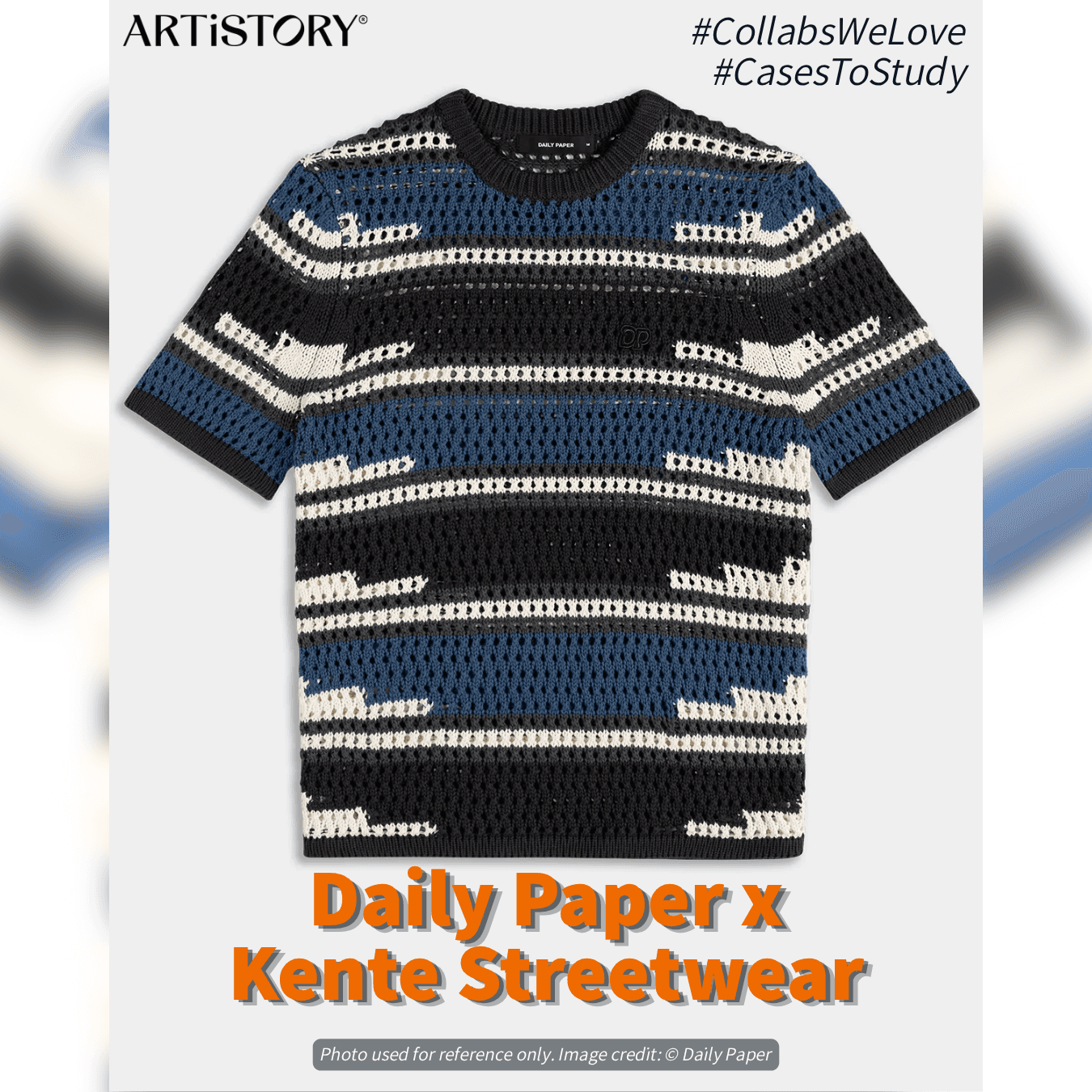
Woodland Grey Kente Stripe Knit Shirt, a listing by Daily Paper.
Photo used for reference only. Image credit: © Daily Paper
Daily Paper's product page describes the Woodland Grey Kente Stripe Knit Shirt as a crochet knitted T-shirt made from soft 100% cotton, with an all-over Kente stripe pattern and a DP chest patch. It currently lists EUR 119.95, but that price should be treated as live e-commerce data and manually re-verified before publication. The product details matter because they place the reference inside material construction, silhouette, and daily styling rather than treating Kente only as surface graphics.
For responsible cultural storytelling, this article treats Kente as a living Ghanaian textile tradition and ICH practice, not a generic pattern. UNESCO lists "Craftsmanship of traditional woven textile Kente" on the Representative List of the Intangible Cultural Heritage of Humanity, and the 19.COM decision record should remain the primary official source for publication review. Smarthistory provides an accessible craft-history reference for Asante and Ewe Kente and explains horizontal strip-loom weaving. This aligns with ARTiSTORY's cultural IP portfolio approach, where craft knowledge and source communities remain visible in the commercial story.
Why UNESCO ICH status matters
UNESCO ICH framing shifts the story from pattern recognition to craft literacy. In fashion copy, that means naming Kente as living textile craftsmanship, acknowledging community transmission and maker knowledge, and then explaining how a contemporary product translates the source through proportion, rhythm, texture, and context. It also means being explicit that crochet-knit construction is Daily Paper's modern product language, not the traditional Kente technique itself.
Design translation: from cloth reference to product language
The strongest design move is translation, not technical equivalence. Traditional Kente is woven on a horizontal strip loom; Daily Paper's shirt is a crochet-knit cotton garment. The design translation happens through stripe rhythm, color blocking, tactile structure, and everyday silhouette. This distinction lets the product feel connected to the source without claiming to reproduce the source craft.
For brands, this is the practical framework: identify the cultural source, decide which design values can translate, then build those values into product categories the audience already understands. In ARTiSTORY's merchandise licensing work, that means treating story, rights, product category, and audience fit as one design system rather than separate afterthoughts.
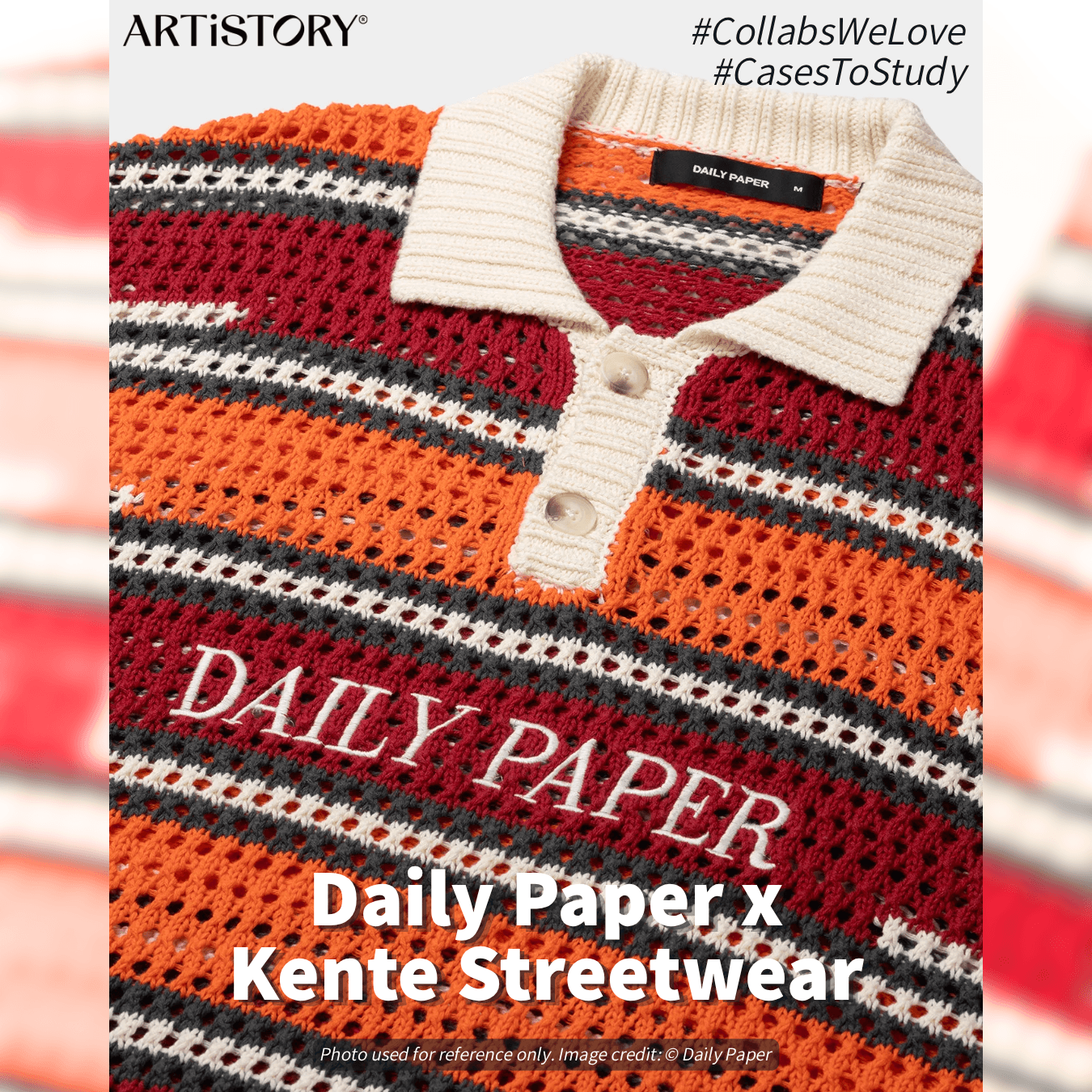
Haute Red Tigerlily Kente Stripe Knit Polo, a listing by Daily Paper.
Photo used for reference only. Image credit: © Daily Paper
The youth-culture lens
Daily Paper's Vic Mensa OFF ROAD page frames the collection around moving beyond the expected and choosing one's own lane, while confirming washed textures and utilitarian silhouettes. For ARTiSTORY's use, the safest wording is to present autonomy, diasporic identity, and cultural memory as ARTiSTORY's editorial lens on the case - not as a direct Daily Paper quote unless that language appears in approved brand copy.
The result is a more useful story for ARTiSTORY partners: heritage can be contemporary without being diluted. The key is to explain the transformation clearly. Kente is not positioned as a trend graphic; it becomes a source context for texture, color literacy, and cultural confidence.
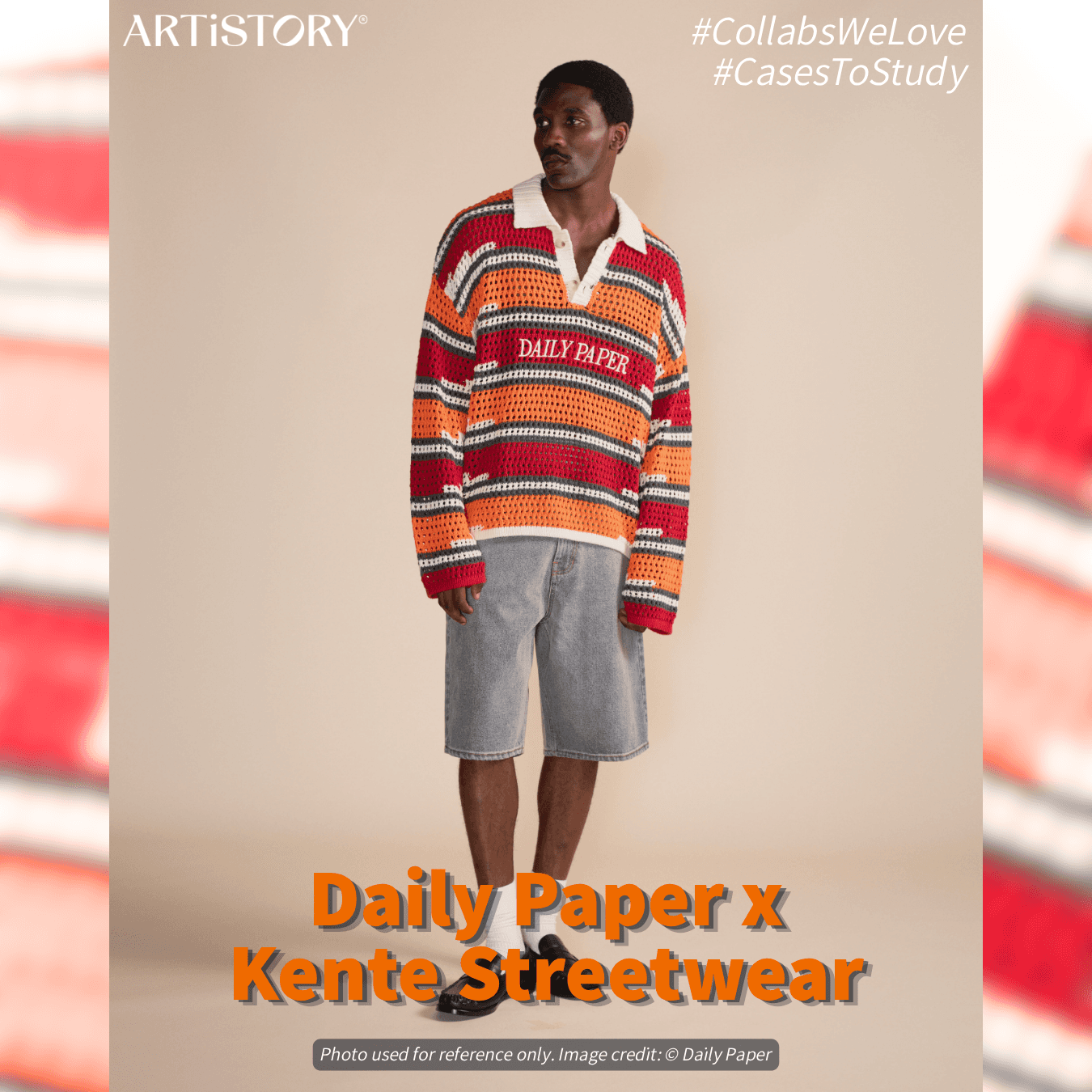
Haute Red Tigerlily Kente Stripe Knit Polo, a listing by Daily Paper.
Photo used for reference only. Image credit: © Daily Paper
Commercial Angle
The Daily Paper model is relevant for mass-premium fashion and lifestyle partners because it supports product categories that are easy to imagine, style, and merchandise. Knit shirts and polos can anchor capsule drops. Caps, bags, patches, and hangtags can extend the story. Retail displays and short-form video can explain the source context in a way that feels natural to youth culture.
For ARTiSTORY, the opportunity is to help partners build a responsible pathway: source context first, design translation second, product storytelling third. This approach aligns with ARTiSTORY's respectful cultural collaboration principles and with the broader role of cultural IP licensing and storytelling in turning heritage into modern products without detaching it from meaning. It also connects naturally to ARTiSTORY's cultural IP portfolio and merchandise licensing pathways for fashion and lifestyle categories.
Responsible storytelling checklist
Name the source context and avoid using Kente as a generic “African pattern.” Acknowledge Asante/Akan and Ewe Kente traditions where long-form space allows.
Prefer texture, structure, label copy, and product storytelling over surface imitation alone.
Acknowledge living craft, makers, and community knowledge where the campaign scope allows.
Use imagery only with approved rights, partner-provided assets, or clear usage permission.
Keep politics out of the framing unless the partner and cultural stakeholders explicitly request that lens.
FAQ
Q: Why is Daily Paper relevant for Kente-inspired streetwear?
A: It shows how Kente can move into everyday knitwear and youth fashion when the design language uses texture, stripe rhythm, founder/diaspora context, and clear product storytelling rather than relying on flat pattern use alone.
Q: What should brands learn from this example?
A: Heritage-led fashion needs cultural context, audience fit, and product logic. The story should guide the design translation, not be added after the product is finished.
Q: Can Kente be used in accessible product categories?
A: Yes, when the use is respectful, contextual, and properly sourced. Shirts, polos, accessories, packaging, retail displays, and social content can all carry heritage if the cultural meaning remains visible.



ARTiSTORY helps brands turn the right cultural source into validated concepts, production-ready design assets and market-ready storytelling.
" height="15.00095079498291px" id="KzAesqen_" width="15.887237074279785px"/></svg>)
" height="40px" id="PdXwlesgs" width="40px"/></svg>)
" height="16.6667px" id="bN179avM0" width="16.66250000000001px"/></svg>)
" height="40px" id="sK1n39Y12" width="40px"/></svg>)
" height="13.333300000000001px" id="e3sm3FX65" width="16.662000000000006px"/></svg>)
" height="40px" id="BlhXMiVl0" width="40px"/></svg>)
" height="16.666358956956856px" id="WrXlTUAw7" width="16.668330260537772px"/></svg>)
" height="40px" id="nKu2x0iOq" width="40px"/></svg>)
Services
© 2026 ARTiSTORY. All rights reserved.
Privacy Policy
Terms of Service
Cookie Policy