
Back to Stories
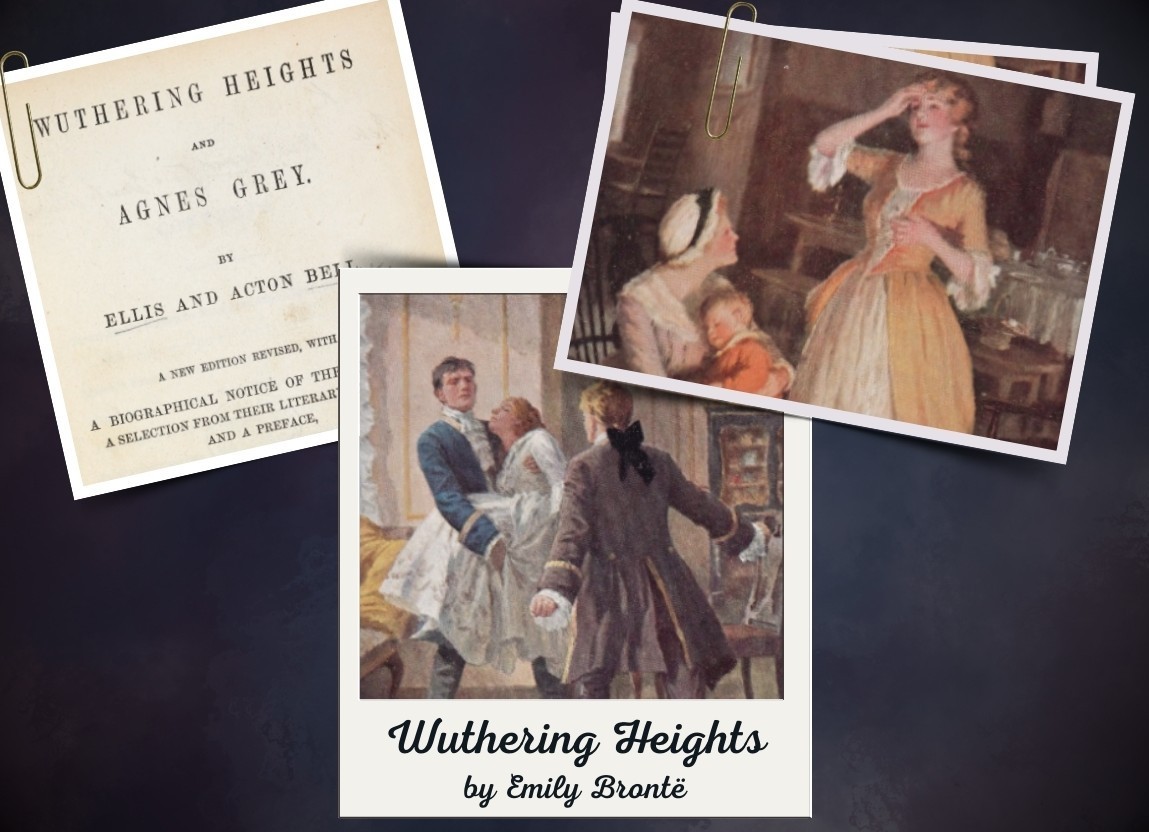
Wuthering Heights: The Untamed Original
Key Takeaway
Wuthering Heights is more than a classic; it’s a manifesto for the untamed spirit. By bridging 19th-century rebellion with contemporary desires for raw authenticity, this narrative invites the modern consumer to embrace a legacy of passion and creative independence that remains as visceral and hauntingly beautiful as ever.
About ARTiSTORY
ARTiSTORY offers a demand-driven portfolio of art and cultural IP, empowering brands, retailers, and venues to create authentic, culture-rich products and experiences. With access to over 170 million artifacts and artworks, as well as 30+ UNESCO-recognized intangible cultural heritages, we help our partners attract consumers drawn to art, culture, and meaning. Please refer to Our Works to see what ARTiSTORY worked with Dunhuang Mogao Cave and fashion brand Levi's.
Literary Classics
ARTiSTORY Staff
• 3 minute read
When Wuthering Heights first appeared in 1847 under the pen name Ellis Bell, its dark passions and gothic intensity stunned readers. This masterpiece by Emily Brontë grips readers with fierce passion, dark drama, and unforgettable characters that echo through generations.
Emily lived a quiet life on the Yorkshire moors. It was a secluded world. She and her sisters shaped an extraordinary legacy there.
Despite her isolation, her only novel still shaped literature for years. Today, it stands as a lasting symbol of passion and rebellion. It also reflects the wild spirit of the moors.
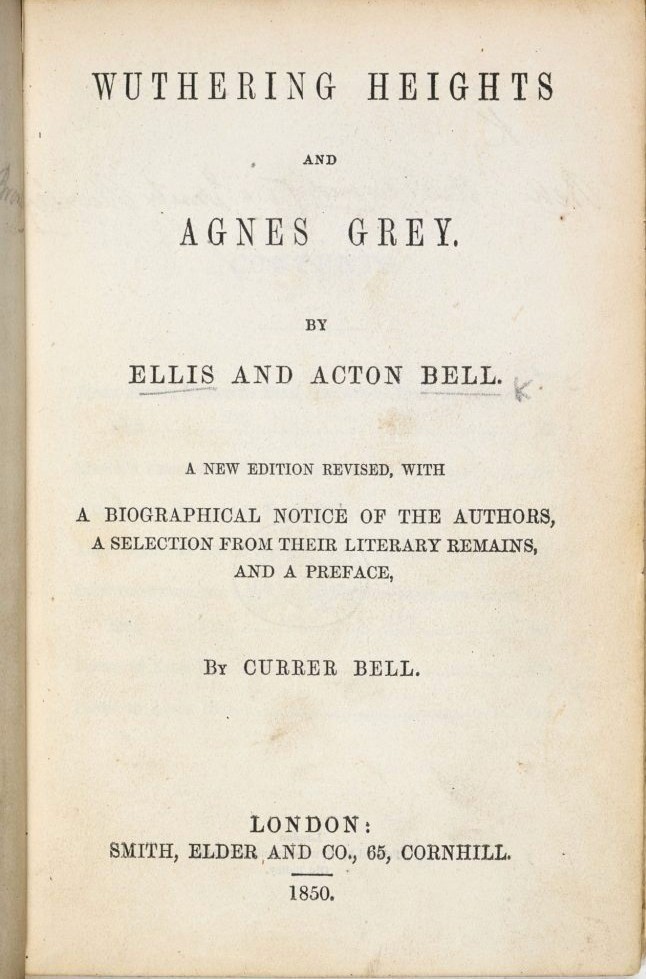
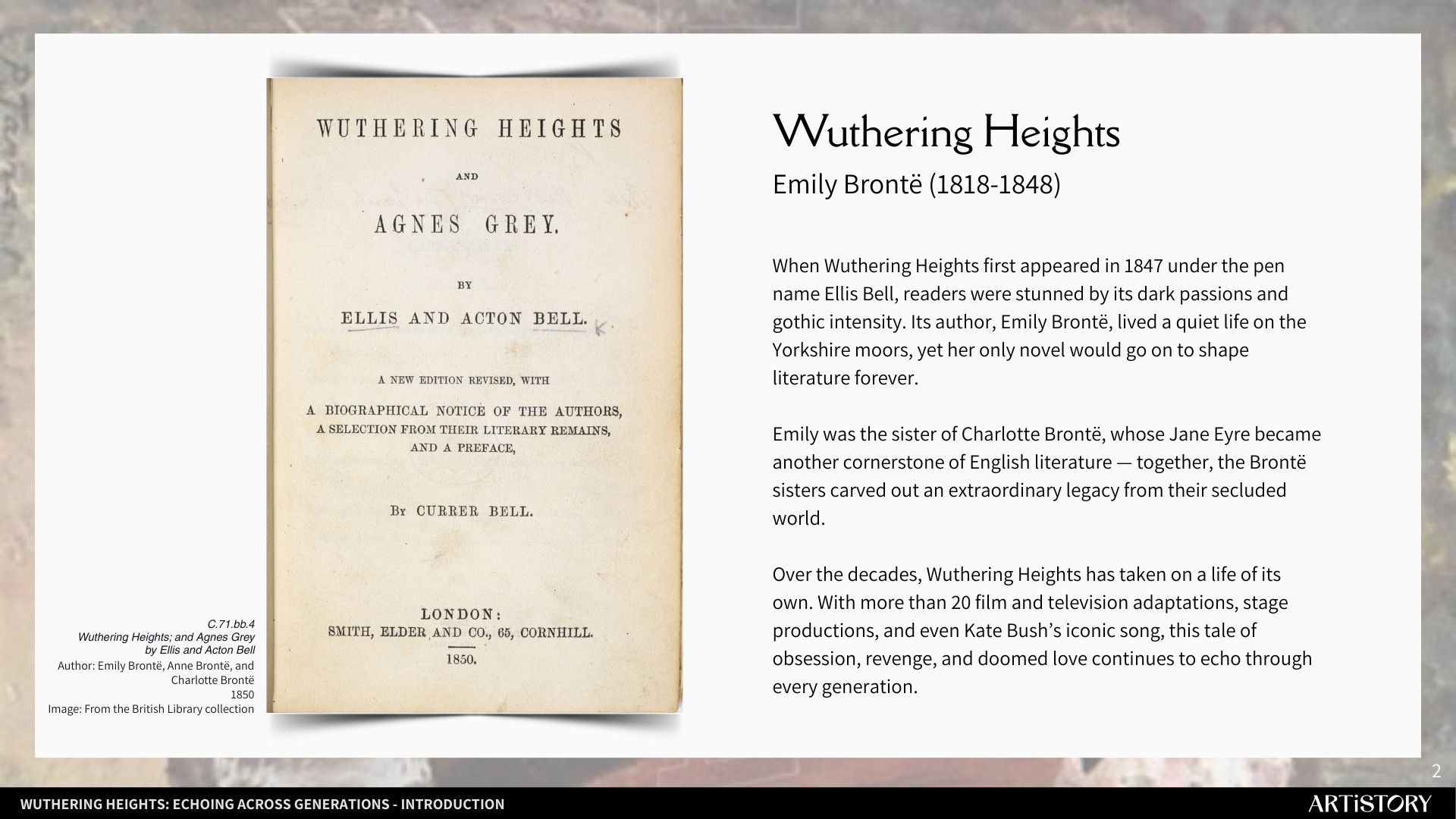
C.71.bb.4
Wuthering Heights and Agnes Grey by Ellis and Acton Bell
Author: Emily Brontë, Anne Brontë, and Charlotte Brontë
1850
Image: From the British Library collection
The novel's history is as intriguing as its plot. Following the initial release, a pivotal moment in literary history occurred with the 1850 edition. This new edition included a biographical notice and a groundbreaking preface by "Currer Bell"—Emily’s sister, Charlotte Brontë. This reveal of their true identities changed how the public saw the Brontë sisters.
It added intrigue and a sense of empowerment to a story shaped by legacy and identity.
The story explores deep themes of love that defies class, nature that reflects emotion, and characters shaped by obsession and fate. At its heart lies the doomed love between Heathcliff and Catherine, encapsulated by the iconic line: "He's more myself than I am. Whatever our souls are made of, his and mine are the same".
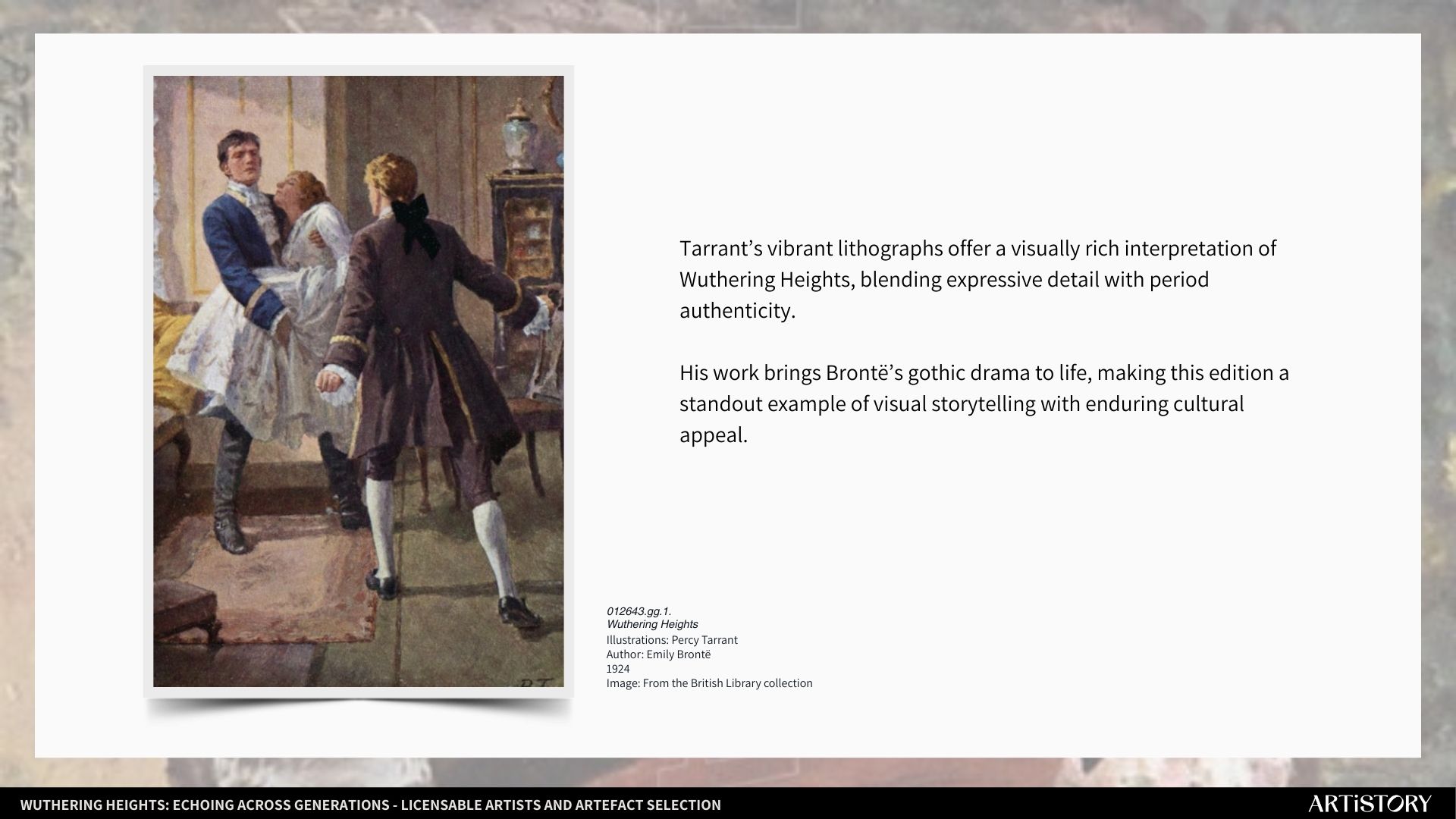
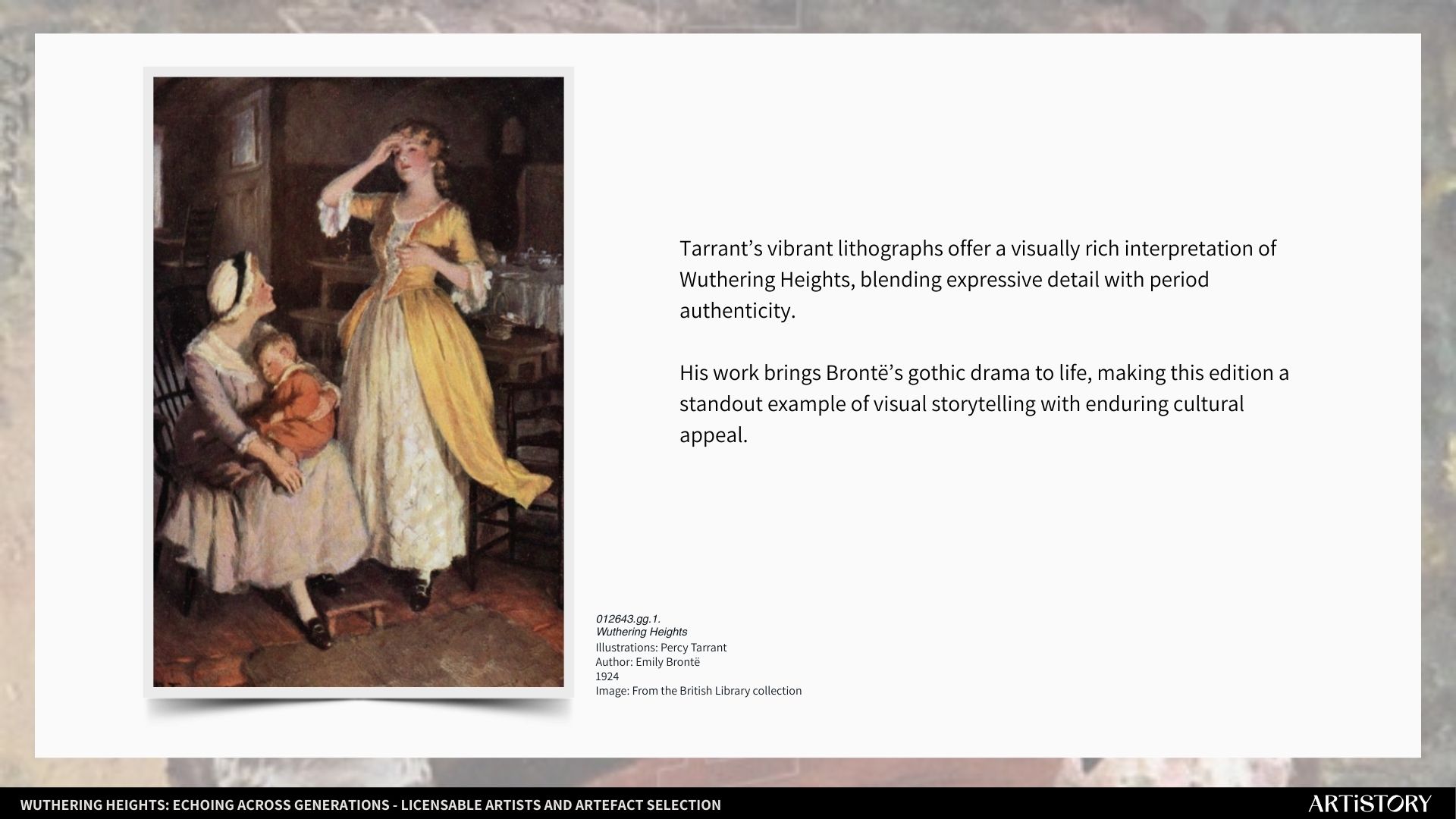
Visual interpretations of this classic have further cemented its cultural status. A standout example of visual storytelling appears in the work of Percy Tarrant (1855-1934). His illustrations accompanied the 1924 edition. Tarrant’s vibrant lithographs offer a visually rich interpretation of Wuthering Heights, blending expressive detail with period authenticity.
His work brings Brontë's gothic drama to life, capturing the essence of the novel's emotional depth. Unlike modern film adaptations, which may only reflect the original ideas, these artifacts feel truly authentic. They offer a direct link to the creative source that shaped generations of art.
The narrative power of Wuthering Heights lies in its ability to take on a life of its own over the decades. While the story inspired over 20 film and TV adaptations, it is still the original text that matters most. It also inspired stage shows and songs.
The original text remains the main source. It is an “untamed original,” unlike screen adaptations that often feel derivative and limited by one filmmaker’s view.
The 1850 edition and Tarrant's 1924 illustrations show the lasting power of Brontë’s vision.
They offer a heritage with cultural depth and literary prestige. By revisiting the original manuscripts and illustrations, we connect with the true literary voice that shaped Gothic romance.
The Commercial Angle
With the 2026 Warner Bros. film creating a "Halo Effect," brands can use this renewed global interest. They can do this by licensing original assets. Percy Tarrant’s lithographs and Brontë’s manuscripts offer rich, custom design elements.
They suit premium packaging, stationery, or apparel that demands true authenticity and Gothic romanticism.
ARTiSTORY offers a demand‑driven portfolio of art and cultural IP, empowering brands, retailers, and venues to create authentic, culture‑rich products and experiences. With access to over 170 million artifacts and artworks, as well as 30+ UNESCO‑recognized intangible cultural heritages, we help our partners attract consumers drawn to art, culture, and meaning. Please refer to Our Works to see what ARTiSTORY worked with Dunhuang Mogao Cave and fashion brand Levi’s.
Back to Home

Connecting cultures through meaningful brand collaborations and authentic storytelling that drives both impact and revenue.
" height="15.00095079498291px" id="KzAesqen_" width="15.887237074279785px"/></svg>)
" height="40px" id="PdXwlesgs" width="40px"/></svg>)
" height="16.6667px" id="bN179avM0" width="16.66250000000001px"/></svg>)
" height="40px" id="sK1n39Y12" width="40px"/></svg>)
" height="13.333300000000001px" id="e3sm3FX65" width="16.662000000000006px"/></svg>)
" height="40px" id="BlhXMiVl0" width="40px"/></svg>)
" height="16.666358956956856px" id="WrXlTUAw7" width="16.668330260537772px"/></svg>)
" height="40px" id="nKu2x0iOq" width="40px"/></svg>)
Services
© 2026 ARTiSTORY. All rights reserved.
Privacy Policy
Terms of Service
Cookie Policy