
Back to Stories
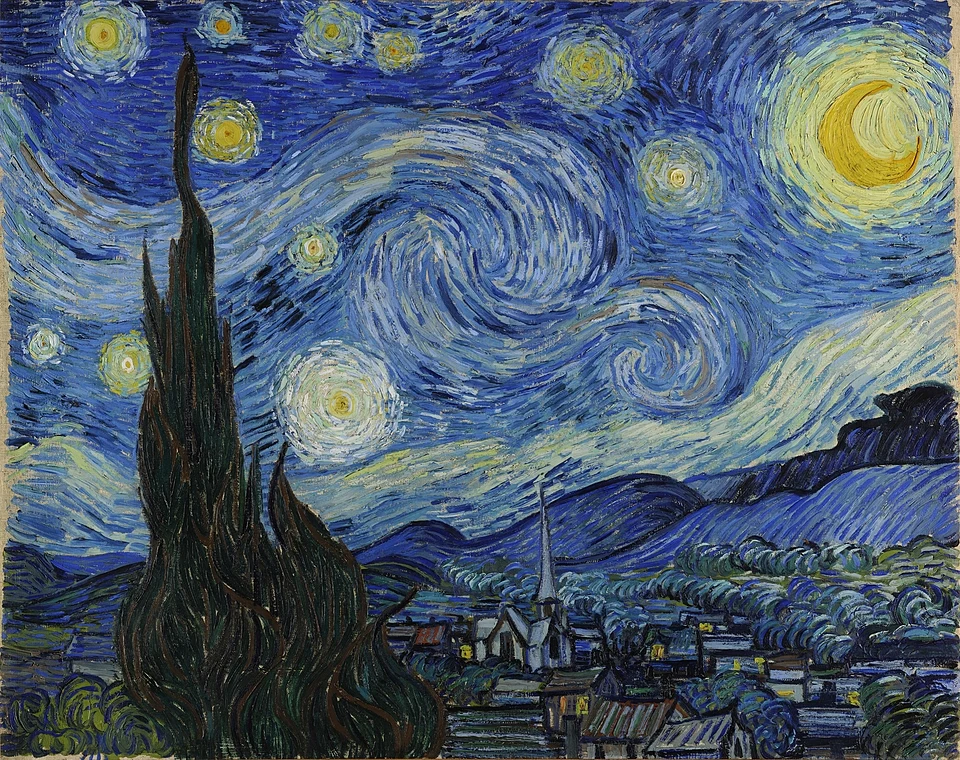
The Starry Night by Van Gogh
Key Takeaway
Created in an asylum in 1889, Van Gogh’s The Starry Night prioritizes emotional expression over realism, featuring a swirling sky and a symbolic cypress tree painted from memory. Its iconic heavy brushwork offers a unique commercial opportunity for tactile interior design products, such as textured acoustic panels or wallpapers that mimic the physical depth of the original impasto.
About ARTiSTORY
ARTiSTORY offers a demand-driven portfolio of art and cultural IP, empowering brands, retailers, and venues to create authentic, culture-rich products and experiences. With access to over 170 million artifacts and artworks, as well as 30+ UNESCO-recognized intangible cultural heritages, we help our partners attract consumers drawn to art, culture, and meaning. Please refer to Our Works to see what ARTiSTORY worked with Dunhuang Mogao Cave and fashion brand Levi's.
Masterpieces
ARTiSTORY Staff
• 3 minute read
Painted in June 1889, The Starry Night is perhaps the most famous view from a window in art history. Looking out from his barred room at the Saint-Paul-de-Mausole asylum in Saint-Rémy-de-Provence, Vincent van Gogh captured not a literal landscape, but a turbulent projection of his inner state. Unlike his earlier works created en plein air, this masterpiece was painted during the day from memory and imagination, representing a rare departure from his strict observation of nature.
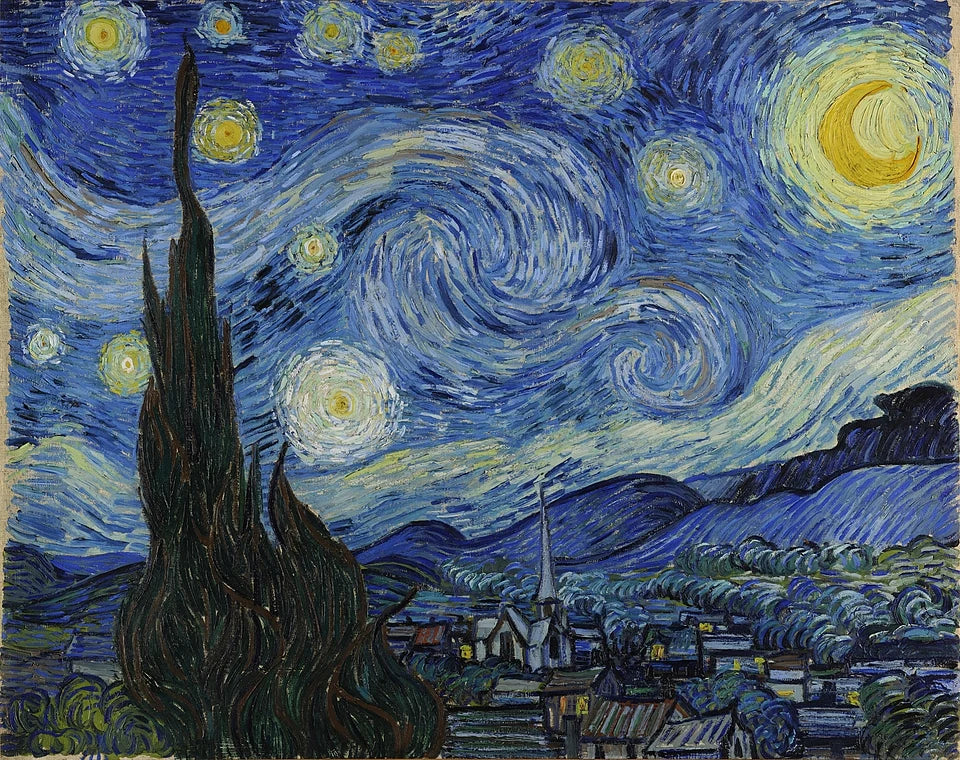
The Starry Night
472.1941
Vincent van Gogh
June 1889
The Museum of Modern Art
The composition is dominated by the violent, swirling energy of the sky, rendered in his signature thick impasto. These churning currents are anchored by the dark, flame-like silhouette of a cypress tree in the foreground—a traditional symbol of mourning and death. Below, the sleeping village is peaceful, featuring a church spire that evokes his Dutch homeland rather than the French countryside, proving the scene is a composite of memory and emotion. The brightest point of light, just to the right of the cypress, is actually Venus, the "morning star," which Van Gogh described seeing in his letters. This work defines Post-Impressionism: the use of colour and form to express emotional truth rather than visual accuracy.
The Commercial Angle
The Starry Night is a global superbrand, but the market is saturated with flat prints. The real opportunity lies in tactile innovation. The painting's heavy brushwork is perfect for "3D-textured" home decor. Imagine acoustic wall panels or luxury wallpapers that physically replicate the ridges of Van Gogh’s impasto, allowing consumers to "feel" the movement of the sky, blending acoustic function with high-art aesthetics.
ARTiSTORY offers a demand‑driven portfolio of art and cultural IP, empowering brands, retailers, and venues to create authentic, culture‑rich products and experiences. With access to over 170 million artifacts and artworks, as well as 30+ UNESCO‑recognized intangible cultural heritages, we help our partners attract consumers drawn to art, culture, and meaning. Please refer to Our Works to see what ARTiSTORY worked with Dunhuang Mogao Cave and fashion brand Levi’s.
Back to Home

Connecting cultures through meaningful brand collaborations and authentic storytelling that drives both impact and revenue.
" height="15.00095079498291px" id="KzAesqen_" width="15.887237074279785px"/></svg>)
" height="40px" id="PdXwlesgs" width="40px"/></svg>)
" height="16.6667px" id="bN179avM0" width="16.66250000000001px"/></svg>)
" height="40px" id="sK1n39Y12" width="40px"/></svg>)
" height="13.333300000000001px" id="e3sm3FX65" width="16.662000000000006px"/></svg>)
" height="40px" id="BlhXMiVl0" width="40px"/></svg>)
" height="16.666358956956856px" id="WrXlTUAw7" width="16.668330260537772px"/></svg>)
" height="40px" id="nKu2x0iOq" width="40px"/></svg>)
Services
© 2026 ARTiSTORY. All rights reserved.
Privacy Policy
Terms of Service
Cookie Policy