
Back to Stories
The Snow Queen by Hans Christian Andersen
Key Takeaway
Hans Christian Andersen’s 1844 epic The Snow Queen is a dark, complex tale of a cursed mirror and a boy’s frozen heart, saved by his friend Gerda’s tears rather than magic. Distinct from Disney’s Frozen, the original story offers rich "Nordic Noir" aesthetics, ideal for premium goods like "true reflection" vanity mirrors or winter-rose fragrances that embrace the tale's gothic, botanical roots.
About ARTiSTORY
ARTiSTORY offers a demand-driven portfolio of art and cultural IP, empowering brands, retailers, and venues to create authentic, culture-rich products and experiences. With access to over 170 million artifacts and artworks, as well as 30+ UNESCO-recognized intangible cultural heritages, we help our partners attract consumers drawn to art, culture, and meaning. Please refer to Our Works to see what ARTiSTORY worked with Dunhuang Mogao Cave and fashion brand Levi's.
Literary Classics
ARTiSTORY Staff
• 3 minute read
Published on December 21, 1844, The Snow Queen (Snedronningen) is one of Hans Christian Andersen’s longest and most acclaimed tales. Far darker than modern adaptations suggest, the story is a seven-part epic centering on the struggle between the warm, innocent heart of a young girl, Gerda, and the cold, intellectual detachment of the Snow Queen. The narrative begins not with royalty, but with the Devil (or a troll) creating a mirror that distorts beauty into ugliness. When this mirror shatters, billions of microscopic shards rain down on the world. Two fragments pierce the eyes and heart of a young boy named Kai, causing him to see the world as flawed and turning his heart into a lump of ice.
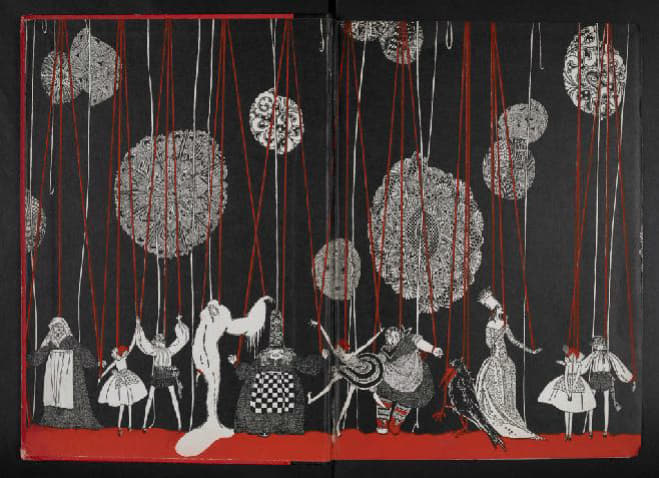
The Snow Queen
YD.2004.b.454
Hans Christian Andersen
c1929
Image: From the British Library collection
Unlike Disney’s Frozen, which was loosely inspired by this tale, the original Snow Queen is a mysterious, elemental force who abducts Kai to her palace in the frozen wasteland of Spitsbergen. She is not a misunderstood sister but a symbol of cold reason and emotional numbness. The true hero is Gerda, who embarks on a surreal, barefoot journey to save her friend. Her quest is aided not by magic powers, but by nature and faith—roses that speak, a crow, a robber girl, and a reindeer. In the end, it is not a "true love's kiss" but Gerda’s hot tears that melt the ice in Kai’s heart, washing away the mirror shard and restoring his humanity.
Visually, the story was first defined by Vilhelm Pedersen, Andersen’s original illustrator, whose delicate drawings captured the whimsy and fragility of the characters. Later, in 1911, Edmund Dulac brought a rich, ethereal quality to the tale. Dulac’s "Snow Queen on a Winter’s Night" uses deep blues and soft whites to depict the Queen as a ghostly, almost invisible figure blending into the blizzard, perfectly capturing her elusive and dangerous nature.
The Commercial Angle
While the market is saturated with Frozen merchandise, there is a significant gap for "Nordic Noir" folklore products. The original story’s focus on the "Devil’s Mirror" offers a unique design concept for high-end vanity mirrors or compacts that play on the theme of "true reflection" versus distortion. Additionally, the botanical elements—specifically the rose garden that Gerda speaks to—could inspire a winter floral fragrance line, blending notes of frozen rose, pine, and ozone, targeting an older demographic that appreciates dark fairy tales.
ARTiSTORY offers a demand‑driven portfolio of art and cultural IP, empowering brands, retailers, and venues to create authentic, culture‑rich products and experiences. With access to over 170 million artifacts and artworks, as well as 30+ UNESCO‑recognized intangible cultural heritages, we help our partners attract consumers drawn to art, culture, and meaning. Please refer to Our Works to see what ARTiSTORY worked with Dunhuang Mogao Cave and fashion brand Levi’s.
Back to Home

Connecting cultures through meaningful brand collaborations and authentic storytelling that drives both impact and revenue.
" height="15.00095079498291px" id="KzAesqen_" width="15.887237074279785px"/></svg>)
" height="40px" id="PdXwlesgs" width="40px"/></svg>)
" height="16.6667px" id="bN179avM0" width="16.66250000000001px"/></svg>)
" height="40px" id="sK1n39Y12" width="40px"/></svg>)
" height="13.333300000000001px" id="e3sm3FX65" width="16.662000000000006px"/></svg>)
" height="40px" id="BlhXMiVl0" width="40px"/></svg>)
" height="16.666358956956856px" id="WrXlTUAw7" width="16.668330260537772px"/></svg>)
" height="40px" id="nKu2x0iOq" width="40px"/></svg>)
Services
© 2026 ARTiSTORY. All rights reserved.
Privacy Policy
Terms of Service
Cookie Policy