
Back to Stories
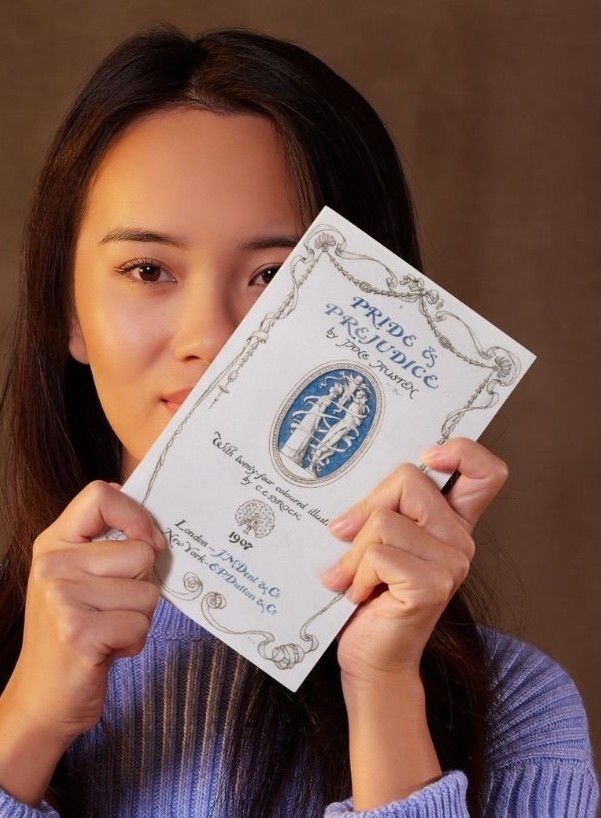
J. Austen's Pride & Prejudice: Timeless Classic | ARTiSTORY
Key Takeaway
Austen’s masterpiece evolved from a rejected draft into the definitive romantic comedy, celebrated for its sharp social satire. Beyond literary prestige, the novel is a visual icon; Hugh Thomson’s "Peacock Edition" offers timeless Regency aesthetics, driving enduring commercial success in fashion, home decor, and lifestyle collections.
About ARTiSTORY
ARTiSTORY offers a demand-driven portfolio of art and cultural IP, empowering brands, retailers, and venues to create authentic, culture-rich products and experiences. With access to over 170 million artifacts and artworks, as well as 30+ UNESCO-recognized intangible cultural heritages, we help our partners attract consumers drawn to art, culture, and meaning. Please refer to Our Works to see what ARTiSTORY worked with Dunhuang Mogao Cave and fashion brand Levi's.
Literary Classics
ARTiSTORY Staff
• 3 minute read
Pride & Prejudice: From First Impressions to Timeless Classic
Long before it became the gold standard for romantic comedy, Jane Austen's most famous work was a manuscript titled First Impressions, drafted in 1796. The novel was rejected by publishers without a reading, languishing for over a decade until Austen revised it into the masterpiece we know today. Published in 1813 as Pride and Prejudice—a title likely inspired by Fanny Burney’s Cecilia—the story dissects the social fabric of Regency England through the sharp, spirited eyes of Elizabeth Bennet.
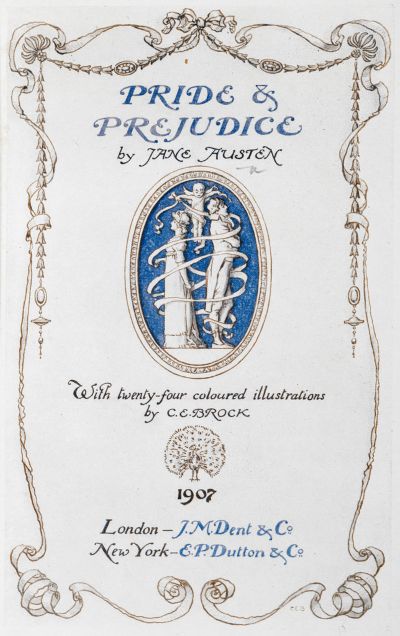
Pride and Prejudice
012208.g.2/3 title page
Author: Jane Austen
Illustrations: Charles Edmund Brock
1907
Image: From the British Library collection
At its core, the novel is a brilliant study of character and class, centered on the friction between Elizabeth's quick judgment and Mr. Darcy's aristocratic reserve. Austen subverts the expectations of her era; the heroine is not saved by a wealthy man but rather saves herself through self-awareness and wit, while the hero must learn that high status does not equate to noble character. The "truth universally acknowledged" that opens the book remains one of literature's most famous lines, instantly setting the satirical tone.
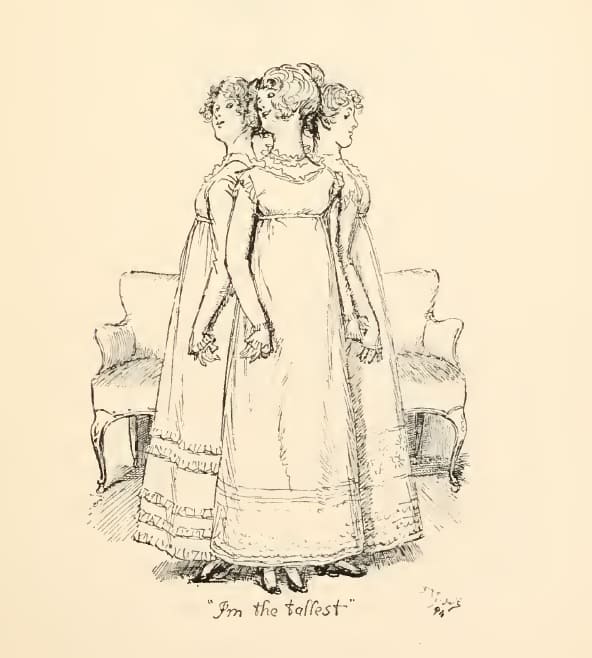
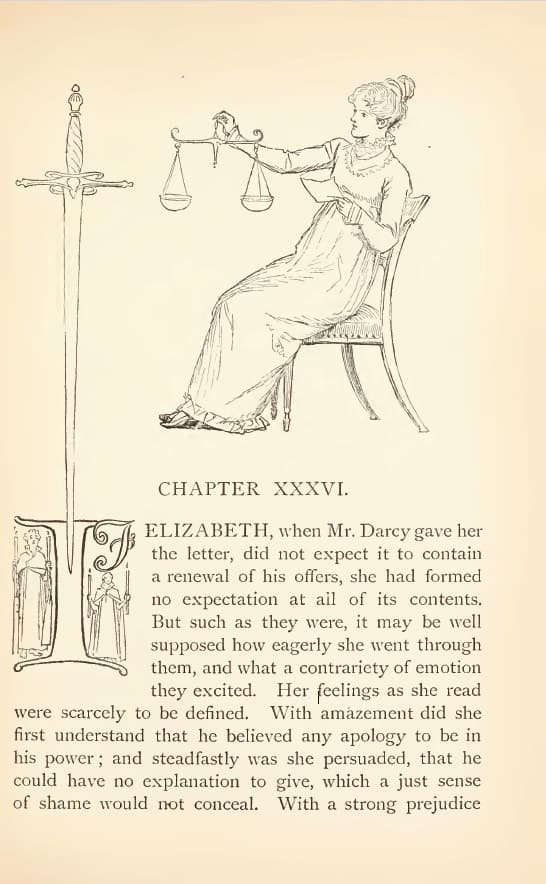
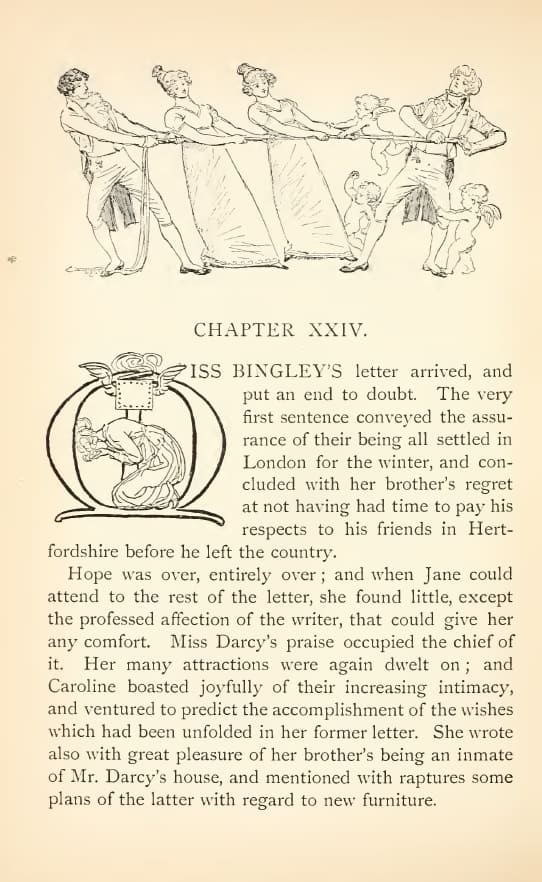
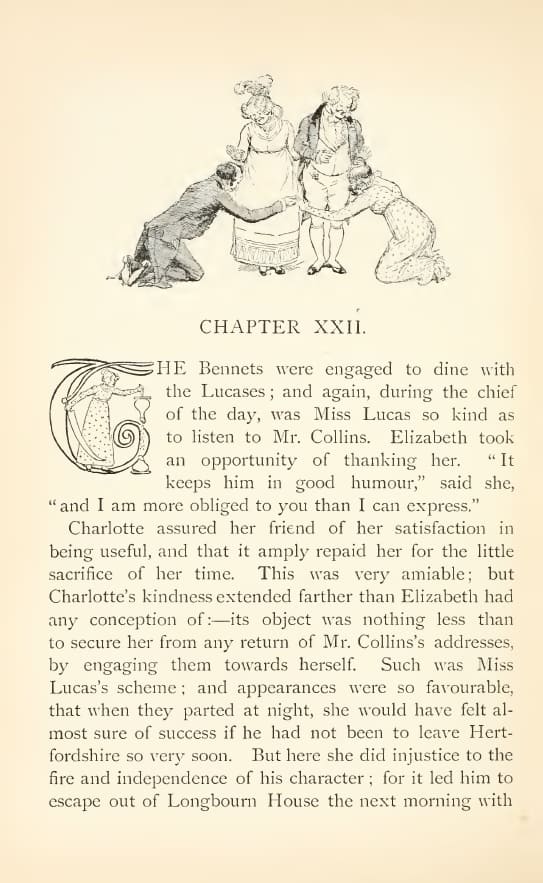
Visually, the novel has been defined by distinct artistic eras. The 1894 "Peacock Edition," illustrated by Hugh Thomson, remains the definitive visual interpretation for collectors. Thomson’s delicate pen-and-ink drawings and the iconic gold-gilded peacock cover captured the grace of the Regency period, solidifying the book's aesthetic as one of elegance and nostalgia. Later, in 1907, C.E. Brock provided another influential visual layer with colour plates that emphasized the domestic warmth and costume detail of the Bennet household, shaping how future generations would envision the world of Longbourn.
The Commercial Angle
Pride and Prejudice is a licensing juggernaut, having moved far beyond books into a lifestyle brand. The "Peacock Edition" cover art alone is widely licensed for tote bags, journals, and tea tins. Given the enduring "Regencycore" trend (popularized by shows like Bridgerton), there is a prime opportunity for a "Pemberley Estate" home decor line, featuring botanical wallpapers and fine china inspired by Thomson's original illustrations.
ARTiSTORY offers a demand‑driven portfolio of art and cultural IP, empowering brands, retailers, and venues to create authentic, culture‑rich products and experiences. With access to over 170 million artifacts and artworks, as well as 30+ UNESCO‑recognized intangible cultural heritages, we help our partners attract consumers drawn to art, culture, and meaning. Please refer to Our Works to see what ARTiSTORY worked with Dunhuang Mogao Cave and fashion brand Levi’s.
Back to Home

Connecting cultures through meaningful brand collaborations and authentic storytelling that drives both impact and revenue.
" height="15.00095079498291px" id="KzAesqen_" width="15.887237074279785px"/></svg>)
" height="40px" id="PdXwlesgs" width="40px"/></svg>)
" height="16.6667px" id="bN179avM0" width="16.66250000000001px"/></svg>)
" height="40px" id="sK1n39Y12" width="40px"/></svg>)
" height="13.333300000000001px" id="e3sm3FX65" width="16.662000000000006px"/></svg>)
" height="40px" id="BlhXMiVl0" width="40px"/></svg>)
" height="16.666358956956856px" id="WrXlTUAw7" width="16.668330260537772px"/></svg>)
" height="40px" id="nKu2x0iOq" width="40px"/></svg>)
Services
© 2026 ARTiSTORY. All rights reserved.
Privacy Policy
Terms of Service
Cookie Policy