
Back to Stories
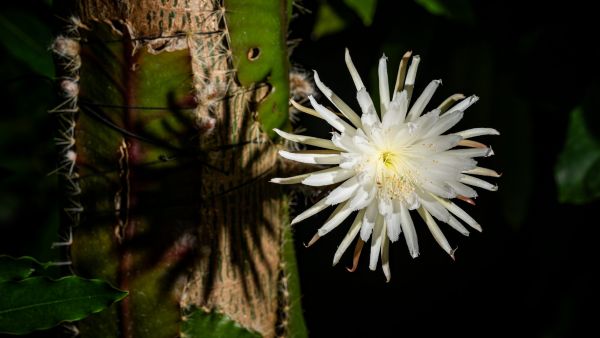
Moonflower at Cambridge: A Midnight Spectacle | ARTiSTORY
Key Takeaway
The Amazon Moonflower (Strophocactus wittii) at Cambridge is a rare epiphytic cactus that blooms for a single night, famously captured by artist Margaret Mee. Its fleeting white flower and spiral stems offer unique bio-design inspiration, while its evolving scent profile—from sweet to pungent—presents a bold concept for niche, narrative-driven perfumery.
About ARTiSTORY
ARTiSTORY offers a demand-driven portfolio of art and cultural IP, empowering brands, retailers, and venues to create authentic, culture-rich products and experiences. With access to over 170 million artifacts and artworks, as well as 30+ UNESCO-recognized intangible cultural heritages, we help our partners attract consumers drawn to art, culture, and meaning. Please refer to Our Works to see what ARTiSTORY worked with Dunhuang Mogao Cave and fashion brand Levi's.
Museum Collection
ARTiSTORY Staff
• 3 minute read
Hidden within the humid warmth of the Cambridge University Botanic Garden’s Tropics House lives one of the botanical world's most elusive treasures: the Amazon Moonflower (Strophocactus wittii). Native to the flooded forests of the Rio Negro in Brazil, this epiphytic cactus defies expectation. It possesses no traditional spines; instead, its flattened, leaf-like stems spiral tightly around the trunk of a water chestnut tree, resembling green ribbons or snake scales. This unique adaptation allows it to cling to hosts above the rising floodwaters of the Amazon basin.
Moonflower
Cambrige University Botanic Garden
The true drama, however, lies in its bloom. The Moonflower is an ephemeral masterpiece, flowering for only one night a year. The process begins at sunset, with the long, white buds unfurling to reveal pristine, star-shaped tepals. By sunrise, the flower is dead. In the wild, this brief window is a race against time to attract its only two pollinators: specific species of long-tongued hawkmoths. To lure them, the flower emits a potent fragrance that evolves rapidly—starting as a sweet, jasmine-like perfume (rich in benzyl salicylate) to signal nectar, before turning rancid and unpleasant hours later as the bloom fades.
In February 2021, the Cambridge specimen captivated the world by becoming the first of its kind to flower in the UK, an event watched by thousands via livestream. More recently, in 2024, the plant achieved a "lunation"—a rare multiple flowering event. This specimen not only represents a horticultural triumph but connects us to the legacy of Margaret Mee, the botanical artist who, in 1988, became the first to document this "Queen of the Night" in its natural habitat, just months before her death.
The Commercial Angle
The Moonflower’s fleeting beauty and dual-scent profile offer a sophisticated narrative for the luxury fragrance market. A "Moonlight & Decay" limited-edition perfume could capture the flower's lifecycle: top notes of sweet jasmine and benzyl alcohol transitioning into complex, earthy base notes. Additionally, the plant's unique spiraling stem structure provides a striking geometric motif for biophilic jewelry—think serpentine silver bangles or "climbing" ear cuffs that mimic the cactus's grip.
ARTiSTORY offers a demand‑driven portfolio of art and cultural IP, empowering brands, retailers, and venues to create authentic, culture‑rich products and experiences. With access to over 170 million artifacts and artworks, as well as 30+ UNESCO‑recognized intangible cultural heritages, we help our partners attract consumers drawn to art, culture, and meaning. Please refer to Our Works to see what ARTiSTORY worked with Dunhuang Mogao Cave and fashion brand Levi’s.
Back to Home

Connecting cultures through meaningful brand collaborations and authentic storytelling that drives both impact and revenue.
" height="15.00095079498291px" id="KzAesqen_" width="15.887237074279785px"/></svg>)
" height="40px" id="PdXwlesgs" width="40px"/></svg>)
" height="16.6667px" id="bN179avM0" width="16.66250000000001px"/></svg>)
" height="40px" id="sK1n39Y12" width="40px"/></svg>)
" height="13.333300000000001px" id="e3sm3FX65" width="16.662000000000006px"/></svg>)
" height="40px" id="BlhXMiVl0" width="40px"/></svg>)
" height="16.666358956956856px" id="WrXlTUAw7" width="16.668330260537772px"/></svg>)
" height="40px" id="nKu2x0iOq" width="40px"/></svg>)
Services
© 2026 ARTiSTORY. All rights reserved.
Privacy Policy
Terms of Service
Cookie Policy