
Back to Stories
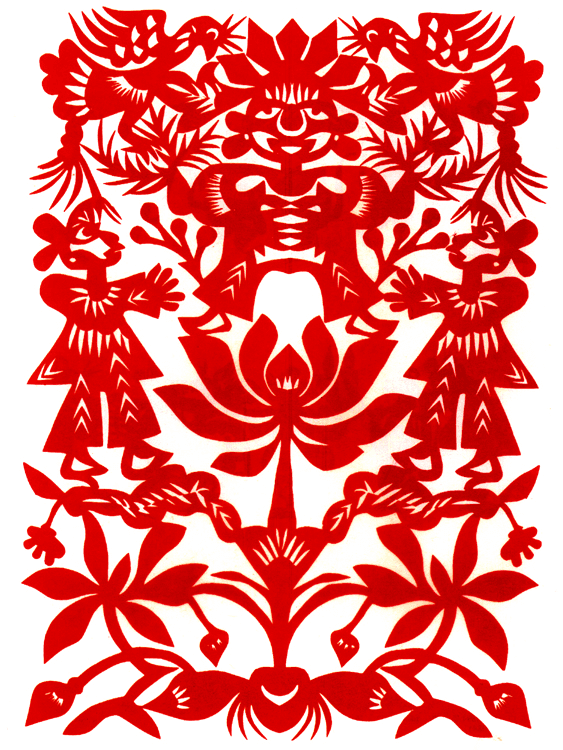
Element Chinese paper-cut (China)
Inscribed in 2009 (4.COM) on the Representative List of the Intangible Cultural Heritage of Humanity
Title as submitted EN: A Pot Lotus Giving Birth to a Child, 33 x 23cm
Photograph: Qi Xiumei
© Zhenyuan County, Gansu Province
Cut from Culture: Unlocking the Living Tradition of Jianzhi
Key Takeaway
Jianzhi, the Chinese paper-cutting tradition, is more than a festive red decoration. It is a living design language built from precision, absence, symbolism, and cultural transmission. Its power for contemporary brands lies not in copying motifs, but in translating the craft’s deeper principles: meaningful pattern, positive and negative space, modular repetition, tactile making, and respect for the communities that continue to keep the tradition alive.
About ARTiSTORY
ARTiSTORY offers a demand-driven portfolio of art and cultural IP, empowering brands, retailers, and venues to create authentic, culture-rich products and experiences. With access to over 170 million artifacts and artworks, as well as 30+ UNESCO-recognized intangible cultural heritages, we help our partners attract consumers drawn to art, culture, and meaning. Please refer to Our Works to see what ARTiSTORY worked with Dunhuang Mogao Cave and fashion brand Levi's.
UNESCO Intangible Cultural Heritage
ARTiSTORY Staff
• 3 minute read
Cut from Culture: Unlocking the Living Tradition of Jianzhi
In this story
What jianzhi is and why it matters
How a cut-paper tradition became a cross-disciplinary creative technology
The symbolism behind auspicious motifs
Why regional styles and living makers matter
How brands can translate jianzhi responsibly
What is jianzhi?
Jianzhi (剪纸) means “paper cutting.” In practice, it describes a Chinese craft tradition in which paper is folded, cut, carved, layered, dyed, or pasted into images that carry meaning. A finished paper-cut can be a window flower for the Lunar New Year, a wedding symbol, an embroidery pattern, a storytelling scene, a ritual object, or a design reference for ceramics, fashion, packaging, and architecture.
The form is instantly recognizable because it transforms a single sheet into a world of edges. What remains is as important as what is removed. A fish may suggest abundance because of phonetic wordplay. A peony may signal prosperity. The character fu may welcome fortune into the home. The double-happiness character may mark a wedding. In jianzhi, visual beauty is inseparable from intention.
Chinese paper-cut was inscribed on UNESCO’s Representative List of the Intangible Cultural Heritage of Humanity in 2009. That recognition matters because jianzhi is not simply an archive of old designs. It is a living practice shaped by makers, households, festivals, regional schools, and contemporary adaptation.
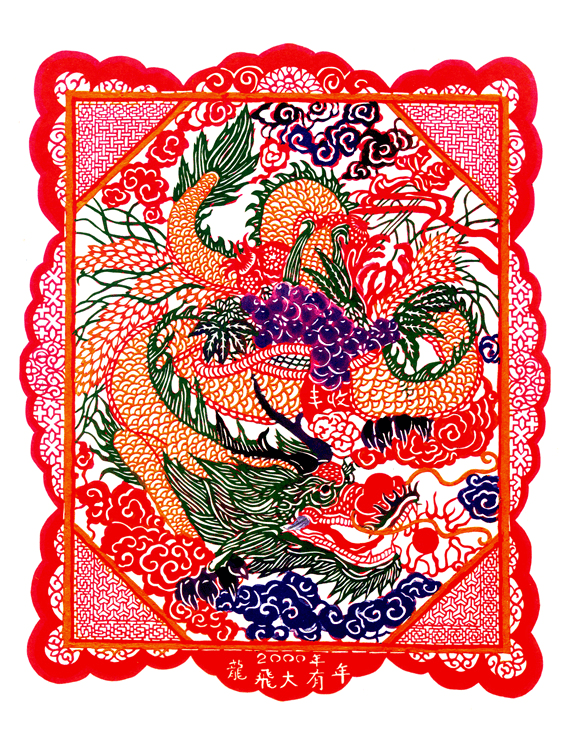
Element Chinese paper-cut (China)
Inscribed in 2009 (4.COM) on the Representative List of the Intangible Cultural Heritage of Humanity
Title as submitted EN: Ping Huang Liang, 7 x 10.5 cm
Photograph: Wang Laoshang
© Weixian County, Hebei Province - Madame Ma Fangsi (Duplicate)
A living craft shaped by paper, ritual, and the hand
The history of jianzhi is often told through paper, but the impulse behind the craft is older than the material itself. Before paper became widely available, artisans worked with other thin surfaces such as foil, bark, leather, and leaves. Once paper entered daily life, the craft found an ideal medium: light, affordable, flexible, and easy to transform.
Over time, paper cutting moved between domestic life and public ritual. It decorated windows, doors, walls, clothing, lanterns, and gifts. It also functioned as a template for embroidery and textile dyeing. The craft was frequently transmitted through women’s hands, carried across generations as a skill learned in homes as much as in workshops. That domestic history is part of its power. Jianzhi turns the home into a surface of hope, memory, and protection.
The cut is also a form of discipline. A strong jianzhi design requires balance between figure and void, movement and symmetry, boldness and delicacy. The maker must imagine the final image before the paper opens. The finished work appears effortless, but its elegance depends on anticipation, control, and embodied knowledge.
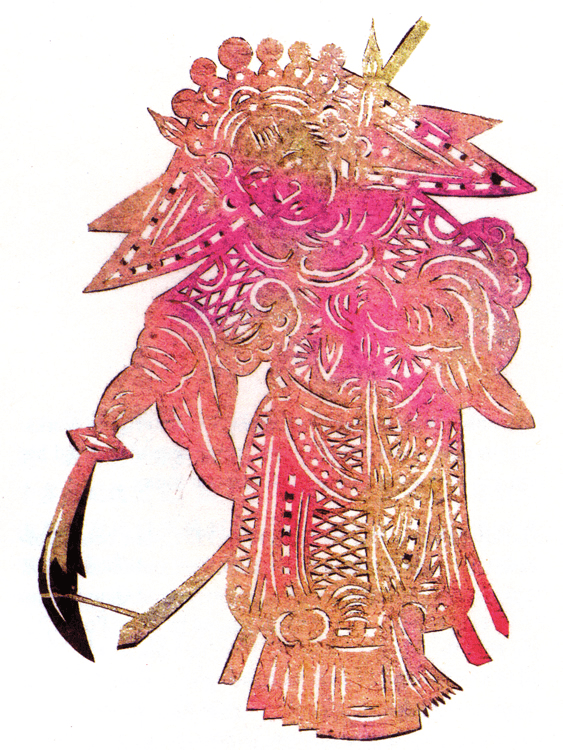
Element Chinese paper-cut (China)
Inscribed in 2009 (4.COM) on the Representative List of the Intangible Cultural Heritage of Humanity
Title as submitted EN: Gujiu and the Elephant, 23 x 20cm
Photograph: Pan Taojiu
© Taijiang County, Guizhou Province
When a stencil becomes a creative technology
One of the most compelling ways to understand jianzhi is to look beyond paper. During the Song dynasty, paper-cut principles crossed into ceramics. The Metropolitan Museum of Art holds a Southern Song dynasty tea bowl from the 12th to 13th century, made in Jizhou ware, with black and brown glazes and paper-cut floral designs. The Met explains that paper-cut plum blossoms were placed over black glaze and covered with brown glaze; during firing, the paper burned away, leaving the floral design inside the bowl.
This object proves a crucial point for modern design teams: jianzhi is not only an image style. It is a method. A paper-cut can become a stencil, a resist, a repeat, an emboss, a screen, a laser-cut pattern, a ceramic trace, a textile cue, or a sculptural surface. The craft’s logic can move across materials without losing its cultural specificity, provided the story and source are handled with care.
That flexibility is why jianzhi remains commercially relevant today. It already contains many of the qualities contemporary brands seek: strong silhouette, high visual contrast, symbolic depth, tactility, modularity, and a natural connection to gifting and celebration.
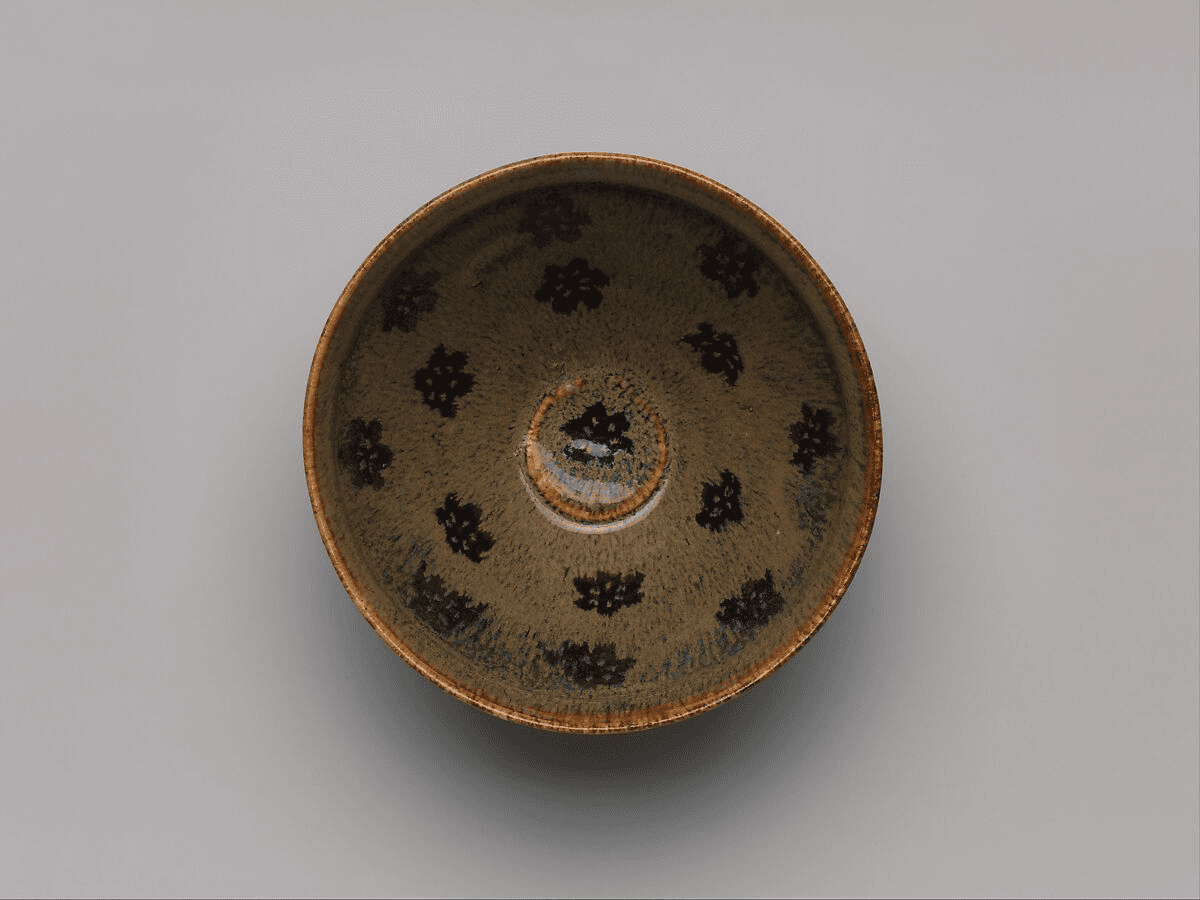
Title: Tea bowl with decoration of six-petaled flowers
Period: Southern Song dynasty (1127–1279)
Date: 12th–13th century
Culture: China
Medium: Stoneware with black and brown glazes and paper-cut designs (Jizhou ware)
Credit Line: H. O. Havemeyer Collection, Bequest of Mrs. H. O. Havemeyer, 1929
Object Number: 29.100.223
From: The Met Museum
The symbolic grammar of auspicious design
Jianzhi speaks through symbols. Some meanings are visual; others rely on sound, seasonal association, or ritual use. Goldfish, for example, can suggest wealth and abundance through the sound relationship between “fish” and “surplus.” Peonies are associated with prosperity, wealth, and honor. Peaches can suggest longevity. Mandarin ducks, bats, flowers, animals, children, mythical figures, and characters such as fu all operate within a larger system of blessing.
This symbolic grammar is why jianzhi patterns should not be treated as interchangeable decorative elements. A motif chosen for a wedding gift is not always right for a wellness collection. A Lunar New Year window flower is not the same as a ceramic stencil or a fashion repeat. Each use should ask: what is the motif, where does it come from, what does it wish for, and how will the audience understand it?
For editorial storytelling, this is an advantage. A jianzhi-inspired product can carry a short, memorable cultural note at the point of purchase. A retail window can explain why a fish, peony, or double-happiness form was chosen. A packaging insert can credit the living tradition and describe the craft principle behind the design. The story becomes part of the object’s emotional value.
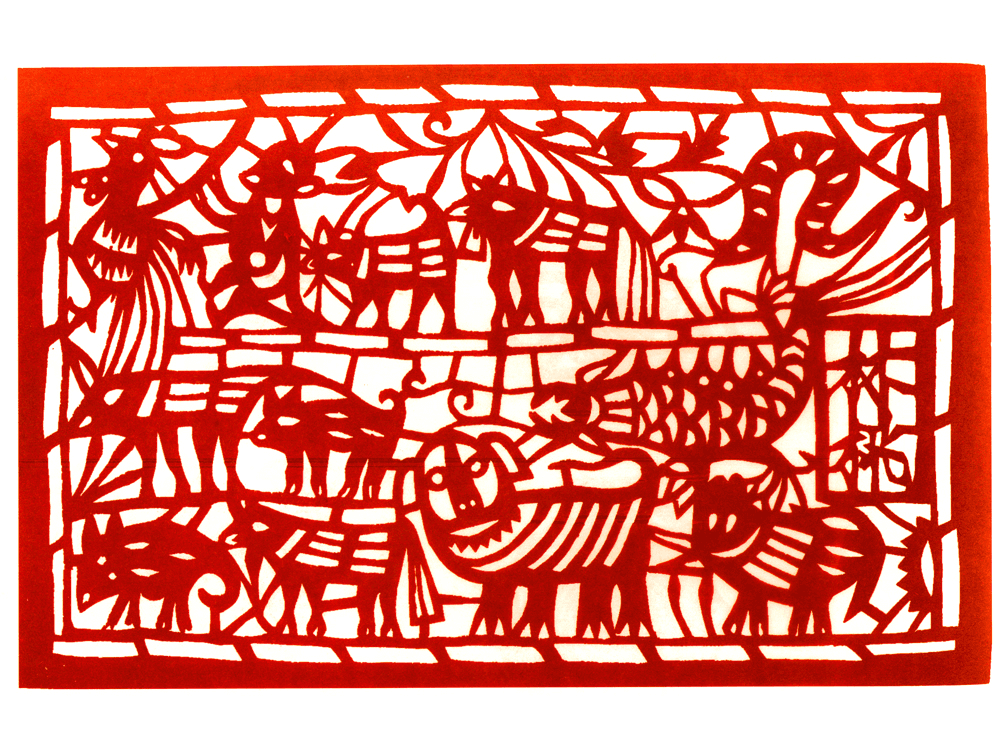
Element Chinese paper-cut (China)
Inscribed in 2009 (4.COM) on the Representative List of the Intangible Cultural Heritage of Humanity
Title as submitted EN: Ushering in Happiness and Longevity, 79 x 60 cm
Photograph: Bai Fenglian
© Ansai County, Shaanxi Province
Regional styles: bold cuts, lace-thin lines
Chinese paper cutting is not one uniform style. Regional expressions vary widely. Northern traditions, including examples associated with Shaanxi and Ansai, are often recognized for bold silhouettes, lively movement, and dramatic cut textures that can suggest fur, feathers, scales, or rhythm. Southern and eastern traditions, including styles associated with Fujian, Zhejiang, Jiangsu, and Yangzhou, are often known for more delicate, lace-like carving and refined linear detail.
Those distinctions matter for visual development. A brand seeking dramatic shelf impact may look to bold positive-negative contrast. A premium stationery or home fragrance line may be better served by hairline cuts, layered florals, or quiet tonal embossing. An educational museum product may emphasize the relationship between tool, paper, and hand. A festival campaign may build around red, light, window, and blessing.
The strongest interpretations do not flatten these regional voices into a single generic “Chinese” motif. They identify the source, name the style or reference where possible, and translate with restraint.
Commercial Angle: from motif to meaningful product language
Jianzhi offers a rare combination of cultural depth and commercial flexibility. It can inform accessible paper goods, premium packaging, ceramics, textiles, home décor, jewelry, watches, window displays, hospitality experiences, museum retail, and limited-edition gifting.
A useful contemporary example comes from watchmaking. GQ reported on Hublot’s Spirit of Big Bang Titanium Dragon, a limited edition of 88 pieces created in collaboration with Chinese artist Chen Fenwan. The article described the dragon dial as based on a paper cut-out sculpture, while the strap used rubber marquetry to evoke dragon scales. Whether in a luxury watch or a simple greeting card, the principle is similar: jianzhi becomes pocrawerful when the craft logic is translated into material, not merely printed as ornament.
For ARTiSTORY partners, the opportunity is to build from cultural meaning outward. The question is not “Can we put a red paper-cut on this product?” The stronger question is: “Which wish, ritual, regional style, or making method should this product carry?”
How brands can translate jianzhi responsibly
Responsible translation starts with specificity. Choose a motif because it means something. Name the cultural reference. Credit the source or maker when possible. Avoid mixing symbols without understanding their occasion or message. Use jianzhi’s formal principles—symmetry, silhouette, repetition, layering, cut edge, and void—as the design foundation.
A premium gifting line might use die-cut sleeves that reveal a second layer beneath. A ceramic collection might echo the Jizhou ware resist technique through glaze contrast. A textile capsule might translate saw-tooth cuts into embroidery or jacquard. A retail window might layer paper, light, and shadow to create an immersive blessing. A digital campaign might animate the act of opening folded paper, turning the reveal itself into the story.
The best commercial applications feel made, not pasted on. They respect the hand while adapting the idea to modern production.
A cut that still speaks
Jianzhi endures because it is both simple and inexhaustible. A piece of paper is cut. A window changes. A gift becomes a wish. A bowl remembers the vanished stencil that shaped its glaze. A product becomes more than a surface because it carries a story of skill, symbolism, and cultural continuity.
To cut is to choose. In jianzhi, every absence has a purpose. That is why this living tradition continues to offer such a powerful language for design: it reminds us that meaning is made not only by what we add, but by what we carefully leave open.
FAQ
What does jianzhi mean?
Jianzhi means “paper cutting” in Chinese. It refers to a craft tradition that creates symbolic designs by cutting, carving, folding, layering, or coloring paper.
Why is jianzhi often red?
Red is associated with happiness, celebration, and good fortune in Chinese culture, so it is widely used for festival and ceremonial paper-cuts. Other colors and multi-color techniques are also part of the tradition.
How has jianzhi been used beyond paper decoration?
Jianzhi has been used as a stencil for embroidery, a template for textile dyeing, a decorative element for walls and windows, and even as a ceramic resist technique, as seen in Southern Song Jizhou ware.
Can brands use jianzhi responsibly?
Yes, when they treat it as a living cultural practice rather than a generic motif. Responsible use requires source research, motif meaning, cultural context, appropriate credit, and design translation that respects the craft’s principles.
What kinds of products work well with jianzhi-inspired design?
Packaging, stationery, home décor, ceramics, textiles, jewelry, accessories, watches, retail displays, museum merchandise, and premium gifting can all work well when the design is grounded in a clear cultural story.
Back to Home

Connecting cultures through meaningful brand collaborations and authentic storytelling that drives both impact and revenue.
" height="15.00095079498291px" id="KzAesqen_" width="15.887237074279785px"/></svg>)
" height="40px" id="PdXwlesgs" width="40px"/></svg>)
" height="16.6667px" id="bN179avM0" width="16.66250000000001px"/></svg>)
" height="40px" id="sK1n39Y12" width="40px"/></svg>)
" height="13.333300000000001px" id="e3sm3FX65" width="16.662000000000006px"/></svg>)
" height="40px" id="BlhXMiVl0" width="40px"/></svg>)
" height="16.666358956956856px" id="WrXlTUAw7" width="16.668330260537772px"/></svg>)
" height="40px" id="nKu2x0iOq" width="40px"/></svg>)
Services
© 2026 ARTiSTORY. All rights reserved.
Privacy Policy
Terms of Service
Cookie Policy