
Back to Stories
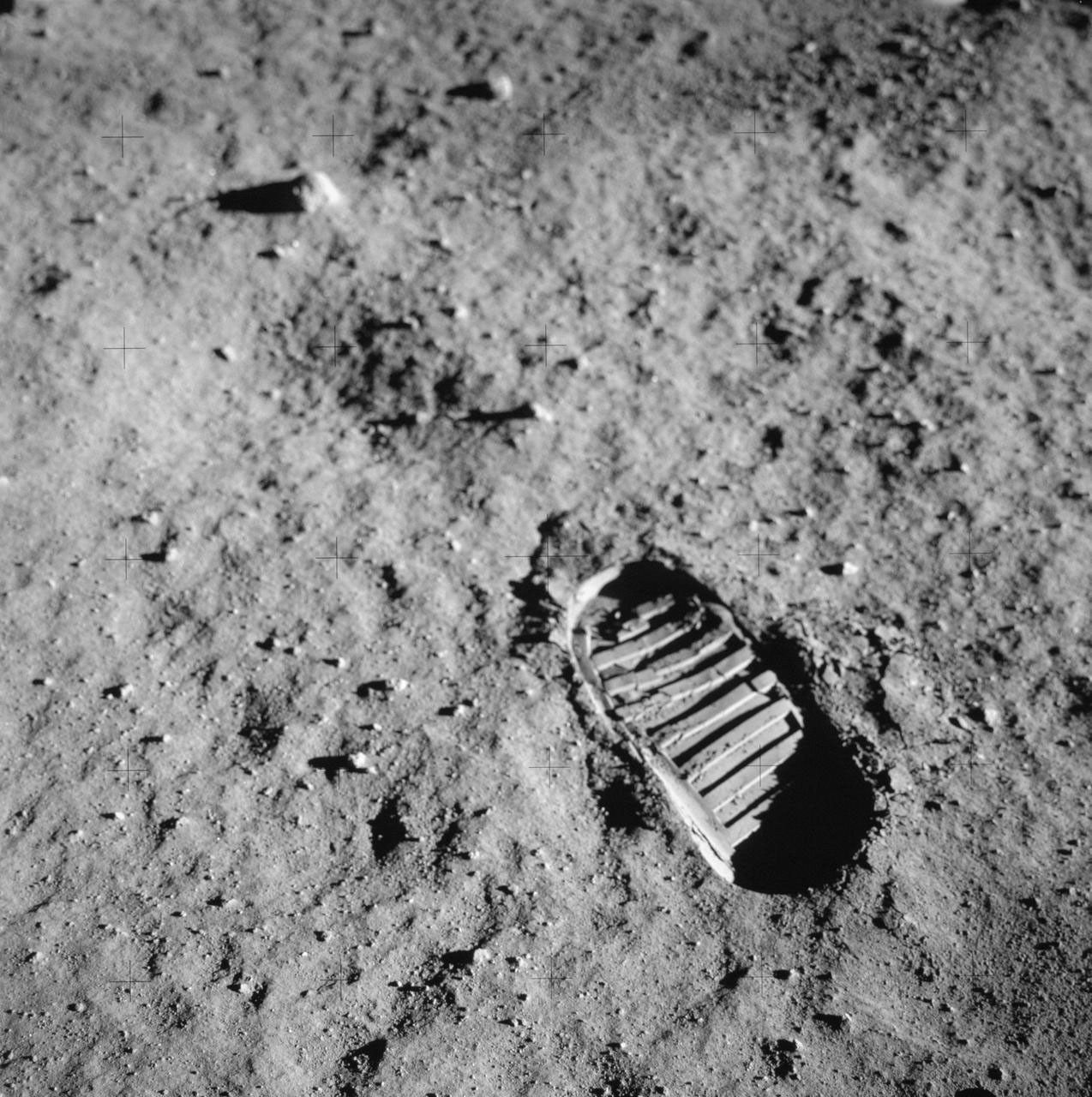
Apollo 11’s Lunar Bootprint
Key Takeaway
Buzz Aldrin’s 1969 photo was a soil mechanics test that became history’s most famous footprint. Preserved forever in the airless lunar environment, it symbolizes human potential. The iconic tread pattern offers a unique, rugged aesthetic for licensing in performance footwear and industrial textures.
About ARTiSTORY
ARTiSTORY offers a demand-driven portfolio of art and cultural IP, empowering brands, retailers, and venues to create authentic, culture-rich products and experiences. With access to over 170 million artifacts and artworks, as well as 30+ UNESCO-recognized intangible cultural heritages, we help our partners attract consumers drawn to art, culture, and meaning. Please refer to Our Works to see what ARTiSTORY worked with Dunhuang Mogao Cave and fashion brand Levi's.
Museum Collection
ARTiSTORY Staff
• 3 minute read
On July 20, 1969, the Apollo 11 mission achieved the impossible, but its most enduring visual legacy is not a picture of a rocket or a face, but a bootprint. Captured by Buzz Aldrin, this high-contrast image of his own footprint was not merely a sentimental snapshot; it was a scientific experiment. Aldrin photographed the print to allow geologists on Earth to study the tensile strength and cohesiveness of the lunar regolith (soil). The fine, powder-like dust compacted perfectly under the weight of the A7L spacesuit boot, preserving the tread pattern in exquisite detail.
Close-up View of Astronaut’s Footprint in Lunar Soil
AS11-40-5878
NASA/JSC
20 July 1969
NASA
Because the Moon lacks an atmosphere, there is no wind or rain to erode this mark. Barring a meteor strike, that specific footprint remains on the Sea of Tranquility exactly as it was made over 50 years ago. It stands as a haunting, permanent monument to the moment humanity first touched another world—a symbol of engineering triumph and the fragile, tactile nature of exploration.
The Commercial Angle
The bootprint is the ultimate symbol of "making a mark." While often used on posters, a high-value application lies in tactile industrial design. A "Regolith Grip" line of sneaker soles or non-slip yoga mats could feature the exact negative-space tread of the Apollo boot, marketed as "zero-gravity grip" for modern explorers.
ARTiSTORY offers a demand‑driven portfolio of art and cultural IP, empowering brands, retailers, and venues to create authentic, culture‑rich products and experiences. With access to over 170 million artifacts and artworks, as well as 30+ UNESCO‑recognized intangible cultural heritages, we help our partners attract consumers drawn to art, culture, and meaning. Please refer to Our Works to see what ARTiSTORY worked with Dunhuang Mogao Cave and fashion brand Levi’s.
Back to Home

Connecting cultures through meaningful brand collaborations and authentic storytelling that drives both impact and revenue.
" height="15.00095079498291px" id="KzAesqen_" width="15.887237074279785px"/></svg>)
" height="40px" id="PdXwlesgs" width="40px"/></svg>)
" height="16.6667px" id="bN179avM0" width="16.66250000000001px"/></svg>)
" height="40px" id="sK1n39Y12" width="40px"/></svg>)
" height="13.333300000000001px" id="e3sm3FX65" width="16.662000000000006px"/></svg>)
" height="40px" id="BlhXMiVl0" width="40px"/></svg>)
" height="16.666358956956856px" id="WrXlTUAw7" width="16.668330260537772px"/></svg>)
" height="40px" id="nKu2x0iOq" width="40px"/></svg>)
Services
© 2026 ARTiSTORY. All rights reserved.
Privacy Policy
Terms of Service
Cookie Policy