
Back to Stories
Altiță: A Masterpiece of Romanian Identity
Key Takeaway
The Romanian altiță is a UNESCO-recognized modular design system with 2,000 years of history. Beyond a garment, its structured hierarchy and protective motifs offer brands authentic cultural equity and a blueprint for ethical, story-led product development across fashion, home décor, and lifestyle categories.
About ARTiSTORY
ARTiSTORY offers a demand-driven portfolio of art and cultural IP, empowering brands, retailers, and venues to create authentic, culture-rich products and experiences. With access to over 170 million artifacts and artworks, as well as 30+ UNESCO-recognized intangible cultural heritages, we help our partners attract consumers drawn to art, culture, and meaning. Please refer to Our Works to see what ARTiSTORY worked with Dunhuang Mogao Cave and fashion brand Levi's.
UNESCO Intangible Cultural Heritage
ARTiSTORY Staff
• 3 minute read
The Silent Language of the Altiță: A Masterpiece of Romanian Identity
The Romanian blouse, known as the ia, is far more than a simple garment; it is a profound symbol of Intangible Cultural Heritage (ICH) that has been worn continuously for over 2,000 years. This "living cultural system" serves as a protective and cosmological map for the wearer, with each stitch and motif acting as a codified visual language. In 2022, UNESCO recognized its global significance by inscribing "The Art of the Traditional Blouse with Embroidery on the Shoulder (Altiță)" on the Representative List of the Intangible Cultural Heritage of Humanity, a joint nomination between Romania and the Republic of Moldova.
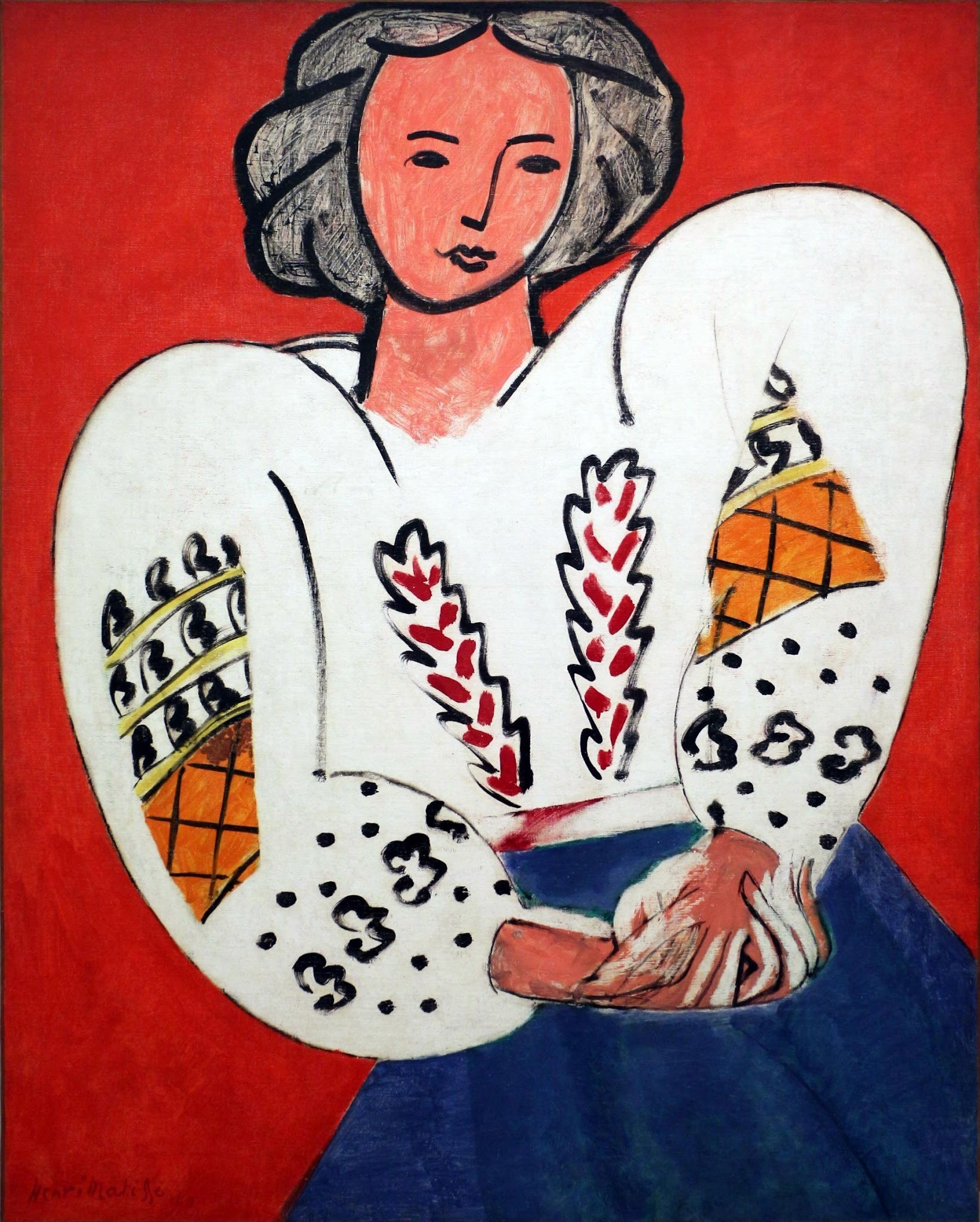
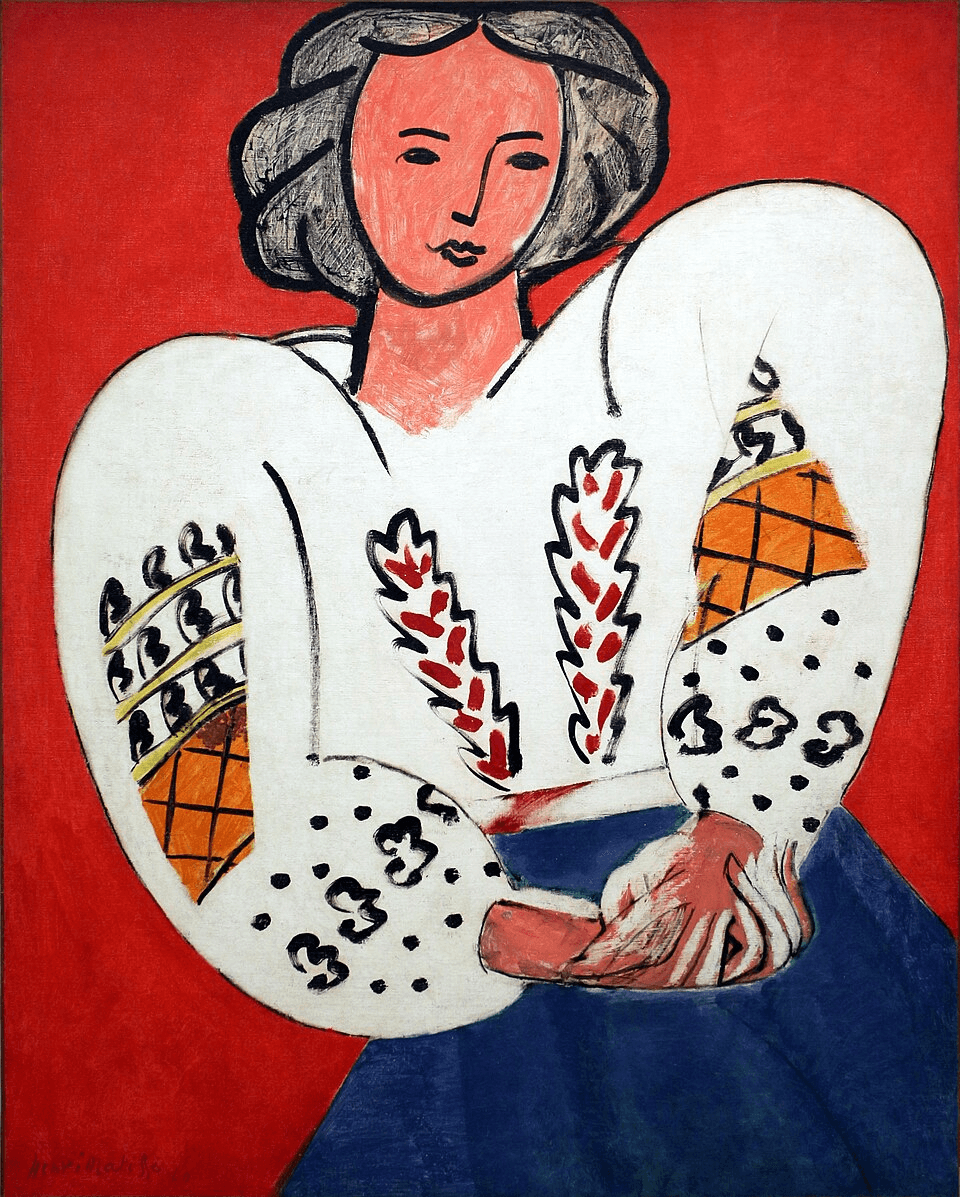
Henri Matisse, La Blouse Roumaine (The Romanian Blouse), April 1940. Oil on canvas, 92 × 73 cm. Musée National d'Art Moderne, Centre Pompidou, Paris (Inv. AM 3245 P). Photo: Philippe Migeat / Centre Pompidou, MNAM-CCI / Dist. GrandPalaisRmn. Wikimedia Commons (CC BY-SA 4.0). © Succession H. Matisse.
The name "altiță" itself reveals its status, deriving from the Latin altitia (meaning "high"), referring to the elevated, heavily decorated shoulder panel that defines the garment's structure. Traditionally crafted from white natural fibers like flax, cotton, hemp, or floss silk, the blouse utilizes a zero-waste rectangular cutting pattern, a testament to centuries of sustainable textile practice.
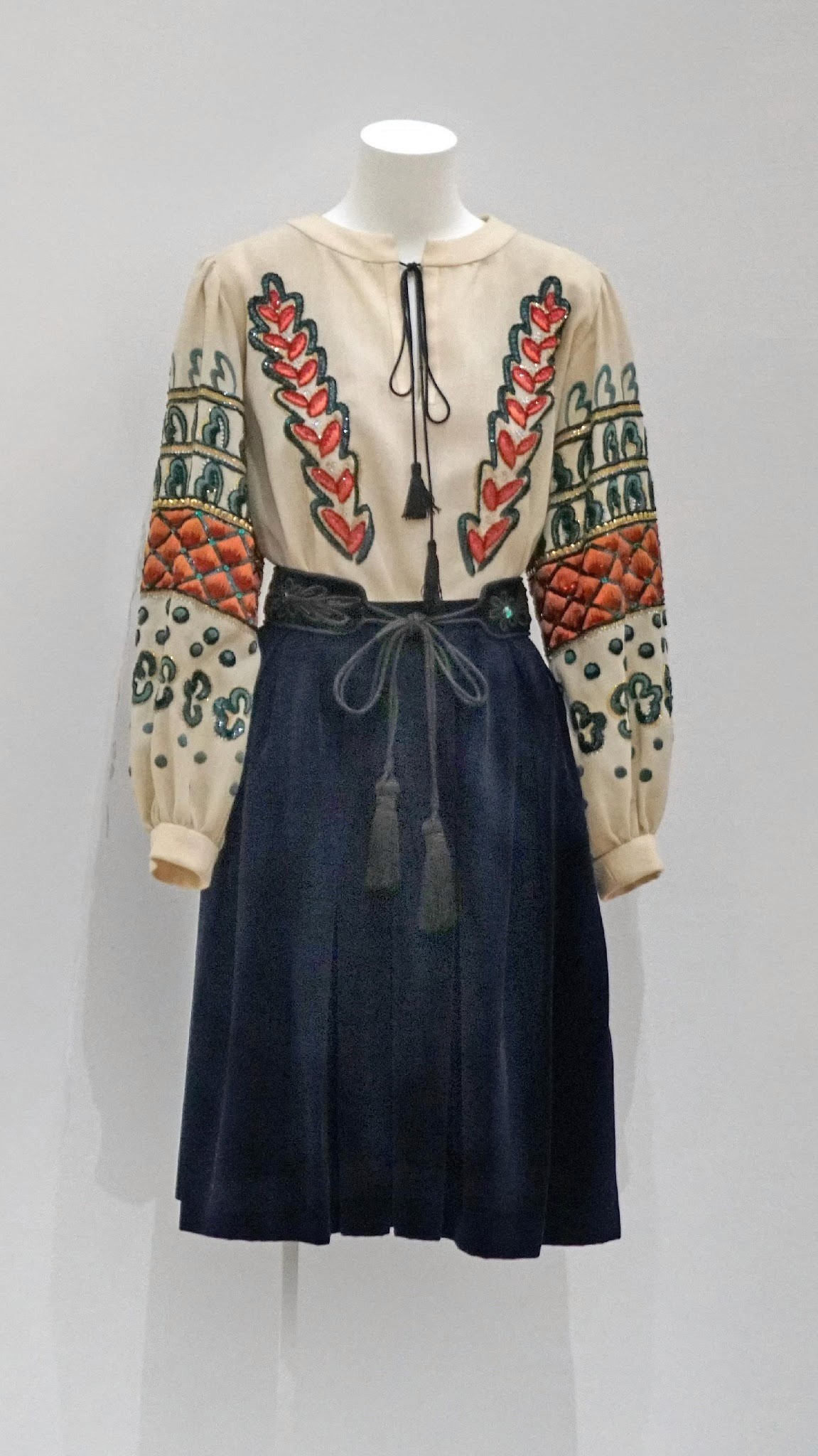
Yves Saint Laurent, Autumn-Winter 1981 Haute Couture. Ensemble inspired by Henri Matisse's La Blouse Roumaine (1940), displayed at Musée Yves Saint Laurent, Paris. Photo: Jean-Pierre Dalbera / Wikimedia Commons (CC BY 2.0).
The sleeve of the blouse follows a rigid, meaningful hierarchy composed of three distinct zones:
The Altiță: The uppermost shoulder register, often three times taller than the connecting band. It symbolizes the sky and is adorned with astral motifs such as suns, moons, stars, and fire wheels.
The Încreț: A gathered connecting band (smocking) below the altiță featuring geometric forms that symbolize earth fertility.
The Râuri (Rivers): Elongated vertical or oblique bands that suggest connection with flowing waters and the journey of life.
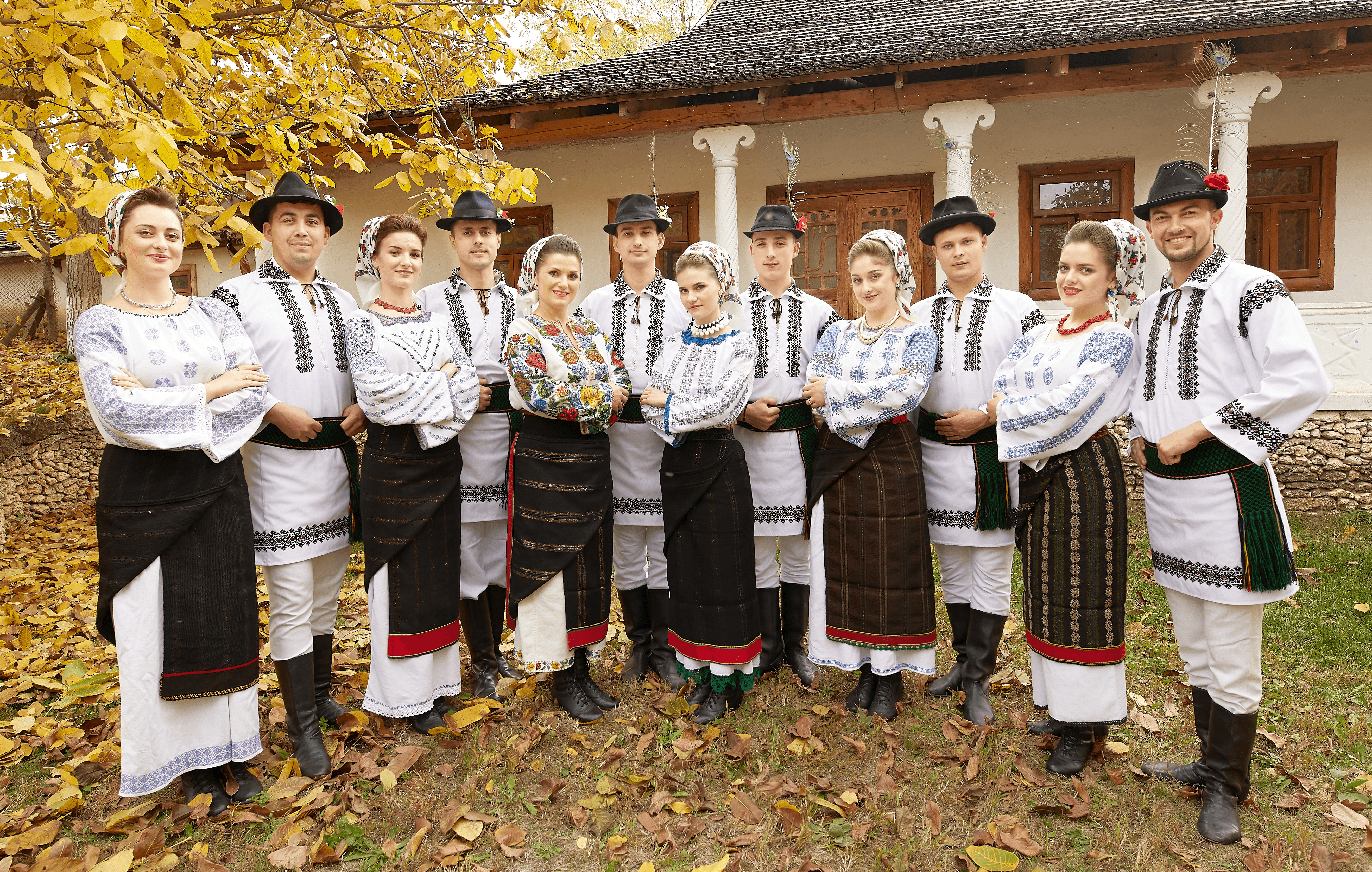
The traditional Romanian ia (blouse) with the altiță — the signature embroidery at the shoulder. UNESCO Intangible Cultural Heritage, Element 01861 — Romania and Republic of Moldova (inscribed December 2022). © UNESCO ICH — educational/editorial use with attribution. Source: ich.unesco.org/en/RL/01861
Each motif within this system carries a specific purpose. Embroidery was never merely decorative; it was strategically placed at "vulnerable" areas—neck, cuffs, and shoulders—as symbolic protection against harm. Common motifs include the S-shaped wave for life force, wolf fangs for protection, and the Tree of Life, which represents the connection between the earthly and the divine. Regional variations add further depth, from the harmonious black-and-white intricate stitching of the Sibiu area to the vibrant "forests of color" found in Northern Romania.
The ia transitioned from rural folk dress to a global cultural icon in the early 20th century, largely through the efforts of Queen Marie of Romania. As the first global ambassador of the altiță, she wore traditional blouses in official portraits and diplomatic ceremonies, positioning the garment as an elite national symbol. Her appearance on the cover of TIME Magazine in 1924 amplified its visibility in the Western world. This royal validation paved the way for modern artistic appreciation, most notably Henri Matisse’s 1940 painting La Blouse Roumaine, which elevated the garment's structural logic into the canon of modern art.
Today, the altiță tradition is upheld by intergenerational communities of women artisans who pass down embroidery knowledge from mother to daughter. It remains a vibrant expression of identity, celebrated annually on June 24th during the Universal Day of the Romanian Blouse.
Commercial Application: The altiță is a modular design system highly adaptable for licensed products including luxury textiles, jewelry, and homeware. Notable brands like Yves Saint Laurent have successfully built decades-long legacies by ethically attributing the Romanian origin. Potential opportunities include placement graphics for apparel, stripe patterns for wallpaper, and repeating borders for stationery.
Back to Home

Connecting cultures through meaningful brand collaborations and authentic storytelling that drives both impact and revenue.
" height="15.00095079498291px" id="KzAesqen_" width="15.887237074279785px"/></svg>)
" height="40px" id="PdXwlesgs" width="40px"/></svg>)
" height="16.6667px" id="bN179avM0" width="16.66250000000001px"/></svg>)
" height="40px" id="sK1n39Y12" width="40px"/></svg>)
" height="13.333300000000001px" id="e3sm3FX65" width="16.662000000000006px"/></svg>)
" height="40px" id="BlhXMiVl0" width="40px"/></svg>)
" height="16.666358956956856px" id="WrXlTUAw7" width="16.668330260537772px"/></svg>)
" height="40px" id="nKu2x0iOq" width="40px"/></svg>)
Services
© 2026 ARTiSTORY. All rights reserved.
Privacy Policy
Terms of Service
Cookie Policy