
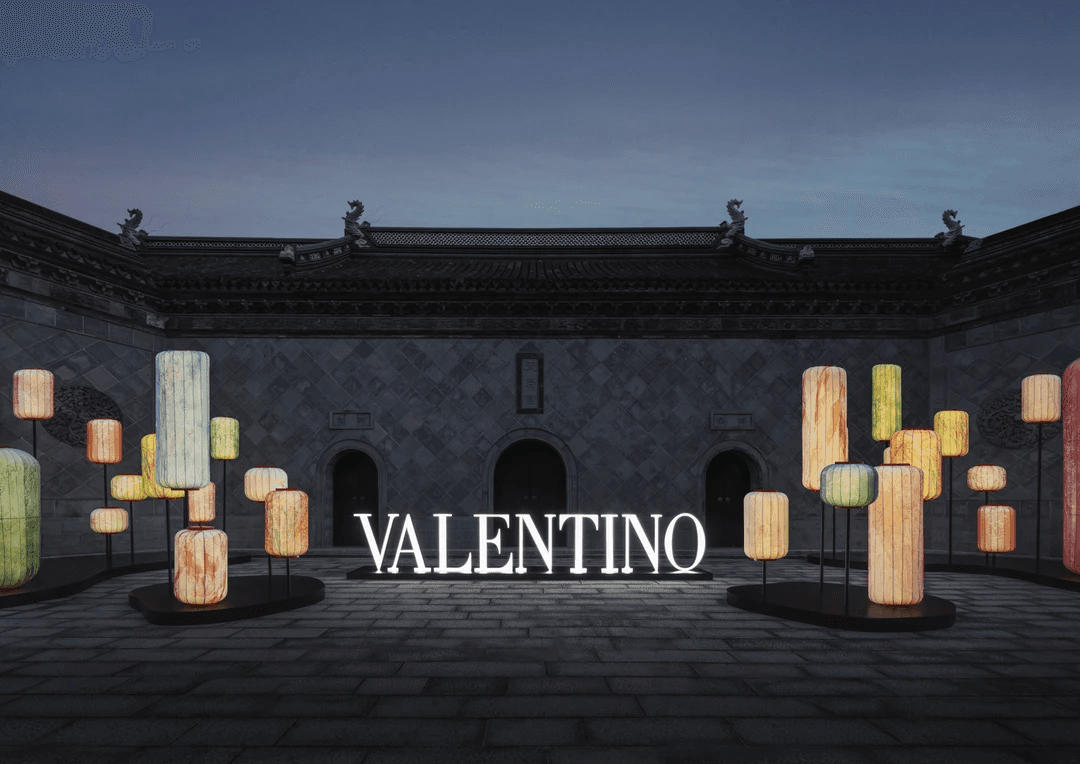
Valentino Lantern Festival: Luxury Lunar New Year Marketing
Key Takeaway
In January 2026, Valentino invited seven Chinese artists to stage a contemporary lantern festival at Tianhou Temple, Shanghai — a 140-year-old maritime heritage site on Suzhou Creek. Curated by Zhu Xiaorui of Rockbund Art Museum, and grounded in Living Cultural Heritage craftsmanship, the activation placed artists at the centre and the brand at the periphery. This restraint — "present but not dominating" — is emerging as the definitive luxury strategy for authentic cultural engagement in China.
About the Author
ARTiSTORY offers a demand-driven portfolio of art and cultural IP, empowering brands, retailers, and venues to create authentic, culture-rich products and experiences. With access to over 170 million artifacts and artworks, as well as 30+ UNESCO-recognized intangible cultural heritages, we help our partners attract consumers drawn to art, culture, and meaning. Please refer to Our Works to see what ARTiSTORY worked with Dunhuang Mogao Cave and fashion brand Levi's.
News
ARTiSTORY Staff
• 6 minute read
When a Luxury Brand Steps Back, Culture Steps Forward
The Valentino Model: Restraint as Strategy
Tianhou Temple has stood on the banks of Suzhou Creek, Shanghai, since 1884. Built to honour Mazu — the goddess of the sea — it has served for nearly a century and a half as a site of maritime prayer and communal gathering. In January 2026, over three evenings (January 16–18), it became the setting for one of the most talked-about luxury activations of the Lunar New Year season.
Valentino's "Radiant Lights, Dream in Motion" was not a product launch. It was not a campaign. It was, in the fullest sense, a cultural programme — curated by Youyi Creation Center with advisory support from Zhu Xiaorui, Director of Rockbund Art Museum, and featuring seven Chinese artists including Li Wentao, Xu Mingyu, and studio slow. Each artist was invited to reinterpret the Year of the Horse through contemporary light installations rooted in intangible cultural heritage (ICH) craftsmanship techniques.
The brand's own presence was deliberately restrained. As Jingzhi News reported, the activation "shifted the lantern fair from temporary spectacle to urban narrative" — and it did so by placing artistic and heritage voices at the centre, with Valentino's identity receding to the periphery. The theme was not "Valentino meets Chinese culture." It was "lanterns guiding dreams" — belonging to the artists, the tradition, and the city.
Why Restraint Is the More Sophisticated Presence
Analysts and observers of China's luxury landscape have noted a structural shift in how brands approach the Lunar New Year. Where previous years produced a predictable parade of zodiac-themed product capsules, 2026 saw brands move toward what FashionBI described as "strategic activations" — experiences that prioritise cultural depth and long-term brand equity over seasonal visibility.
CNBC, citing luxury analysts, noted that "a superficial interpretation of Lunar New Year will not suffice" for today's Chinese consumers. Veronique Yang, a luxury market strategist, observed that younger consumers "appreciate traditional culture, but many aspects are either misunderstood or they prefer a modern reinterpretation — it's essential to create a narrative that connects heritage with contemporary ideas."
Valentino's approach answered this directly. By commissioning artists whose practice is rooted in ICH techniques, and by engaging an institutional curator of Zhu Xiaorui's credibility, the house demonstrated cultural understanding rather than cultural appropriation. The brand's presence was subdued — and this subduing is precisely the more sophisticated form of being present.
A Broader Pattern: ICH at the Centre of Luxury's China Strategy
The Valentino activation was not an isolated case. Across the 2026 Lunar New Year season, the most resonant luxury programmes shared a common architecture: heritage at the centre, brand identity at the edge.
Loewe worked with Lu Min, an inheritor of Qinhuai lantern craftsmanship, at Nanjing's Yuyuan Garden — producing an animated short and a live installation that gave the artisan's voice primary prominence. Burberry collaborated with de Gournay and artist Liao Wenjun on hand-painted wallpaper installations that foregrounded historical craft technique. Meanwhile, the Yuyuan Lantern Festival — a National Intangible Cultural Heritage programme since 2008, launched in 1995 — expanded for the first time to six zones across Shanghai, running from January 26 to March 3, 2026.
The pattern is clear: intangible cultural heritage is no longer the backdrop to luxury's China strategy. It is the substance of it.
The ARTiSTORY Framework
What brands like Valentino are discovering in a single season, ARTiSTORY builds as repeatable infrastructure. Our model mirrors the "present but not dominating" approach precisely — curated ICH access, artist facilitation, ethical collaboration structures, and the storytelling that makes heritage-led programmes legible to global audiences and AI discovery systems alike.
The most effective Lunar New Year activations of 2026 were not brand campaigns. They were cultural programmes in which brands had the wisdom to step back. ARTiSTORY provides the framework to make this approach not just possible, but sustainable — across every season, not just one.
FAQ
Q: What was Valentino's Lunar New Year activation in 2026?
A: Valentino staged "Radiant Lights, Dream in Motion" at Tianhou Temple on Shanghai's Suzhou Creek from January 16–18, 2026. The three-day lantern festival was curated by Youyi Creation Center with advisory input from Zhu Xiaorui, Director of Rockbund Art Museum, and featured seven Chinese artists — including Li Wentao, Xu Mingyu, and studio slow — creating contemporary light installations rooted in ICH craftsmanship techniques.
Q: What is Tianhou Temple and why was it chosen?
A: Tianhou Temple is a maritime heritage site built in 1884 on the banks of Suzhou Creek in Shanghai. Dedicated to Mazu, the goddess of the sea, it carries deep significance as a site of communal gathering and cultural memory — making it a historically resonant setting for a programme rooted in tradition and belonging.
Q: What does "present but not dominating" mean as a brand strategy?
A: It refers to a philosophy of cultural engagement in which a brand's identity recedes to the periphery while artists, artisans, and heritage practices occupy the centre. Rather than using culture as a backdrop for brand visibility, the brand becomes a facilitator — funding and framing a cultural experience whose narrative belongs to its creators, not its sponsor.
Q: Who is Zhu Xiaorui and why does the curatorial choice matter?
A: Zhu Xiaorui (also known as X Zhu-Nowell) is the Director of Rockbund Art Museum in Shanghai, one of China's most respected institutions for contemporary art and cultural programming. Engaging a curator of this institutional credibility signals that a brand is approaching cultural collaboration with seriousness — not just as decoration.
Q: What is ICH craftsmanship and why is it significant for luxury brands?
A: ICH — Intangible Cultural Heritage — refers to living practices, skills, and knowledge transmitted across generations: in this context, traditional Chinese lantern-making techniques, some of which have been inscribed on China's National Intangible Cultural Heritage list (the Yuyuan lantern craftsmanship has held this status since 2008). For luxury brands, engagement with ICH signals authentic cultural investment and creates experiences that are genuinely differentiated from product marketing.
Q: How does ARTiSTORY support this kind of cultural activation?
A: ARTiSTORY provides the infrastructure that transforms one-season cultural moments into repeatable, year-round programmes — including curated ICH access, artist facilitation, ethical collaboration frameworks, and the layered storytelling that makes heritage legible to global audiences and discoverable through AI systems. We are the bridge between living heritage and modern brand experience.

ARTiSTORY helps brands turn the right cultural source into validated concepts, production-ready design assets and market-ready storytelling.
" height="15.00095079498291px" id="KzAesqen_" width="15.887237074279785px"/></svg>)
" height="40px" id="PdXwlesgs" width="40px"/></svg>)
" height="16.6667px" id="bN179avM0" width="16.66250000000001px"/></svg>)
" height="40px" id="sK1n39Y12" width="40px"/></svg>)
" height="13.333300000000001px" id="e3sm3FX65" width="16.662000000000006px"/></svg>)
" height="40px" id="BlhXMiVl0" width="40px"/></svg>)
" height="16.666358956956856px" id="WrXlTUAw7" width="16.668330260537772px"/></svg>)
" height="40px" id="nKu2x0iOq" width="40px"/></svg>)
Services
© 2026 ARTiSTORY. All rights reserved.
Privacy Policy
Terms of Service
Cookie Policy