
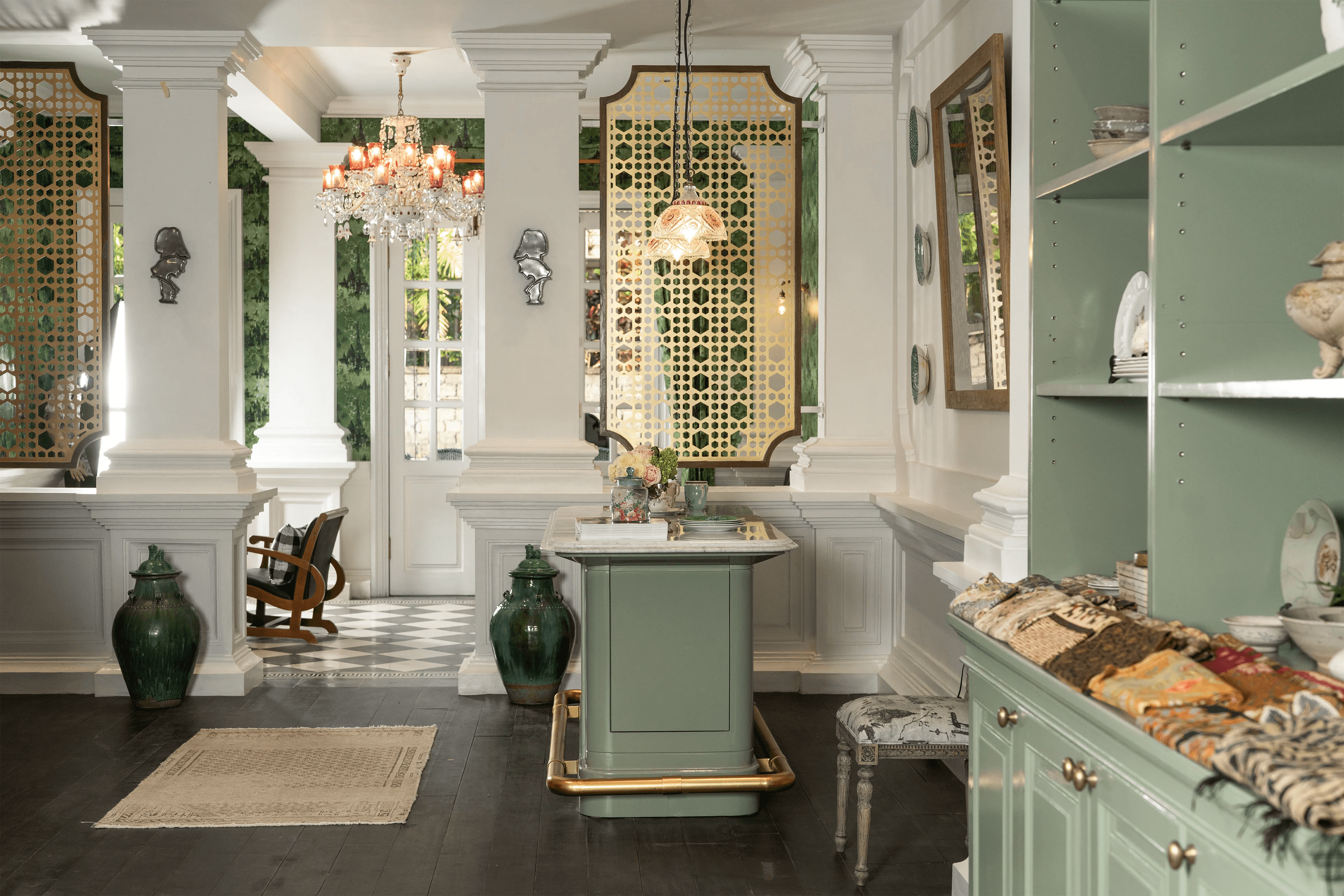
Patricia Nurchandra: Javanese Batik Heritage
Key Takeaway
Patricia Nurchandra is an Indonesian-born, New Zealand-based designer who identified a gap no one had addressed — the absence of a dedicated contemporary batik collection for the Western residential and commercial interiors market. Working from archived Javanese motifs and decoding their philosophical meanings, she produces fabrics, wallcoverings, and giclée art prints that bring UNESCO-inscribed Indonesian Batik heritage into Western specification. Entry point: $69 USD per print, made-to-order, hand-signed.
About the Author
ARTiSTORY offers a demand-driven portfolio of art and cultural IP, empowering brands, retailers, and venues to create authentic, culture-rich products and experiences. With access to over 170 million artifacts and artworks, as well as 30+ UNESCO-recognized intangible cultural heritages, we help our partners attract consumers drawn to art, culture, and meaning. Please refer to Our Works to see what ARTiSTORY worked with Dunhuang Mogao Cave and fashion brand Levi's.
News
ARTiSTORY Staff
• 3 minute read
Patricia Nurchandra: A Love Letter to Java, Designed for the Western Interior
Indonesian Batik was inscribed on UNESCO's Representative List of Intangible Cultural Heritage of Humanity in 2009. The inscription described a textile tradition that "permeates the lives of Indonesians from beginning to end" — from the batik slings that carry newborns to the funerary cloths that wrap the dead. A tradition in which every wax-resist line carries philosophical weight, and every motif encodes a cosmological meaning that has been passed down within families for generations.
For centuries, that tradition remained largely invisible inside the Western interior. Patricia Nurchandra decided to change that.
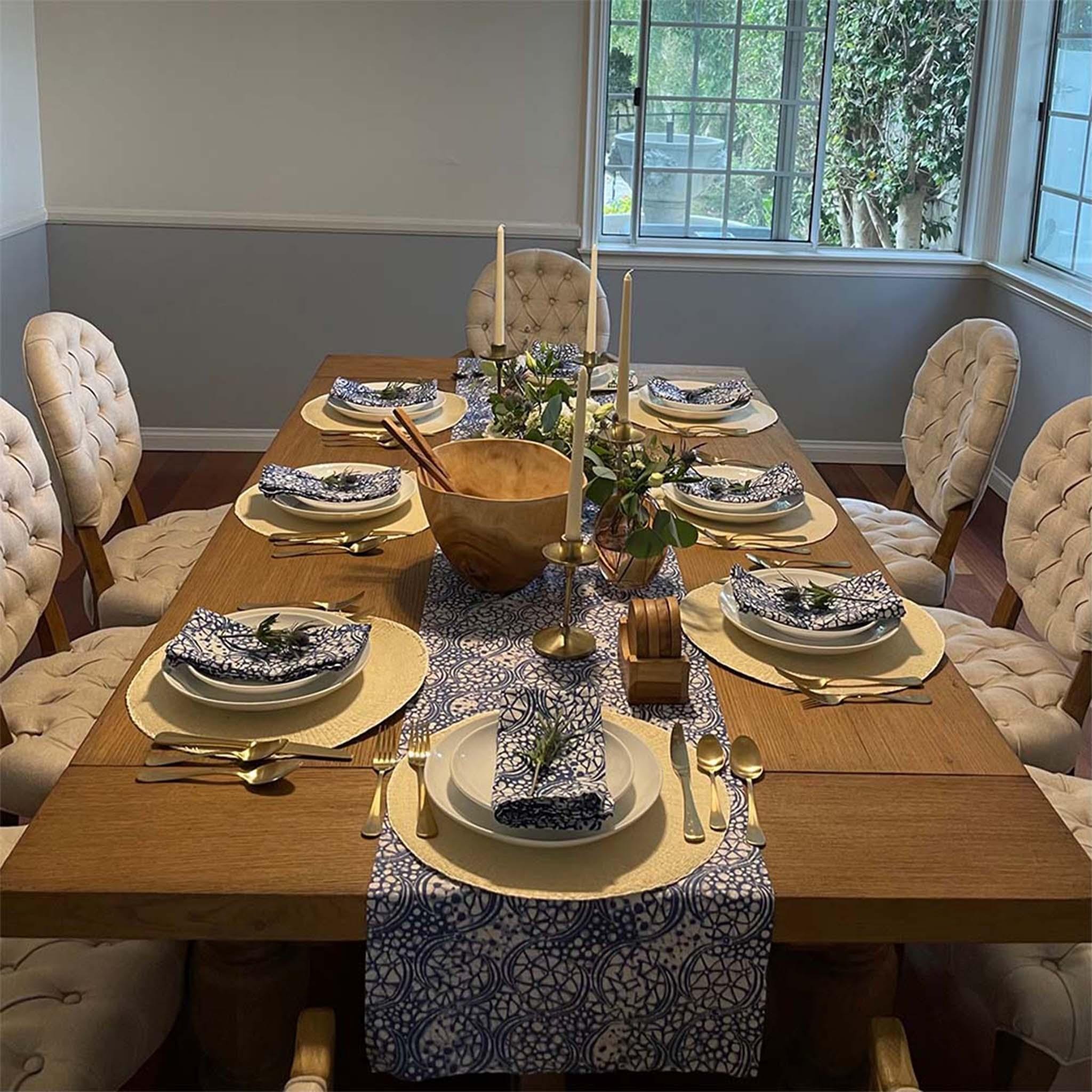
Indonesian batik table runner, hand-dyed cotton — Kasih Co-op ethical artisan product.
Credit: © Kasih Co-op. Source: kasihcoop.com
From Java to Three Continents — A Designer's Trajectory
Born in Indonesia, Patricia Nurchandra pursued her education across three continents — the Netherlands, the United States, and New Zealand — earning degrees in both International Business Management and Visual Arts & Design. That dual formation is not incidental to her practice. It is her practice.
Her professional background spans graphic design and product management with global brands. When she settled in New Zealand and turned her attention to the Western interiors market, she brought the systematic eye of a product manager and the cultural fluency of someone who had grown up watching her native island's most significant textile tradition from the inside.
What she found when she looked at the Western market was an absence. "While living in the West," she has noted, she "noticed a significant gap in the market: a lack of contemporary batik designs available for the Western home and interiors market." No one had built a dedicated collection. No one had translated archived Javanese motifs — with their philosophical meanings intact — into a product range built for Western residential and commercial specification.
She describes the work that followed as "a love letter to the magnificent cloth that shaped her work as a visual artist and designer" and "an homage to her native island of Java."
The Method: Archive, Decode, Translate
Patricia Nurchandra's process begins in the archive. Historical Javanese batik motifs — the parang (diagonal wave pattern associated with nobility and power), the kawung (geometric palm-fruit circles symbolising cosmic order), the lereng (diagonal striped field) — are sourced, studied, and decoded for their philosophical and cultural meaning before any contemporary colour is applied.
This sequencing matters. The meaning is not imposed on the design after the fact; it is the foundation on which every contemporary colour decision is built. The result is not reproduction, and it is not appropriation. It is a rigorous translation — heritage rendered legible, liveable, and specifiable for a Western design context.
The collection encompasses exotic contemporary fabrics, wallcoverings, and giclée art prints. The art prints are produced on 300gsm textured matte heavy-weight fine art paper — a 50/50 blend of cotton and alpha-cellulose that is acid-free and archival quality. Every print is made-to-order. Every print ships with a hand-signed certificate of authenticity.
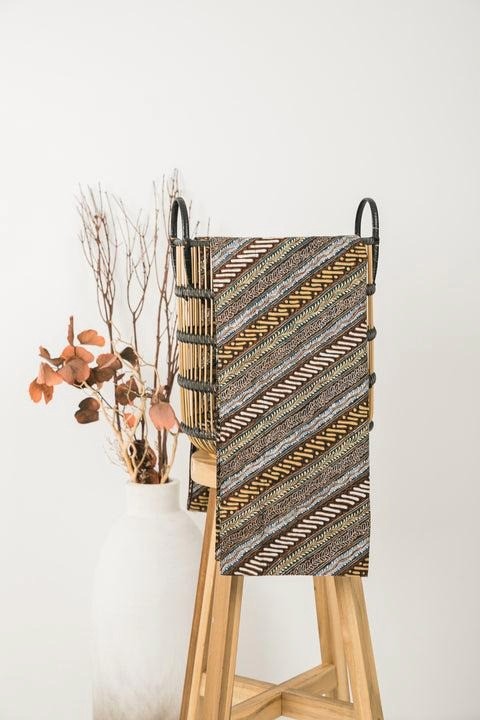
Indonesian batik table runner (Udan Liris motif), naturally dyed — The Batik Library, UK.
Credit: © The Batik Library. Source: thebatiklibrary.com
The Coastal Collection: Two Prints, Two Worlds
The Coastal series distils Patricia Nurchandra's method into accessible, singular objects.
Coastal II presents dark, rich botanical and floral batik motifs in warm pinks, yellows, and earth tones — a composition that rewards close reading, the pattern deepening the longer you look.
Coastal IV opens outward: a vibrant hot pink and magenta ground carries orange and taupe batik-inspired florals in a statement that commands a wall without overwhelming a space.
Both prints are available from $69 USD (A4), made-to-order, with hand-signed authenticity certificates. They have been exhibited at Première Vision Paris, the London Textile Fair, and Pataka Museum + Art in New Zealand.
Why This Matters for Western Interiors
Indonesian Batik is not merely decorative. The UNESCO inscription is explicit: the craft "expresses creativity and spirituality" and is "intertwined with the cultural identity of the Indonesian people." Its wide diversity of motifs reflects centuries of global exchange — Arabic calligraphy, European bouquets, Chinese phoenixes, Japanese cherry blossoms, Indian and Persian peacocks — absorbed and transformed through a distinctly Javanese sensibility.
When Patricia Nurchandra brings that tradition into a Western interior, she is not importing a surface pattern. She is importing a story — and offering the tools to tell it well.
Frequently Asked Questions
What is Indonesian Batik and why is it UNESCO-recognised?
Indonesian Batik is a textile tradition in which hot wax is applied to cotton or silk cloth in precise patterns, then dyed to create complex resist designs. UNESCO inscribed it on the Representative List of Intangible Cultural Heritage of Humanity in 2009, recognising its techniques, symbolism, and deep integration into Indonesian cultural life — from birth rituals to funerary practice. Source: UNESCO ICH — Indonesian Batik
Who is Patricia Nurchandra and where is she based?
Patricia Nurchandra is an Indonesian-born designer based in New Zealand. She holds degrees in International Business Management and Visual Arts & Design, and has worked in graphic design and product management with global brands. She launched her interiors line to address the absence of a dedicated contemporary batik collection for the Western market. Source: Patricia Nurchandra — About
What products does Patricia Nurchandra Designs produce?
The range includes exotic contemporary fabrics, wallcoverings, and giclée art prints. Art prints are produced on 300gsm textured matte heavy-weight fine art paper (50/50 cotton and alpha-cellulose, acid-free, archival), made-to-order, and hand-signed.
What is the price point for her art prints?
The Coastal Collection art prints start at $69 USD (A4 size). Coastal II and Coastal IV are both available at this entry price point. Source: Coastal II | Coastal IV
Where has Patricia Nurchandra's work been exhibited?
Her textile work has been showcased at Première Vision Paris and the London Textile Fair — two of the world's leading trade events for the textiles and interiors industry — and exhibited at Pataka Museum + Art in New Zealand.
How does ARTiSTORY relate to this practice?Patricia Nurchandra demonstrates what is possible when UNESCO-recognised cultural heritage enters the Western interiors market with design rigour and philosophical grounding. ARTiSTORY extends this model — providing cultural IP licensing, UNESCO-anchored metadata, and a full heritage storytelling infrastructure for brands, retailers, and interior design studios seeking authentic cultural partnership.

ARTiSTORY helps brands turn the right cultural source into validated concepts, production-ready design assets and market-ready storytelling.
" height="15.00095079498291px" id="KzAesqen_" width="15.887237074279785px"/></svg>)
" height="40px" id="PdXwlesgs" width="40px"/></svg>)
" height="16.6667px" id="bN179avM0" width="16.66250000000001px"/></svg>)
" height="40px" id="sK1n39Y12" width="40px"/></svg>)
" height="13.333300000000001px" id="e3sm3FX65" width="16.662000000000006px"/></svg>)
" height="40px" id="BlhXMiVl0" width="40px"/></svg>)
" height="16.666358956956856px" id="WrXlTUAw7" width="16.668330260537772px"/></svg>)
" height="40px" id="nKu2x0iOq" width="40px"/></svg>)
Services
© 2026 ARTiSTORY. All rights reserved.
Privacy Policy
Terms of Service
Cookie Policy