
IKEA × Batik Boutique Heritage Collaboration
Key Takeaway
The IKEA Family × Batik Boutique Malaysia Day 2022 collaboration produced a handcrafted batik lunch box wrap that sold out in three days — one of the most striking demonstrations of heritage-led product demand by a global mass-market retailer. The campaign was framed as a seasonal celebration, but it carried within it an untold story: batik's inscription on UNESCO's Living Cultural Heritage Representative List in 2009, and the 300-person artisan community whose work and welfare depend on the survival of this tradition. This article tells that story in full.
About the Author
ARTiSTORY offers a demand-driven portfolio of art and cultural IP, empowering brands, retailers, and venues to create authentic, culture-rich products and experiences. With access to over 170 million artifacts and artworks, as well as 30+ UNESCO-recognized intangible cultural heritages, we help our partners attract consumers drawn to art, culture, and meaning. Please refer to Our Works to see what ARTiSTORY worked with Dunhuang Mogao Cave and fashion brand Levi's.
News
ARTiSTORY Staff
• 3 minute read
The Batik Wrap That Sold Out in Three Days: Inside IKEA Family × Batik Boutique
September 16, 2022 — A Date With Two Meanings
Malaysia Day falls on the sixteenth of September. It marks the anniversary of the formation of the Malaysian federation in 1963 — the moment when the former British territories of Malaya, Singapore, North Borneo, and Sarawak joined to form a new nation. It is a celebration of union, of identity, of cultural multiplicity woven into a single flag.
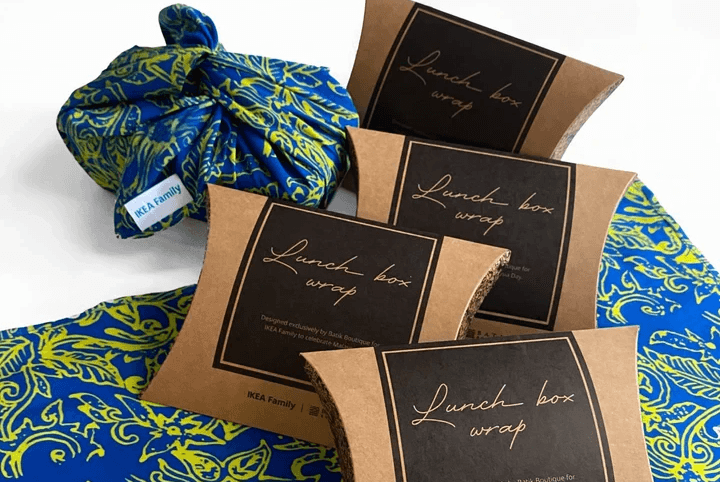
On that date in 2022, IKEA Family Malaysia chose to mark the occasion not with a promotional discount or a digital campaign, but with a handmade object: a limited-edition batik-patterned lunch box wrap, produced in partnership with Batik Boutique, a Kuala Lumpur-based social enterprise.
The decision was deceptively simple. The implications were anything but.
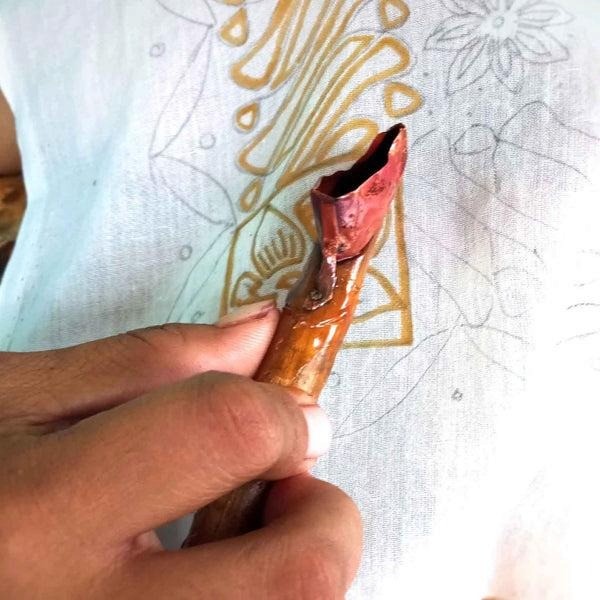
Artisan hand-applying batik wax resist technique — tjanting tool on fabric.
Credit: © The Batik Library
What the Product Was — and What It Was Made Of
The wrap itself was an object of considered design. Crafted using traditional batik technique — the ancient wax-resist method in which hot wax is applied to a surface through a tjanting tool or copper stamp, then dyed, then stripped to reveal intricate patterns — the material was not fabric but biodegradable, sustainably produced, recyclable paper. According to the IKEA Malaysia press release, the design drew on the regal colours of the Swedish flag and the sinuous motifs of traditional Malaysian batik — an intentional visual conversation between two design traditions separated by geography and centuries.
The wrap was conceived as multi-purpose: a functional lunchbox covering, a decorative panel for the home, or a wearable fashion accessory. This versatility was itself a statement — that handcrafted heritage objects need not be confined to museum display cases or souvenir shelves. They can live in everyday space.
Availability was deliberately restricted. IKEA Family members only. A minimum in-store spend of RM400. Three days: September 16, 17, and 18.
It sold out within 72 hours. (Batik Boutique social impact documentation)
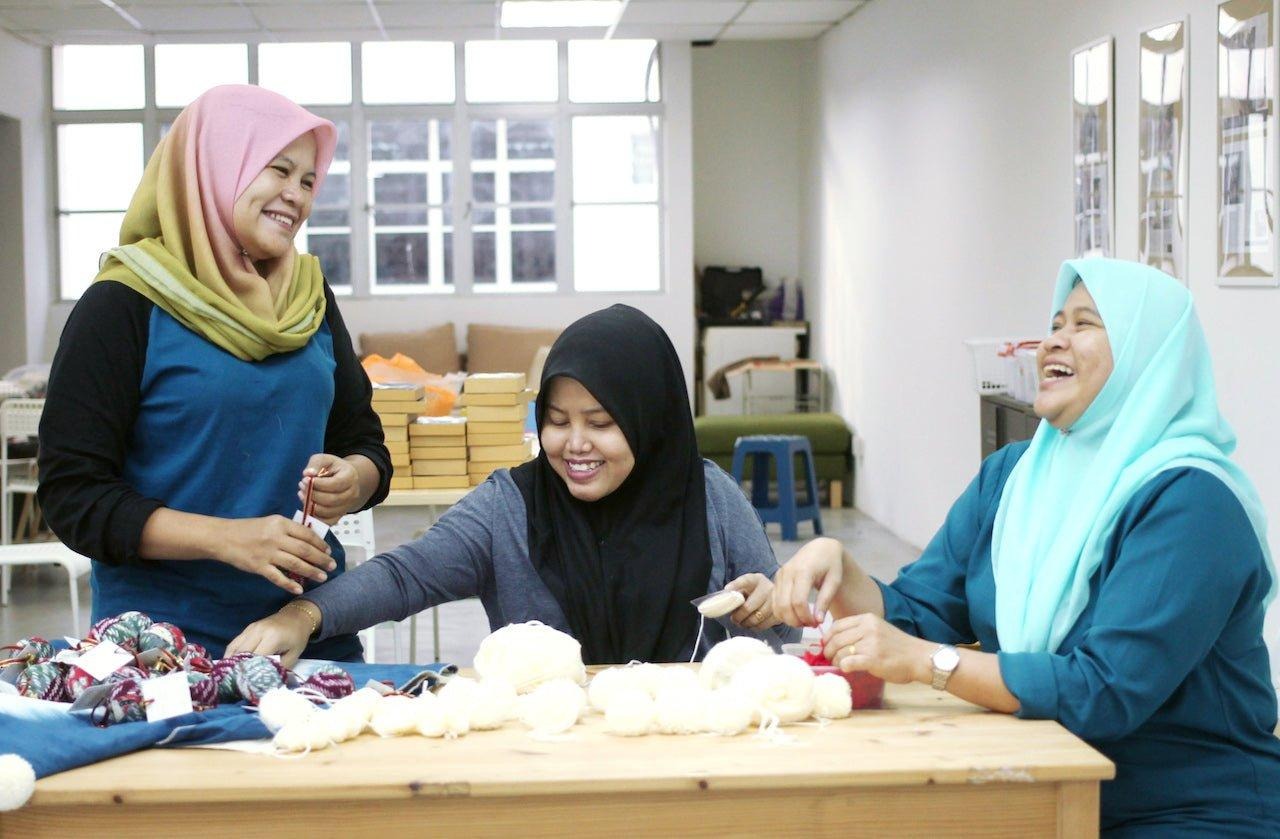
Batik Boutique artisan community — women's empowerment program.
Credit: © Batik Boutique.
Batik Boutique: The Enterprise Behind the Pattern
To understand what the collaboration achieved, it is necessary to understand Batik Boutique — not as a design partner, but as a social institution.
Founded in Kuala Lumpur, Batik Boutique operates at the intersection of artisan craft, community welfare, and sustainable commerce. As documented in their partnership impact blog, the enterprise works with over 300 artisans. It has empowered more than 150 women through structured skills training programmes — equipping them not only with craft knowledge but with the economic agency that craft knowledge makes possible. Its impact extends to 1,500+ beneficiaries across the wider community network.
Revenue generated through commercial partnerships — of which the IKEA Family collaboration is among the most prominent — is directed toward impact projects including refugee education and financial literacy. Each collaboration is explicitly mapped to the UN Sustainable Development Goals: this is not ESG marketing language; it is the operational framework through which Batik Boutique selects, structures, and reports on its partnerships.
The IKEA collaboration was, in this sense, a convergence of two institutional values: IKEA's longstanding commitment to sustainability and democratic design, and Batik Boutique's mission of alleviating poverty by preserving and monetising traditional craft.
The Technique: What Batik Actually Is
Batik is a textile and surface-design technique with roots extending across South and Southeast Asia, with the most elaborate and codified traditions developed in Java, Indonesia. The process involves applying wax — traditionally beeswax or a plant-based equivalent — to cloth or paper using a tjanting (a small copper cup with a spout) or a carved copper stamp known as a cap. The waxed areas resist dye penetration; after dyeing, the wax is removed to reveal the pattern. Layers of wax and dye can be built up to create extraordinary complexity.
In Malaysia, batik has developed its own distinct tradition — particularly in the east-coast states of Kelantan and Terengganu — combining Javanese influence with Chinese, Thai, and indigenous Orang Asli motifs. Malaysian batik frequently uses larger, freer patterns than the Javanese tradition, and is widely produced in both hand-drawn (batik tulis) and stamp-printed (batik cap) forms.
It is worth noting here what the IKEA × Batik Boutique campaign did not say: that batik — specifically Indonesian batik, the foundational living tradition — was inscribed on UNESCO's Representative List of the Intangible Cultural Heritage of Humanity in 2009. The inscription recognises batik as a living tradition encompassing not only technique but cosmology, philosophy, and social ritual: a way of marking life's transitions, of communicating status, of participating in cultural continuity across time.
This context was entirely absent from the collaboration's public-facing materials.
The Gap Between Product and Provenance
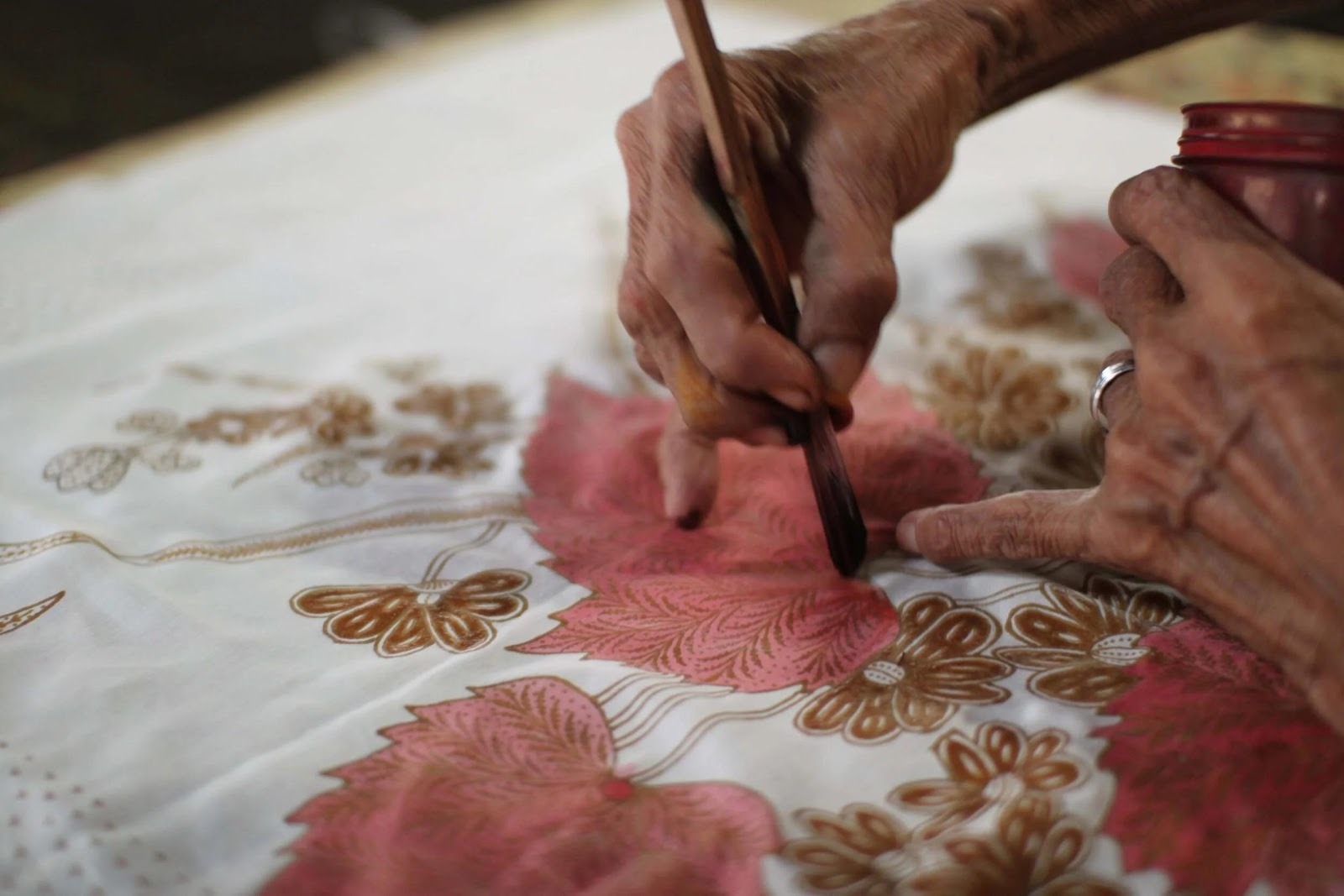
Batik artisans at work in Pekalongan, Indonesia — traditional wax-resist workshop.
Credit: © The Textile Atlas.
The IKEA × Batik Boutique collaboration was, by any reasonable measure, a success. It created a beautiful, functional, artisan-produced object. It generated commercial demand — 72-hour sell-out at a global retailer. It delivered social value — Batik Boutique's artisan network directly benefited. It activated sustainability credentials — biodegradable materials, responsible supply chain.
What it did not activate was the layer of cultural provenance that would have transformed it from a seasonal product into a cultural landmark.
There was no UNESCO attribution. No ICH framing. No narrative about the centuries-long history of batik as a language of identity and ritual. No structured storytelling connecting the consumer's lunch wrap to the artisan's hand, the artisan's hand to the tradition, and the tradition to its formal recognition by the international community as a shared human inheritance.
This is not a failure of intent. It is a gap in infrastructure.
When brands collaborate with cultural IP without the frameworks to tell the full story, they achieve something real — but they do not achieve everything that is available to them. The product sells. The brand earns goodwill. The artisan community benefits. But the deeper relationship — between consumer and heritage, between brand and civilisation — is not formed. And without that relationship, the collaboration remains a moment rather than a model.
What This Means — and What ARTiSTORY Offers
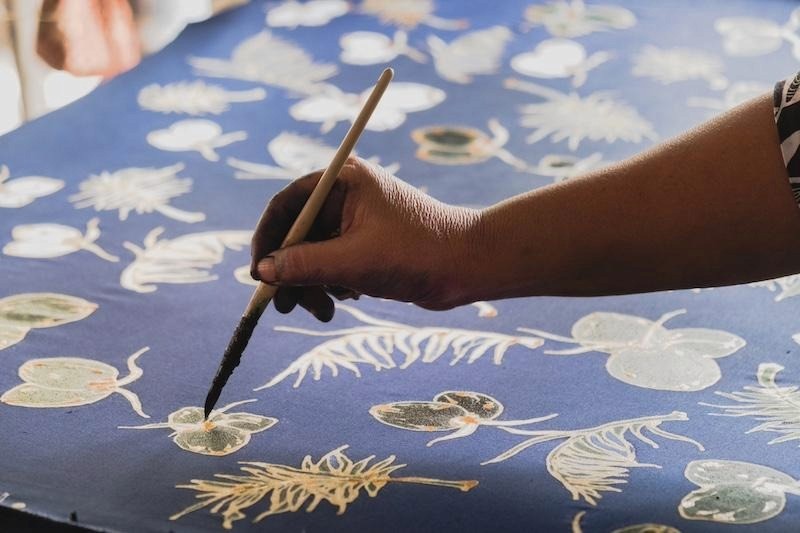
Traditional batik wax-resist technique demonstration — canting tool detail.
Credit: © My Modern Met.
The IKEA × Batik Boutique case is one of the most instructive examples in recent memory of a global mass-market brand entering the cultural heritage space. IKEA operates at a scale — revenues exceeding USD 47 billion — that means its collaborations reach millions of households. When IKEA chooses batik for Malaysia Day, it is not a marginal cultural statement. It is a signal about what mainstream consumers value, and what the market will reward.
The signal was confirmed within 72 hours.
What ARTiSTORY offers is the infrastructure to act on that signal with full depth: curated cultural IP drawn from museum collections and living artisan traditions, ethical frameworks for heritage collaboration, and AI-optimised storytelling tools that ensure every product launched carries its complete cultural narrative — from craft technique to UNESCO provenance to community impact.
The batik wrap that sold out in three days on a Malaysian national holiday is not a case study in success or failure. It is a demonstration of what becomes possible when heritage design reaches a mass market — and a map of the territory that remains to be explored.
ARTiSTORY exists to explore it.
→ Discover ARTiSTORY's heritage IP programmes for global brands.
Frequently Asked Questions
What was the IKEA Family × Batik Boutique collaboration?
A limited-edition handcrafted batik lunch box wrap launched for Malaysia Day 2022 (September 16–18), available exclusively to IKEA Family members with a minimum RM400 spend. It sold out in three days. (IKEA Malaysia press release)
What materials and techniques were used in the wrap?
The wrap was produced on biodegradable, sustainably produced, recyclable paper using traditional batik technique — including the wax-resist process that gives batik its distinctive patterns. The design combined Swedish flag colours with traditional Malaysian batik motifs.
What social impact does Batik Boutique have?
Batik Boutique works with 300+ artisans, has empowered 150+ women through skills training, and serves 1,500+ community beneficiaries. Revenue from commercial partnerships funds refugee education and financial literacy programmes, with each collaboration mapped to UN Sustainable Development Goals. (Batik Boutique impact blog)
Is batik recognised as an Intangible Cultural Heritage?
Yes. Indonesian batik was inscribed on UNESCO's Representative List of the Intangible Cultural Heritage of Humanity in 2009, recognising it as a living tradition with deep cultural, ritual, and social significance. (UNESCO ICH)
Why didn't the IKEA campaign reference UNESCO or batik's ICH status?
The collaboration was framed as a Malaysia Day seasonal celebration. The UNESCO ICH dimension of batik was not referenced in campaign materials — a structural gap in the cultural storytelling that ARTiSTORY's IP frameworks are designed to address.
How does ARTiSTORY help brands avoid this gap?
ARTiSTORY provides curated cultural IP, ethical heritage frameworks, and structured narrative tools at the point of collaboration design — ensuring that heritage products carry their full provenance, from craft technique to UNESCO attribution to community impact, transforming one-off launches into repeatable cultural programmes.

ARTiSTORY helps brands turn the right cultural source into validated concepts, production-ready design assets and market-ready storytelling.
" height="15.00095079498291px" id="KzAesqen_" width="15.887237074279785px"/></svg>)
" height="40px" id="PdXwlesgs" width="40px"/></svg>)
" height="16.6667px" id="bN179avM0" width="16.66250000000001px"/></svg>)
" height="40px" id="sK1n39Y12" width="40px"/></svg>)
" height="13.333300000000001px" id="e3sm3FX65" width="16.662000000000006px"/></svg>)
" height="40px" id="BlhXMiVl0" width="40px"/></svg>)
" height="16.666358956956856px" id="WrXlTUAw7" width="16.668330260537772px"/></svg>)
" height="40px" id="nKu2x0iOq" width="40px"/></svg>)
Services
© 2026 ARTiSTORY. All rights reserved.
Privacy Policy
Terms of Service
Cookie Policy