
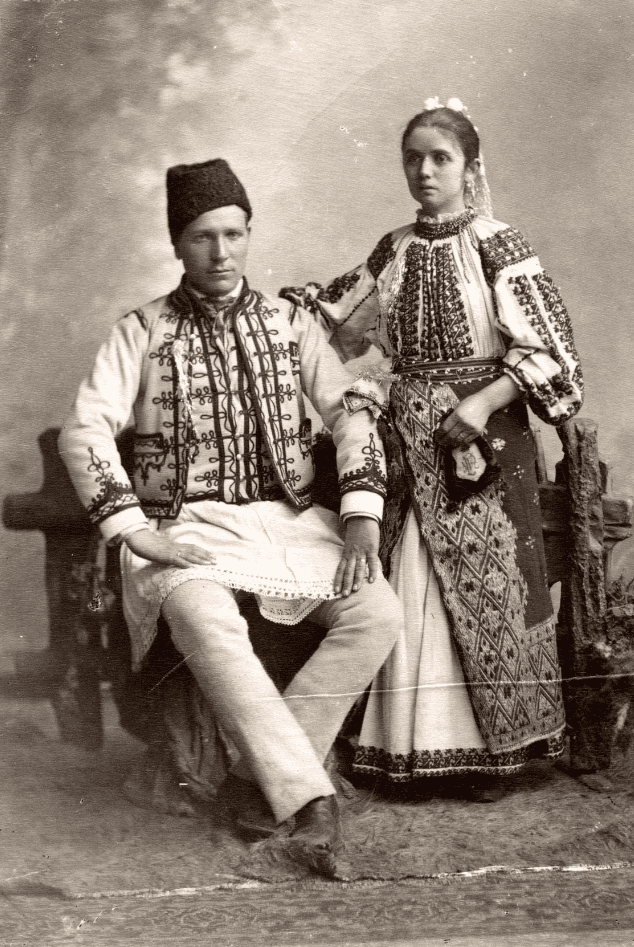
Romanian newlyweds from Vâcea or Oltenia. Photo from Les 32 Mariages Roumains, 1893. Collection of Maryhill Museum.
Licensing: Protecting Living Cultural Heritage
Key Takeaway
Licensing bridges the gap between UNESCO recognition and enforceable legal protection for Living Cultural Heritage. By utilizing contractual controls, trademark layers, and authenticated design archives, ARTiSTORY transforms vulnerable living traditions into protectable commercial assets, ensuring communities secure the attribution and financial returns they deserve while preventing cultural appropriation.
About the Author
Yizan He – Founder and CEO of ARTiSTORY, Founder and Board Member of ALFILO BRANDS
With over two decades of expertise, Yizan He stands as a seasoned executive in the realm of art and cultural IP licensing, known for crafting comprehensive licensing programs for world-class museums and cultural organizations.
In 2021, Yizan established ARTiSTORY in Singapore, focusing on leading the global art and cultural IP licensing sector. Under his leadership, ARTiSTORY collaborates with dynamic Direct-to-Consumer (DTC) brands and retailers to develop art-inspired merchandise, with esteemed clients including TOMs, Cariuma, Ruggables, and the Singapore Fairmont Hotel.
Over the past decade, Yizan has been instrumental in securing master license rights for top-tier museums and cultural organizations globally, including the National Gallery (UK), the British Library, Cambridge University, the Museum of Fine Arts Boston, Centre Pompidou (France), the National Palace Museum (Taiwan), Thyssen-Bornemisza National Museum (Spain), Frida Kahlo Foundation (Spain), Benaki Museum (Greece), and UNESCO site Dunhuang (China).
Before ARTiSTORY, Yizan founded and led Alfilo Brands, where he spearheaded initiatives to develop extensive licensing and retail programs with the British Museum, the MET, Museum of Fine Arts Boston, Victoria & Albert Museum, and BBC Earth. His leadership resulted in award-winning licensing programs across over 20 product categories, enhancing the presence of these institutions in Greater China's online, retail, and immersive spaces.
Yizan's expertise in IP strategy earned him recognition as one of the top 250 IP Strategists by Intellectual Asset Management Magazine in 2011, and he has served on the judging panel of the Premier Asian Licensing Award under the aegis of the Hong Kong government.
Insight
Yizan He, Founder and CEO of ARTiSTORY
• 5 minute read
How Licensing Can Elevate Legal Protection to Intangible Cultural Heritage?
A practical guide to how licensing creates real-world protection for living cultural traditions
Overview
ARTiSTORY is an art and museum licensing company that bridges the gap between world-class cultural institutions and consumer brands — turning art, museum collections, and intangible cultural heritage (ICH) into commercially successful, responsibly authorized products. This article explores how licensing frameworks like the ones ARTiSTORY builds can serve as practical protection tools for ICH communities around the world.
Licensing cannot fully solve all misuse of intangible cultural heritage (ICH), but it can create a practical commercial protection system around authenticity, attribution, access, and enforcement, in plain terms: establishing who made it and deserves credit, how to acknowledge the living traditions, and what consequences follow if someone violates the rules. For many ICH practitioners, the key value is not only stopping copying after the fact, but structuring the market so that brands, retailers, and consumers can distinguish authorized heritage-based products from imitations.
Why ICH Is Hard to Protect?
Traditional cultural expressions often fall outside standard intellectual property categories because motifs, techniques, and forms may be old, communal, and transmitted across generations rather than newly created by one identifiable author. That makes it difficult to rely only on classic copyright, design patent, or trademark claims when factories or fashion brands adapt heritage motifs without permission.
Think of Indonesian Batik — a UNESCO-recognized textile tradition passed down through generations of artisans over 2000 years, now widely copied by fast-fashion brands. Or Chinese paper-cutting (jianzhi), an intricate folk art form at risk of being mass-reproduced without acknowledgment of its cultural origins. Or Kente cloth from Ghana, a vibrant handwoven fabric with deep royal and ceremonial significance among the Asante and Ewe peoples, frequently imitated and sold globally without any connection to its source communities. In each of these cases, conventional IP law offers limited help — and that is exactly where licensing frameworks become essential.
UNESCO’s ICH framework is designed primarily for safeguarding and transmission, not for granting private exclusive IP rights. This means communities often need commercial and contractual tools alongside cultural-recognition frameworks if they want to control market use, ensure proper credit, and secure financial return Simply put: UNESCO recognizes cultural heritage as important, but it doesn’t give communities legal ownership over their traditions. That’s where licensing comes in — it fills that gap with practical business tools..
What Licensing Actually Protects?
A licensing framework does not magically make all traditional motifs legally exclusive everywhere. Instead, it protects a bundle of commercial assets surrounding the heritage expression. For example, an ICH bearer co-branding with a well-known brand can strengthen common law trademark rights for an unregistered ICH name, especially in the US where rights arise from "first use" rather than registration. Other examples include documented provenance, curated design selections, derivative works, brand story materials, trade dress, certification language, supply-chain rules, image assets, and contractual permissions for who may use what, where, and how.
This is powerful because many commercial disputes are won or prevented not by owning the entire culture, but by controlling the authorized package in which the culture is presented to the market. In practice, that can give ARTiSTORY and its partners leverage over retailers, collaborators, manufacturers, marketplaces, and licensees even when pure copyright protection is incomplete.
Legal Protection Mechanisms
a) Contractual Control
Licensing agreements create enforceable contractual obligations on brand partners, manufacturers, distributors, and retailers. These contracts can specify approved motifs, approved source communities, quality standards, territories, term, attribution language, audit rights, sublicensing limits, and penalties for unauthorized use.
This matters because contract claims are often clearer and more practical than trying to argue abstract cultural ownership in court. If a brand signs for access to authenticated Romanian blouse motifs and later exceeds the agreed scope, that breach can trigger termination, damages, clawbacks, injunctive relief, and retailer takedown demands.
b) Authentication and Chain of Title
Licensing works best when each design, motif, embroidery grammar, or artisan-made reference piece is documented in a structured archive with provenance and source validation. That archive helps establish who the cultural bearers are, what region or practice the expression comes from, and what commercial uses have been approved.
This documentation strengthens legal positioning in several ways: it supports originality arguments for curated derivative works, proves misrepresentation by unauthorized sellers, and gives marketplaces and retail buyers evidence for takedown requests or compliance review. For ARTiSTORY, this is especially important because a verified cultural-IP library and style guide can become the backbone of both licensing and enforcement. It’s like creating a verified passport for each design asset — proving where it comes from, who owns it, and how it has been authorized for commercial use. This paper trail is what makes it possible to challenge copycats and hold partners accountable.
c) Trademark and Certification Layers
One of the strongest tools for ICH is often trademark law rather than copyright alone. A licensing framework can support house marks, co-branded marks, certification marks, collective marks, or authenticity seals that identify products as authorized, community-approved, or made according to defined heritage standards.
If consumers learn to look for an ARTiSTORY authenticity mark or a specific Romanian artisan certification statement, then copycats may be challenged for false designation, misleading origin claims, unfair competition, or consumer confusion even if the underlying motif itself is hard to monopolize. This is one of the most commercially realistic protection routes for ICH-linked fashion and design.
d) Trade Dress and Product Presentation
Even where a motif is traditional, the total presentation of an authorized collection may be protectable through trade dress, labeling, packaging, visual identity, product storytelling, and merchandising format. Licensing can standardize these elements so that authorized products have a distinctive market appearance that imitators cannot easily mimic without legal risk.
For example, a heritage capsule could require specific hangtags, artisan biographies, region-of-origin language, provenance cards, and numbered editions. Those elements help consumers recognize authenticity and give enforcement teams additional grounds to act against deceptive lookalikes.
e) Control of Derivative Works or Design Assets
Licensing can distinguish between the underlying traditional expression and newly created derivative assets such as artifact libraries, style guides with adapted pattern layouts, digitized artwork files, curated colorways, campaign photography, editorial text, educational content, and co-branded product designs. Those new assets are much more likely to qualify for conventional IP protection.
This means ARTiSTORY can help turn vulnerable heritage inspiration into protectable commercial outputs without erasing community origin. In effect, the framework can say: the heritage source remains acknowledged and respected, but access to these specific authorized adaptations is legally controlled.
f) Product Approval and Supply-Chain Oversight
A strong licensing framework should include design and sample approvals, factory disclosure obligations, recordkeeping duties, and the ability to audit sourcing and production. These controls are crucial where copying risk comes from overseas factories or intermediaries substituting cheaper methods and materials.
For ICH, this is not just a quality issue; it is a legal and ethical one because the heritage value often lies in the method, community connection, and embodied know-how. Approval clauses help ensure that a product marketed as authentic is genuinely tied to approved practitioners or standards.
Limits and Realism
Licensing is not a total monopoly over ICH. It works best as a layered strategy combined with trademark, unfair competition, provenance documentation, strong contracts, public storytelling, and selective enforcement against the most commercially harmful infringers.
The real strategic goal is to make authentic access easier, more prestigious, and more defensible than unauthorized copying. For ICH businesses, that is often the most realistic path to both safeguarding and monetization. Licensing won’t stop every bad actor, but it gives communities and their partners a structured, enforceable way to push back — commercially, legally, and in the court of public opinion.
Side Story:
What happens when a global fashion brand skips this process entirely — borrowing a century-old heritage design without permission, attribution, or any connection to the community behind it? The following real-world case offers a sobering answer.
The Tory Burch Controversy (2017)
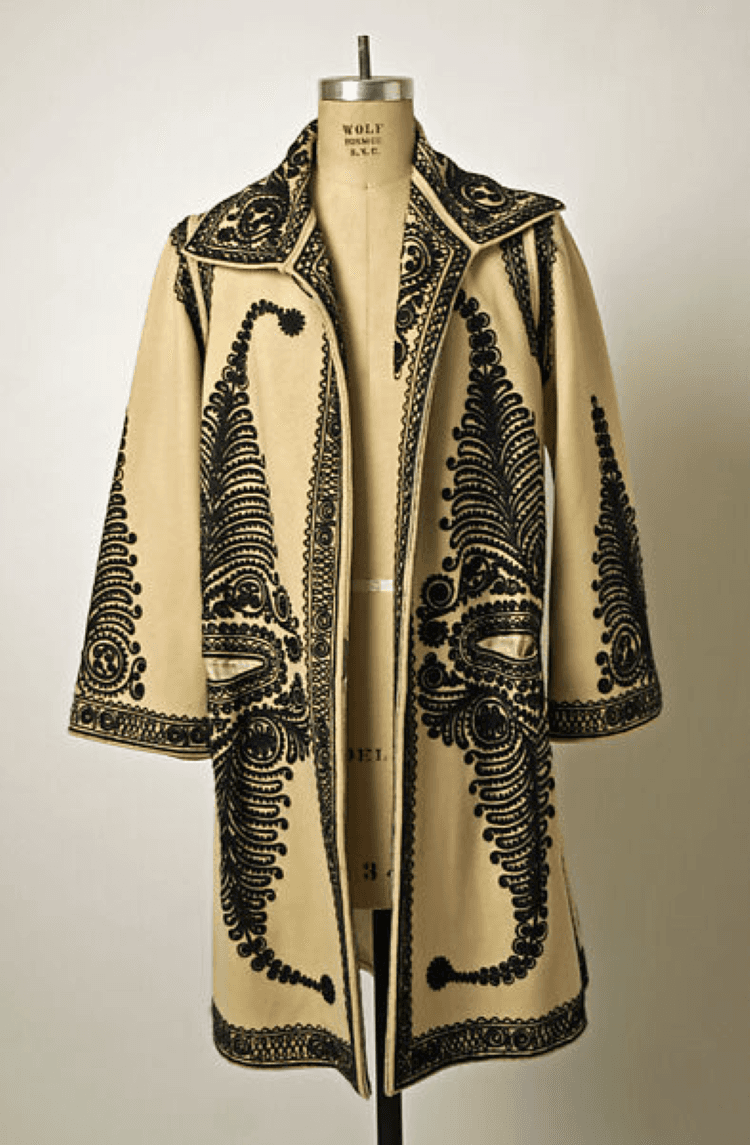
Title: Coat
Date: early 20th century
Culture: Romanian
Credit Line: Gift of Christine Valmy, 1981
Object Number: 1981.312.1
From: the MET Museum
In June 2017, the La Blouse Roumaine Facebook community discovered that Tory Burch's Resort 2018 collection featured a coat nearly identical to a Romanian wool coat from the early 1900s on display at the MET Museum. The traditional garment, called a "suman," features intricate black embroidery and was historically worn by Romanian royalty including Queen Marie. https://ambogdan.com/suman-romania-queen-marie/
Cultural Appropriation Without Credit
Tory Burch initially promoted the collection as inspired by Africa and Uganda (referencing Princess Elizabeth of Toro), completely omitting the Romanian source. La Blouse Roumaine posted side-by-side comparisons showing the designs were identical, not merely inspired, and accused Burch of cultural appropriation.
Forced Acknowledgment
After public backlash, Tory Burch revised the description to acknowledge: "In our effort to summarize the collection, we missed a reference to a beautiful Romanian coat which inspired one of the pieces". However, critics noted this was only an admission of "inspiration," not an acknowledgment of direct copying

ARTiSTORY helps brands turn the right cultural source into validated concepts, production-ready design assets and market-ready storytelling.
" height="15.00095079498291px" id="KzAesqen_" width="15.887237074279785px"/></svg>)
" height="40px" id="PdXwlesgs" width="40px"/></svg>)
" height="16.6667px" id="bN179avM0" width="16.66250000000001px"/></svg>)
" height="40px" id="sK1n39Y12" width="40px"/></svg>)
" height="13.333300000000001px" id="e3sm3FX65" width="16.662000000000006px"/></svg>)
" height="40px" id="BlhXMiVl0" width="40px"/></svg>)
" height="16.666358956956856px" id="WrXlTUAw7" width="16.668330260537772px"/></svg>)
" height="40px" id="nKu2x0iOq" width="40px"/></svg>)
Services
© 2026 ARTiSTORY. All rights reserved.
Privacy Policy
Terms of Service
Cookie Policy