
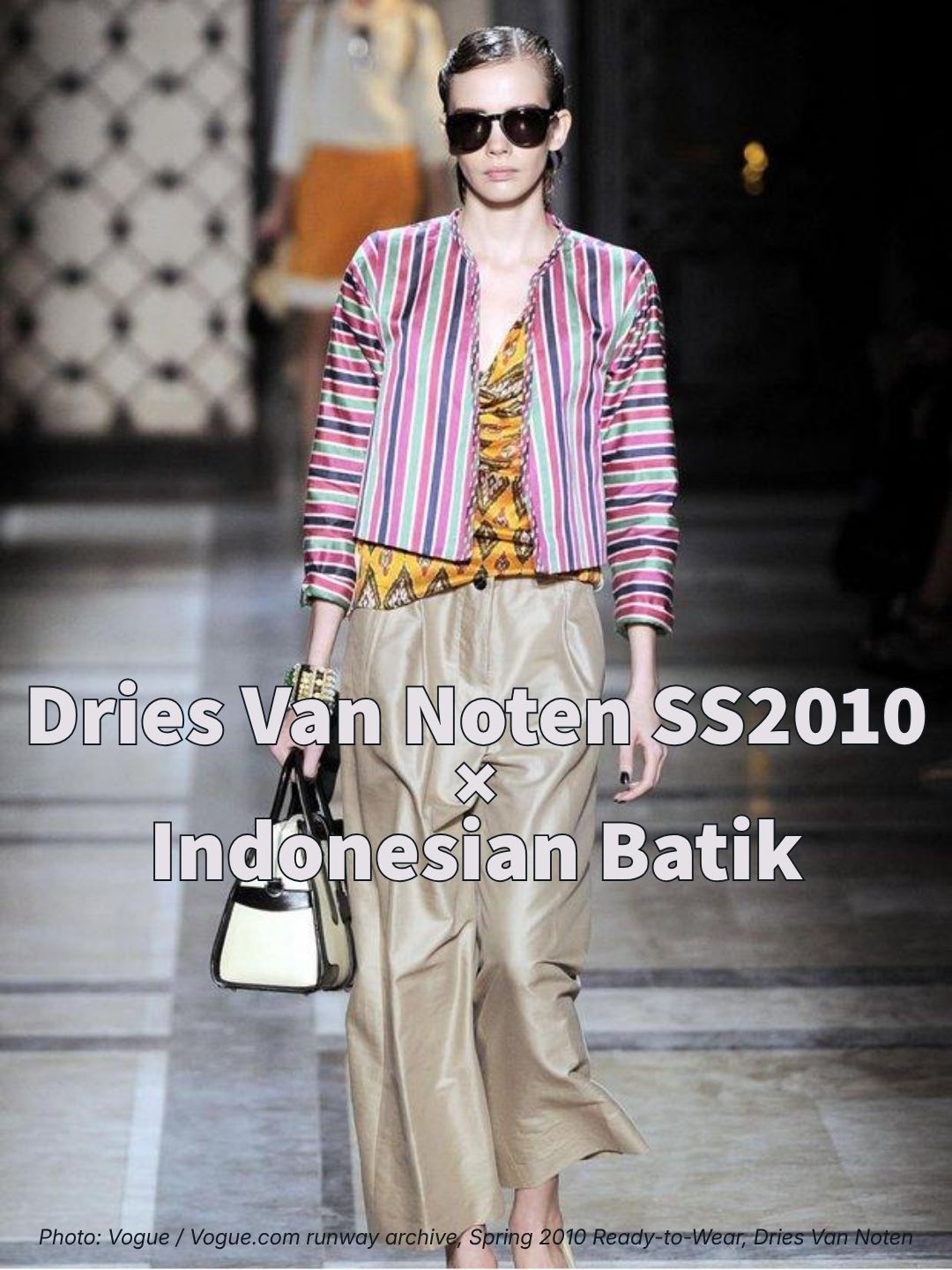
Dries Van Noten's Batik Collection, Indonesian ICH
Key Takeaway
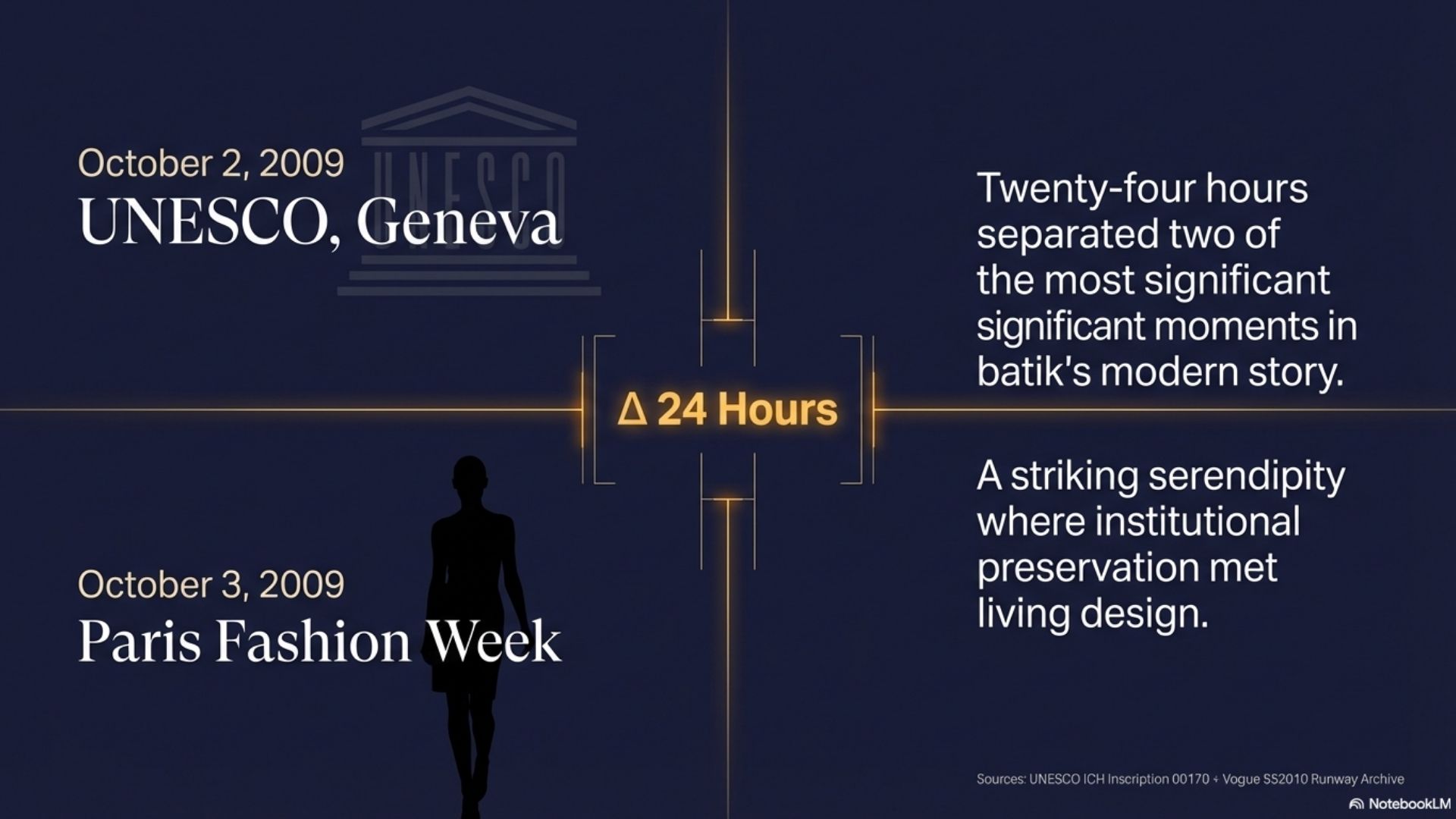
On October 2, 2009, UNESCO formally inscribed Indonesian batik as Intangible Cultural Heritage of Humanity in Abu Dhabi. The following morning, Dries Van Noten opened his Spring/Summer 2010 show inside an old Paris bank, sending down a runway of batik blazers, sarong skirts, and wrapped dresses that drew on centuries of Indonesian textile tradition. These two events — separated by a single day and thousands of miles — together make one of fashion's most quietly profound arguments: that cultural heritage is not a relic to be archived but a living language that speaks, with equal force, in a UNESCO committee room and on the world's most watched catwalks. It is the kind of argument that ARTiSTORY is built to carry forward.
About the Author
ARTiSTORY offers a demand-driven portfolio of art and cultural IP, empowering brands, retailers, and venues to create authentic, culture-rich products and experiences. With access to over 170 million artifacts and artworks, as well as 30+ UNESCO-recognized intangible cultural heritages, we help our partners attract consumers drawn to art, culture, and meaning. Please refer to Our Works to see what ARTiSTORY worked with Dunhuang Mogao Cave and fashion brand Levi's.
News
ARTiSTORY Staff
• 6 minute read
Twenty-Four Hours: Dries Van Noten's Batik Collection, Indonesian Intangible Cultural Heritage, and What Fashion Can Learn
The Old Bank, Paris — October 3, 2009
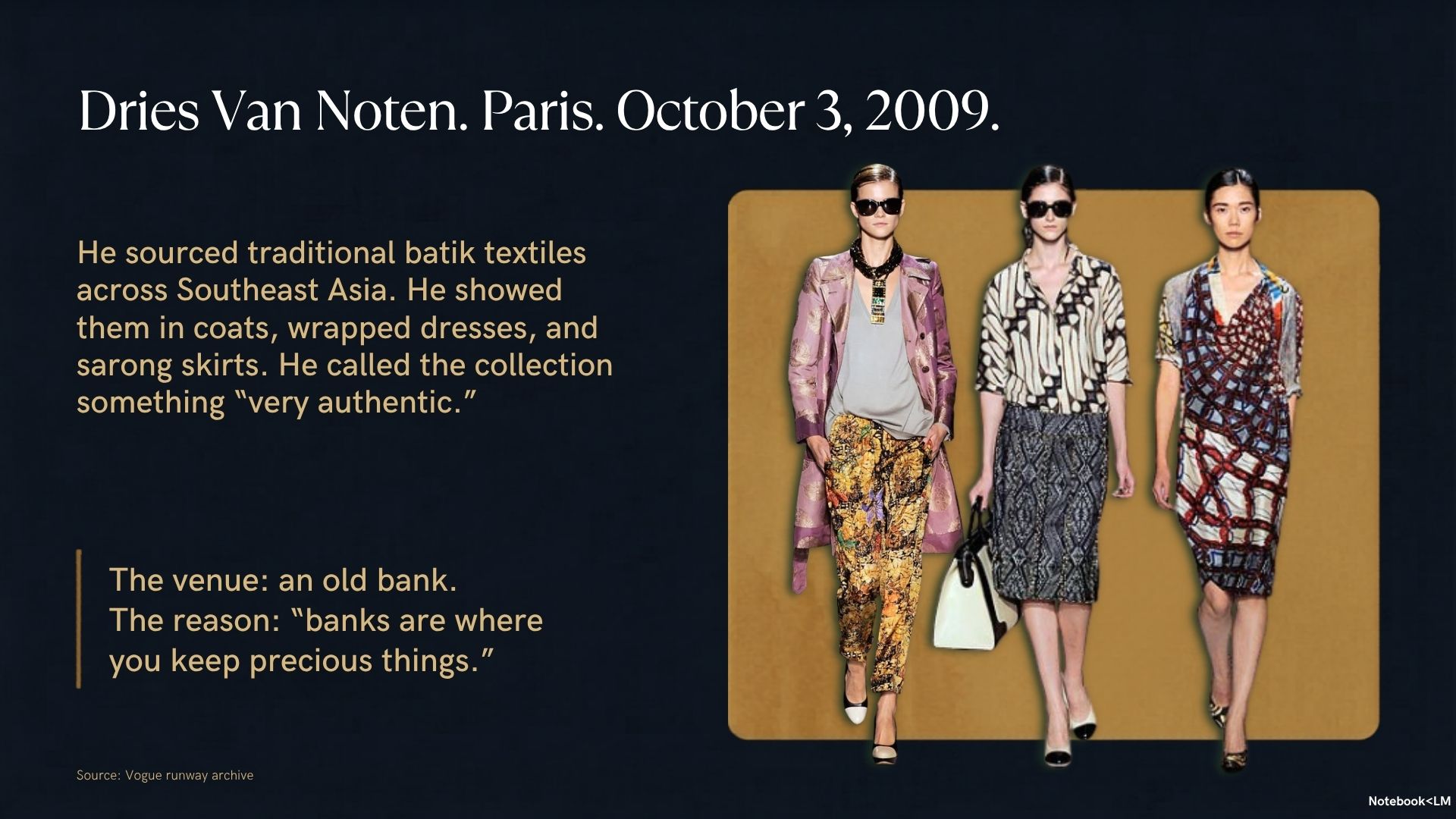
When Dries Van Noten chooses a venue, the choice is never incidental. For his Spring/Summer 2010 ready-to-wear collection, he selected an old bank in Paris. He was precise about why. Banks, he reasoned, are multinational businesses — and this was a multinational collection, weaving together Paris, Tokyo, and Kolkata. Banks are also where you keep precious things. He wanted the audience to understand that what they were about to see was precious in exactly that way.
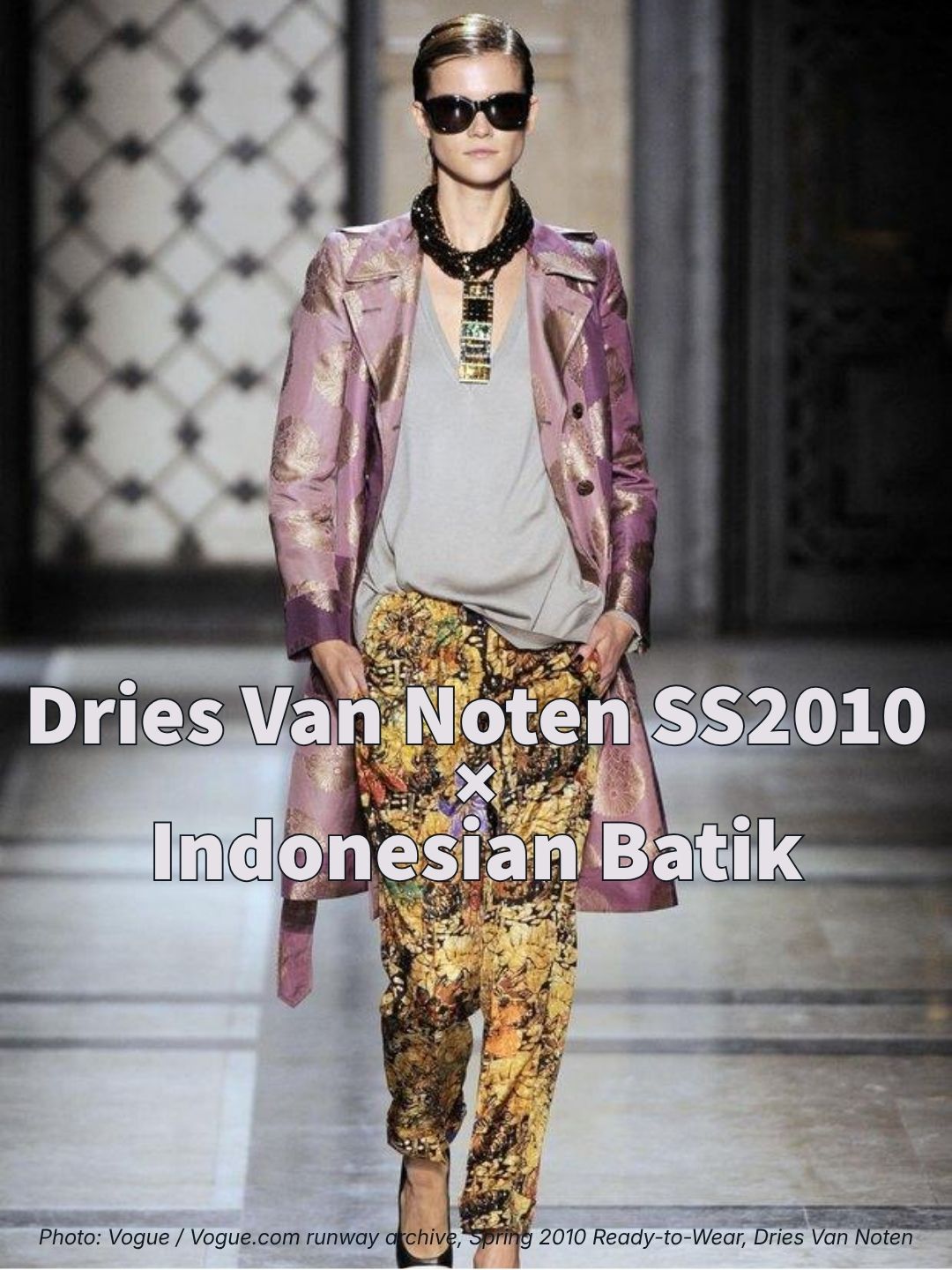
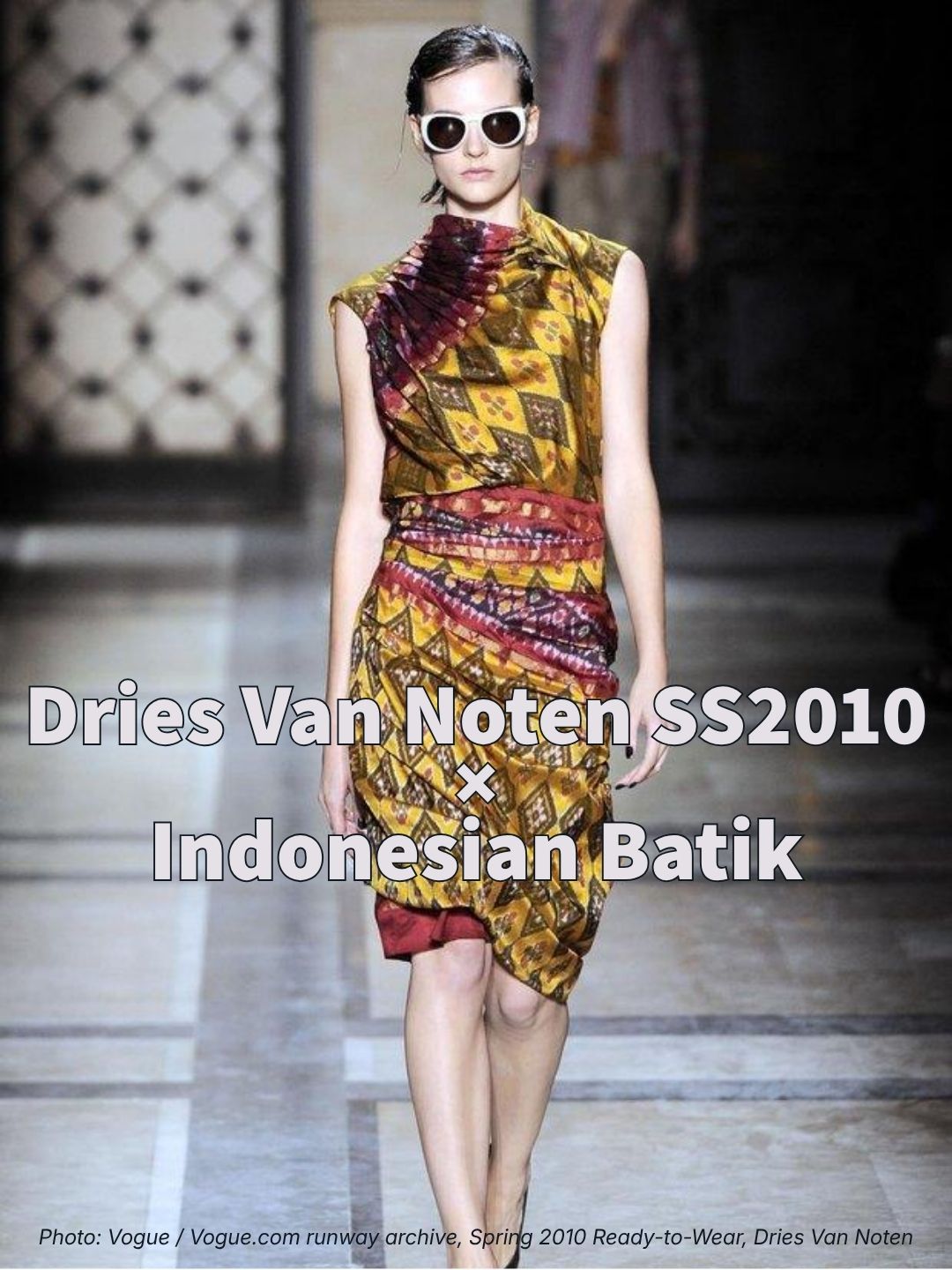
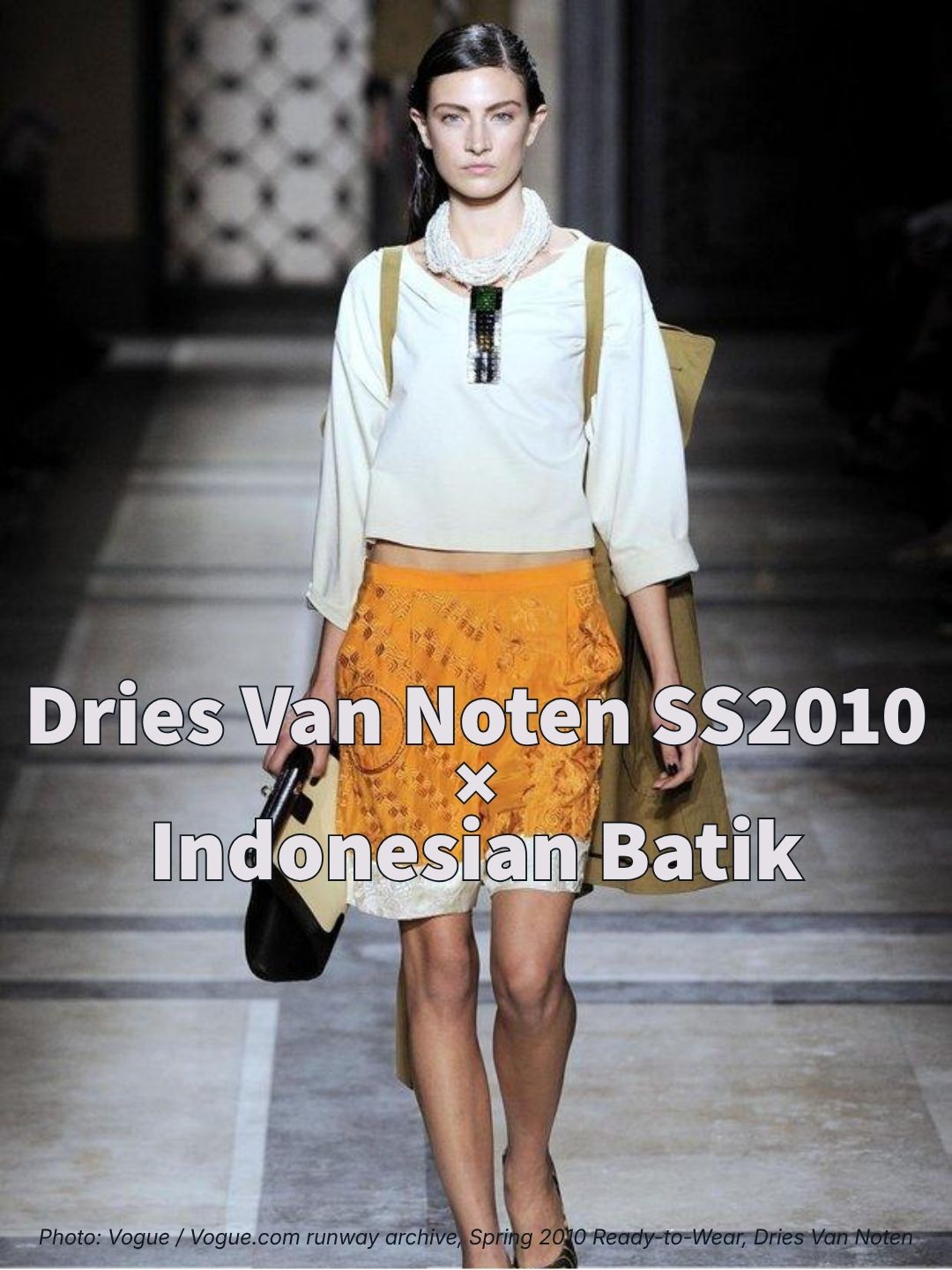
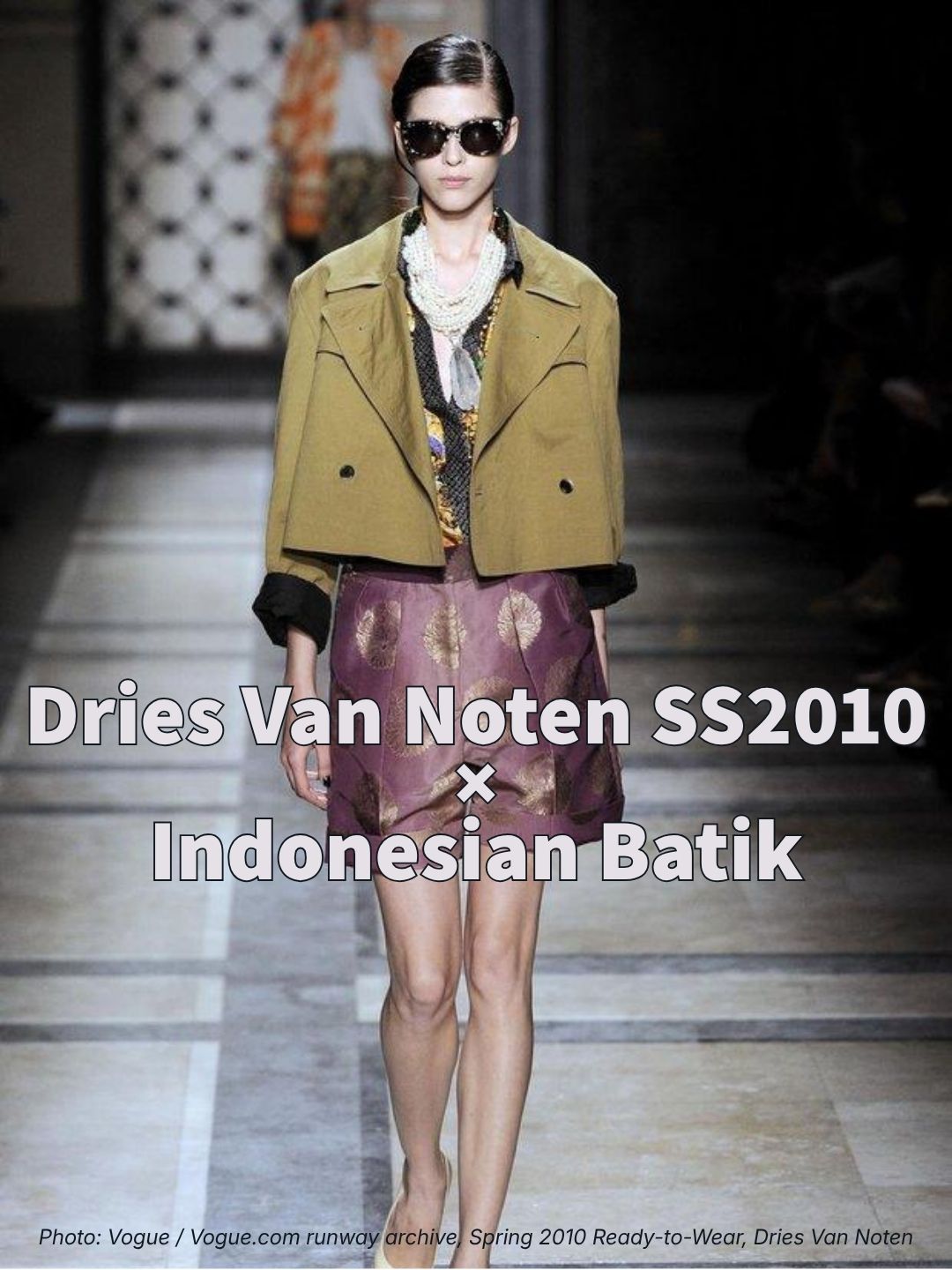
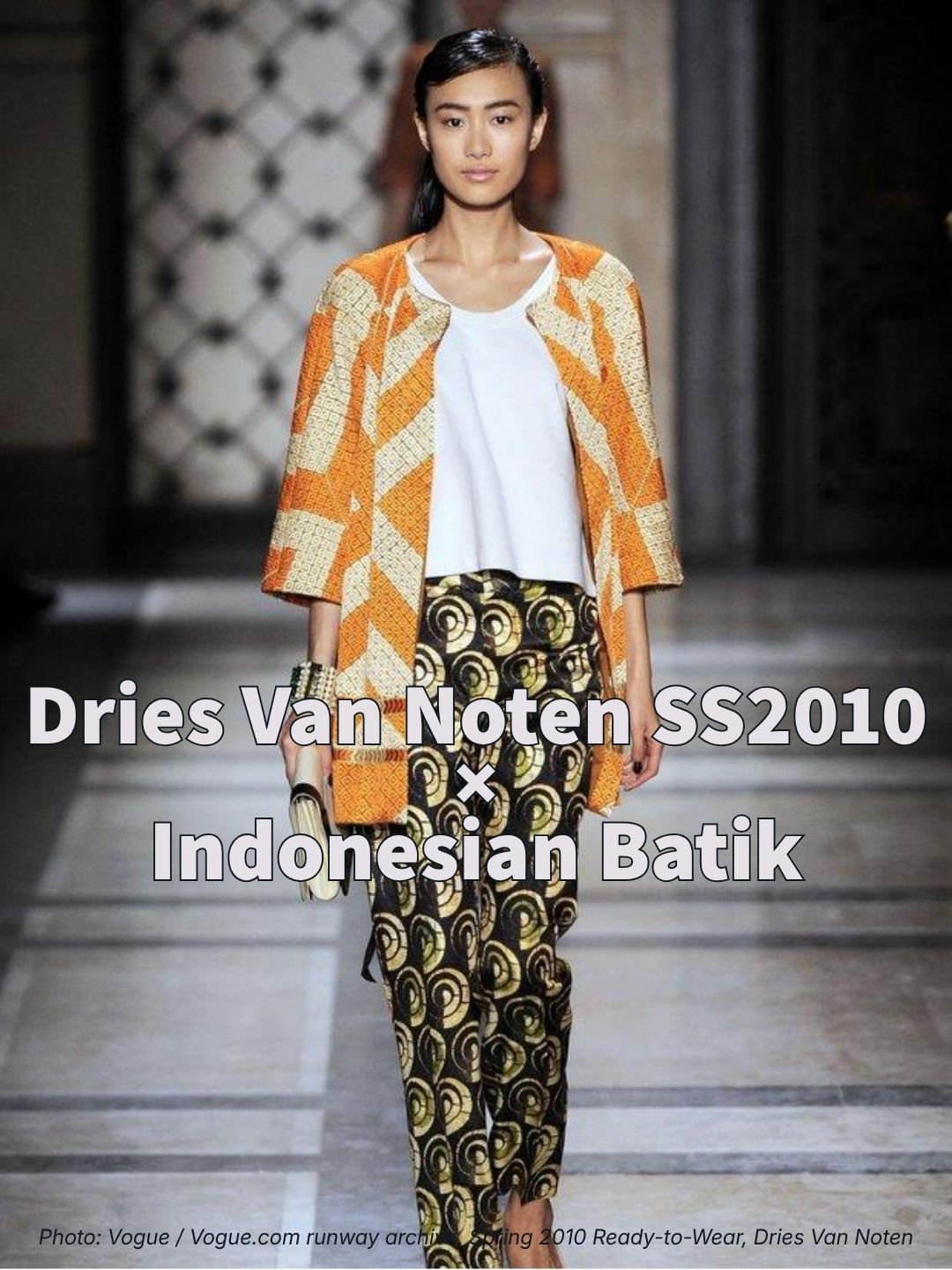
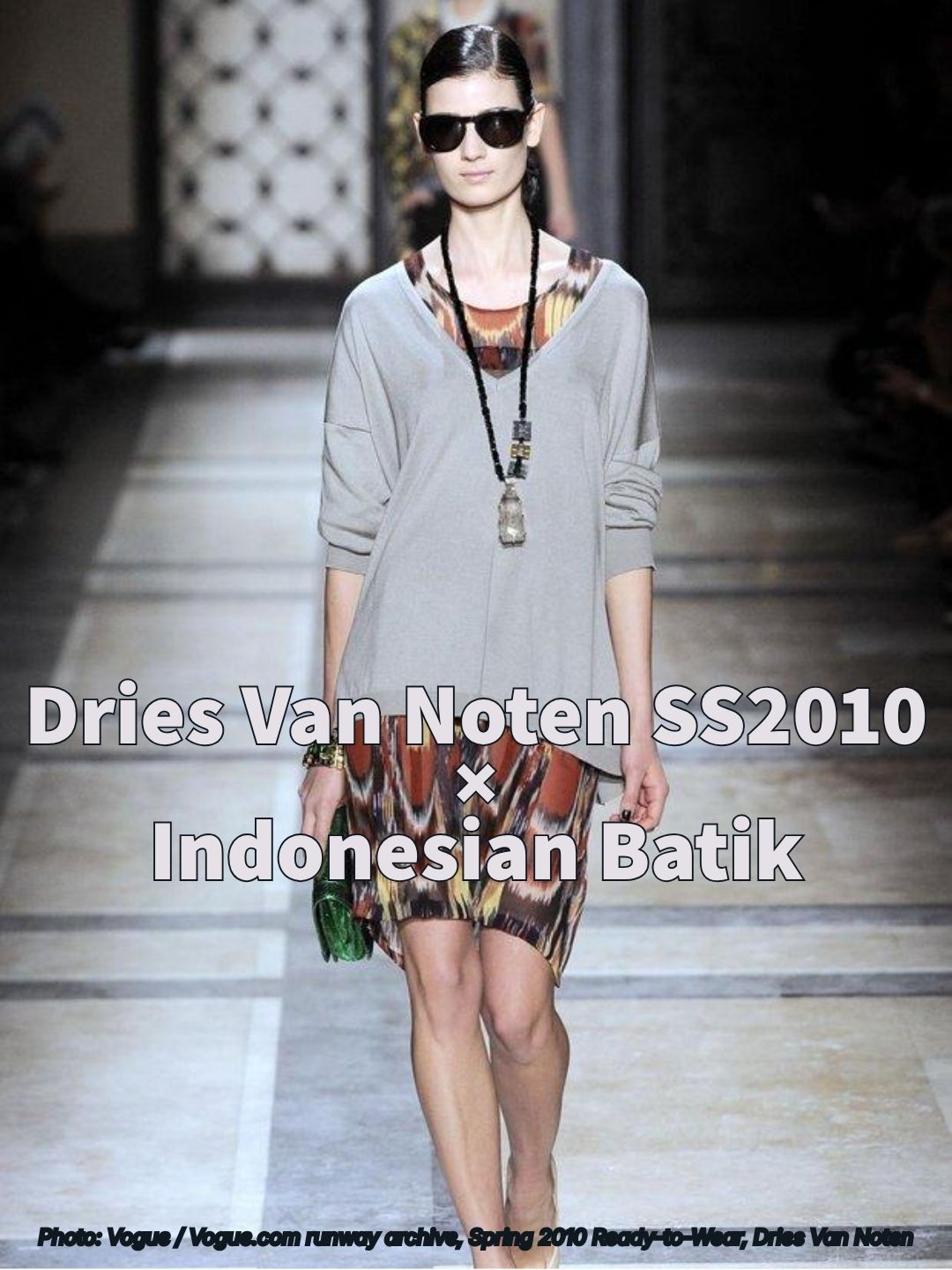
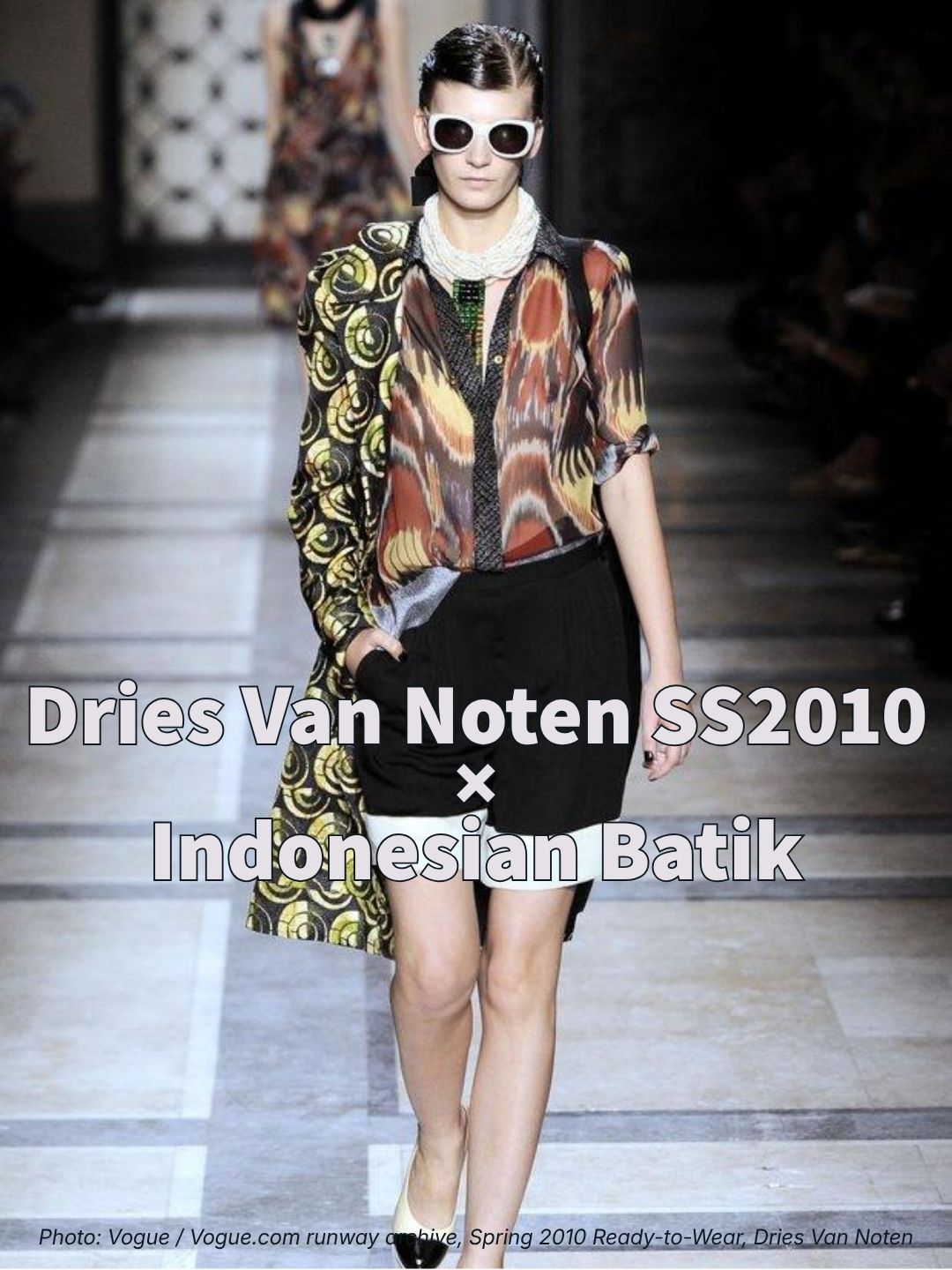
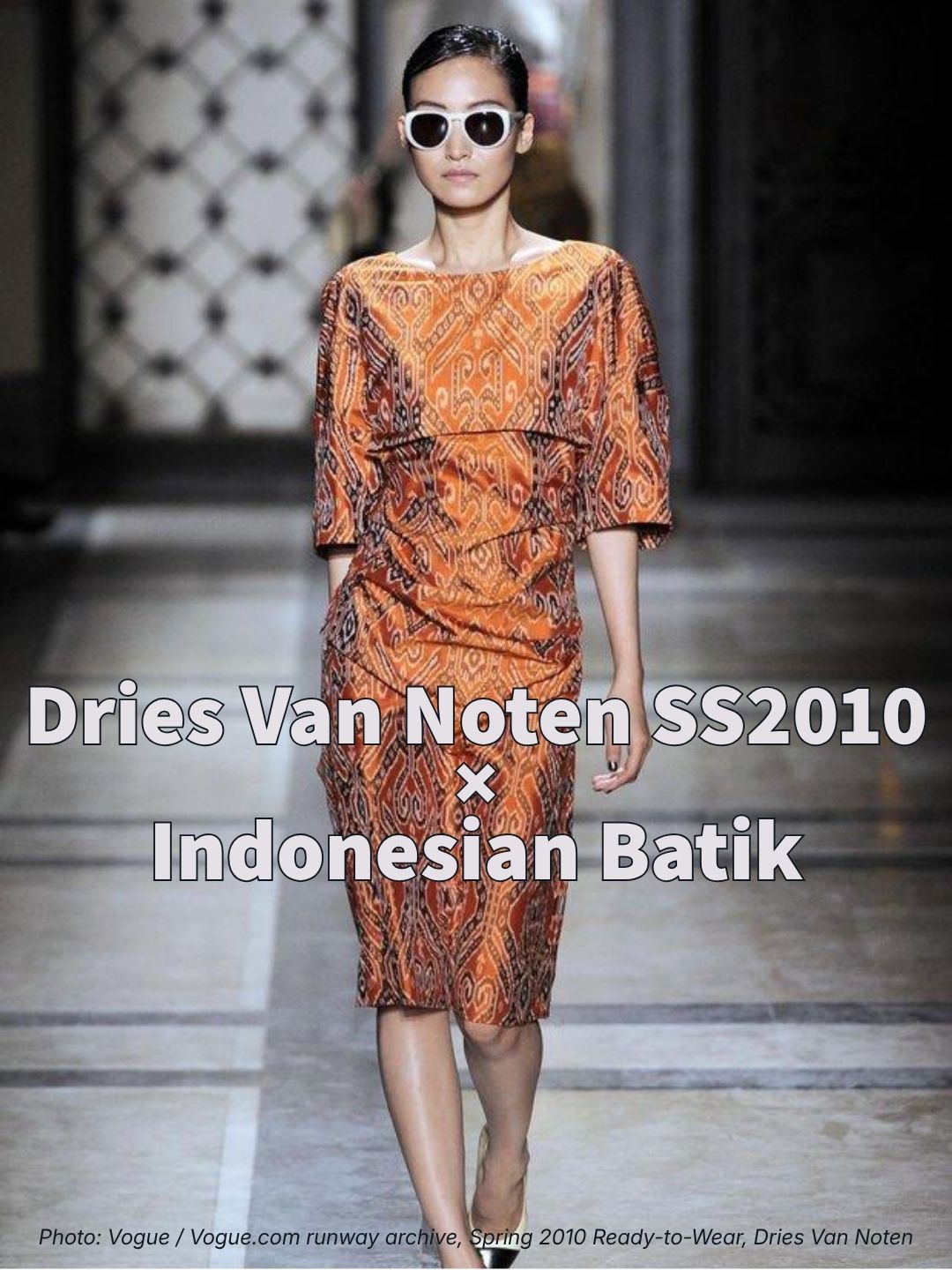
The first look came down the runway and the room understood. Coats and soft boxy jackets. Blazers in traditional batik textiles. Wrapped dresses and sarong skirts rendered in fabrics that — as Vogue's Tim Blanks put it — "looked as if they'd been sourced from a trip around the markets of China and Southeast Asia." Ikat weaves and embroideries from Uzbekistan, India, and points across the global textile tradition completed an inventory that had taken months to assemble. "The research was really huge, it took a long time to find all those prints, all those fabrics," one runway commentator observed in the show's video coverage.
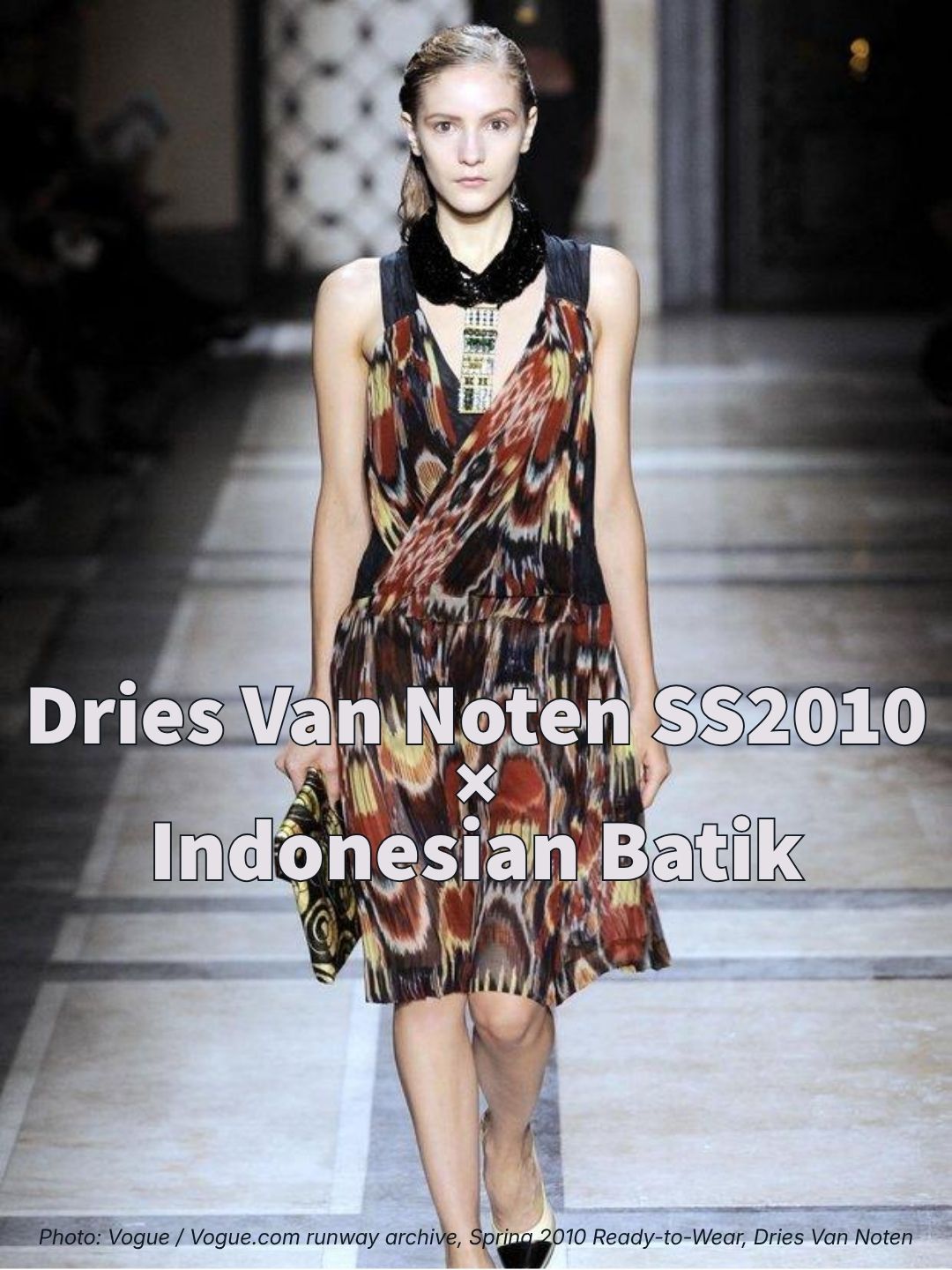
Credit: Vogue / Vogue.com runway archive, Spring 2010 Ready-to-Wear, Dries Van Noten
Pearl choker necklaces dangling geometric pendants set with semiprecious stones and crystal — which Vogue described as among the collection's highlights — framed faces whose expressions suggested models moving through a world they wanted to inhabit rather than merely represent.
Van Noten himself offered an explanation that was both simple and exact: "After the last collections I felt ready for it. For me it was something very authentic. I thought it was right to do it now." He also said he wanted to create "a collection which you just can wear everywhere, all over the world, in every street."
It was, fashion commentators agreed, a turning point — proof that batik belongs not only in heritage capsules and ethnographic museums, but on one of the world's most scrutinised catwalks.
Abu Dhabi, One Day Earlier — October 2, 2009
On the other side of the world, on the afternoon of October 2, 2009, the UNESCO Intergovernmental Committee for the Safeguarding of the Intangible Cultural Heritage convened its fourth session in Abu Dhabi. Among the items on its agenda was a nomination that Indonesian cultural institutions had been preparing for years.
The Committee's decision was formal and sweeping. Indonesian Batik was inscribed onto the Representative List of the Intangible Cultural Heritage of Humanity (Nomination File 00170). The inscription covered not merely a technique but an entire cultural ecosystem: the techniques, symbolism, and culture surrounding hand-dyed cotton and silk garments that, in UNESCO's own words, "permeate the lives of Indonesians from beginning to end." Infants are carried in batik slings decorated with symbols to bring luck. The dead are honoured in funerary batik. Between those poles, the cloth marks ceremonies, social roles, and spiritual life across the archipelago.
It was Indonesia's third UNESCO ICH recognition, following wayang shadow puppetry and the keris blade, both inscribed in 2003. The batik inscription, decision 4.COM 13.44, acknowledged a living tradition — not a historical artefact — actively transmitted within families and communities.
Nobody coordinated what would happen the following morning in Paris. That is precisely the point.
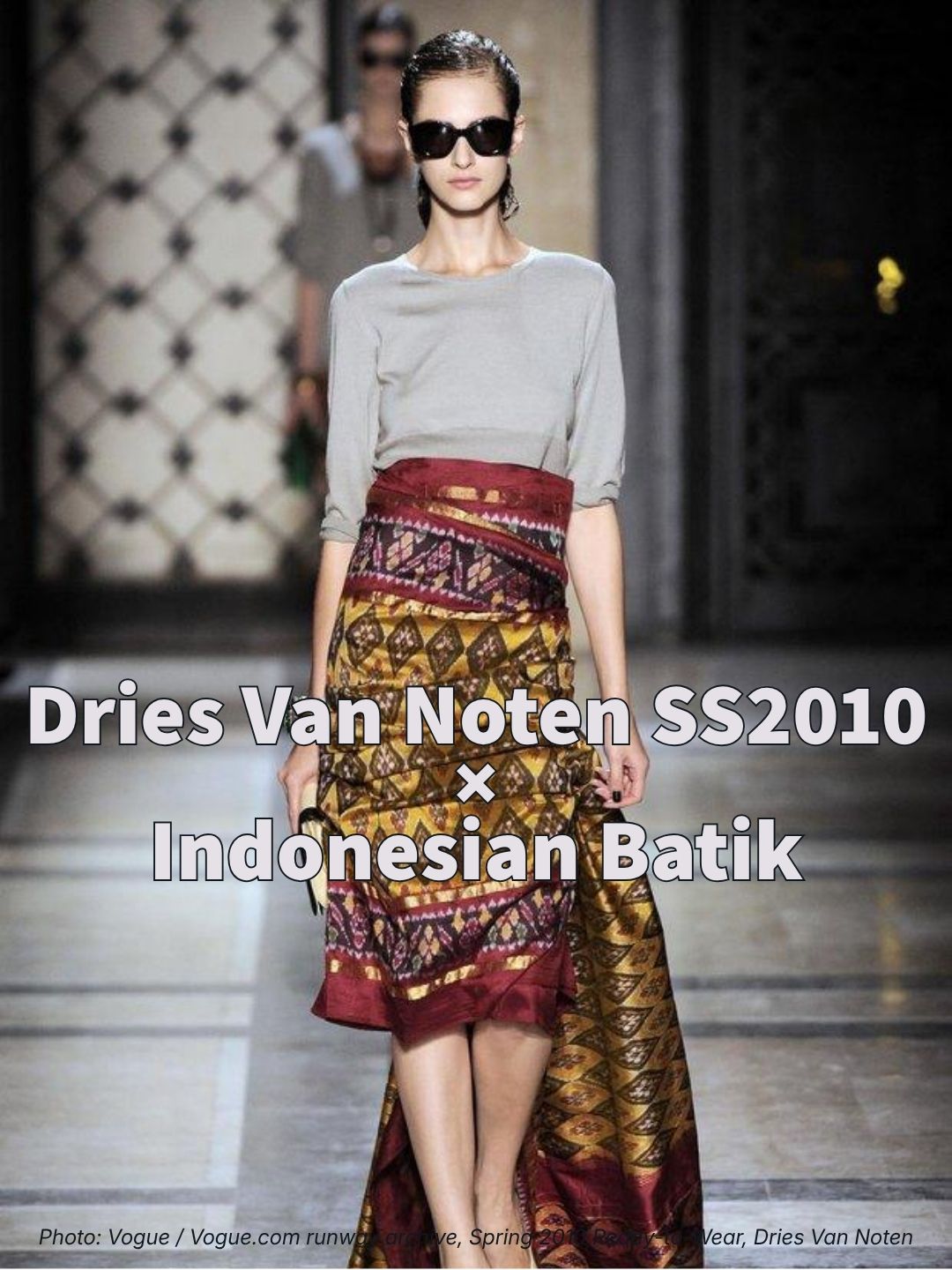
Credit: Vogue / Vogue.com runway archive, Spring 2010 Ready-to-Wear, Dries Van Noten
The Twenty-Four-Hour Convergence
A single day separated a United Nations cultural recognition ceremony in Abu Dhabi and a fashion show in a Parisian bank. Two institutions — one intergovernmental, one commercial — arrived independently at the same conclusion: that batik, at this particular moment in October 2009, deserved to be seen.
This kind of convergence does not happen often. When it does, it carries an argument that no press release or marketing brief could manufacture. Heritage is not a niche concern. It is not an academic annotation. It is something that the world — the fashion world and the cultural governance world alike — recognises simultaneously, in real time, as mattering.
The Jakarta Post had reported earlier that year on Indonesia's push to formalise batik's international recognition. By October 3, 2009, that recognition had been given — and was already, in a sense, being celebrated on one of the most-photographed stages on earth.
Design Translation — How Van Noten Abstracted Batik into Contemporary Fashion
Understanding the Source Material
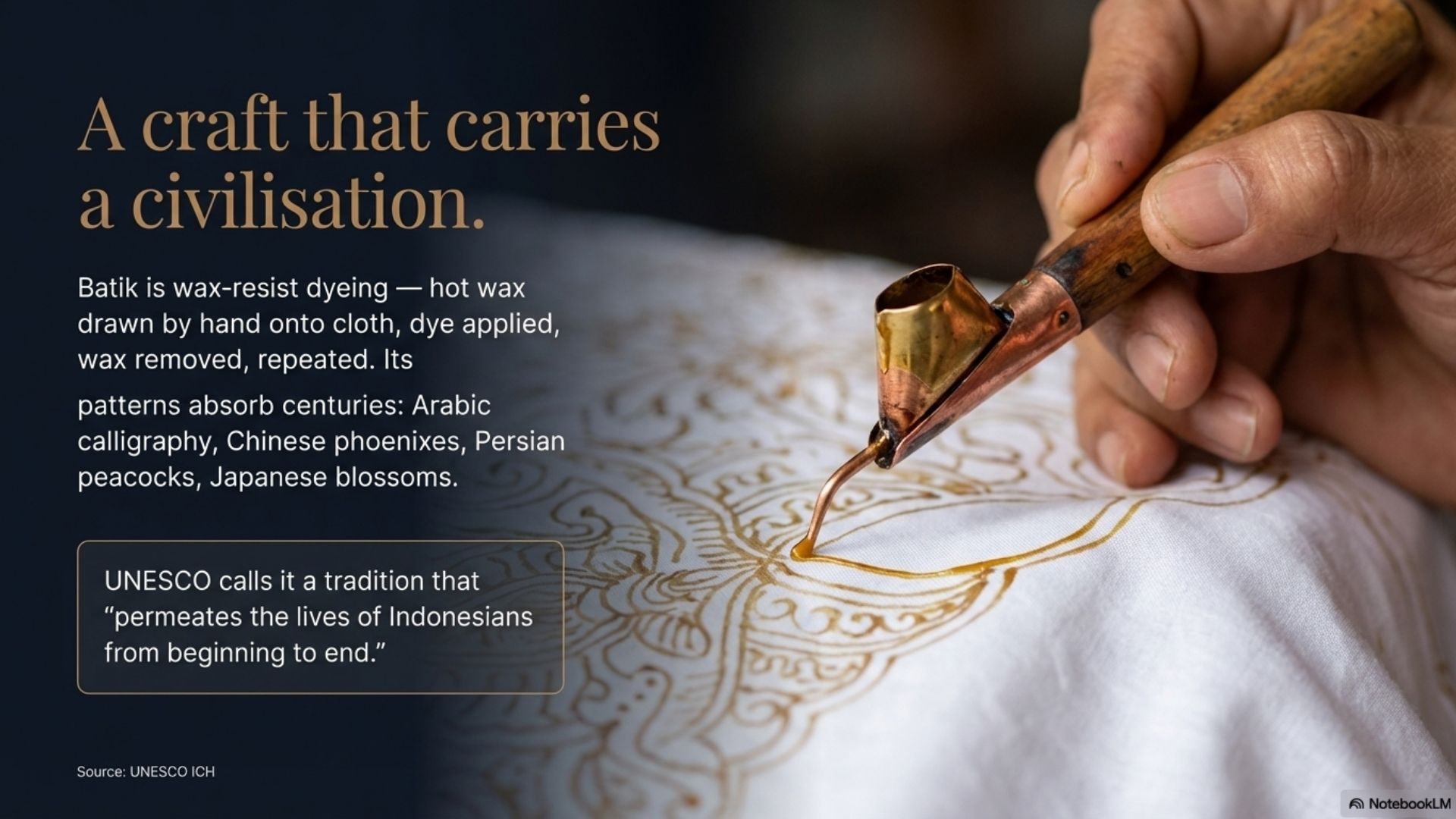
To understand what Van Noten achieved, it helps to understand what batik actually is. The technique involves drawing designs onto cotton or silk using a tool called a canting — a small copper cup on a bamboo handle — which releases precise dots and lines of hot wax onto the fabric surface. This wax resists the dye applied in subsequent baths, allowing the craftsperson to build up layers of color and pattern over multiple rounds of waxing and dyeing. When the wax is removed in boiling water, the design emerges from the cloth.
The patterns that result are not arbitrary. Centuries of trade across the Indonesian archipelago absorbed motifs from Arabic calligraphy, Chinese phoenixes and clouds, Indian and Persian peacocks, Japanese cherry blossoms, and European floral bouquets. Each pattern carries cultural and social meaning — some reserved for royalty, others for specific ceremonies. Batik is, in a very literal sense, a textile that holds history.
Abstraction Without Erasure
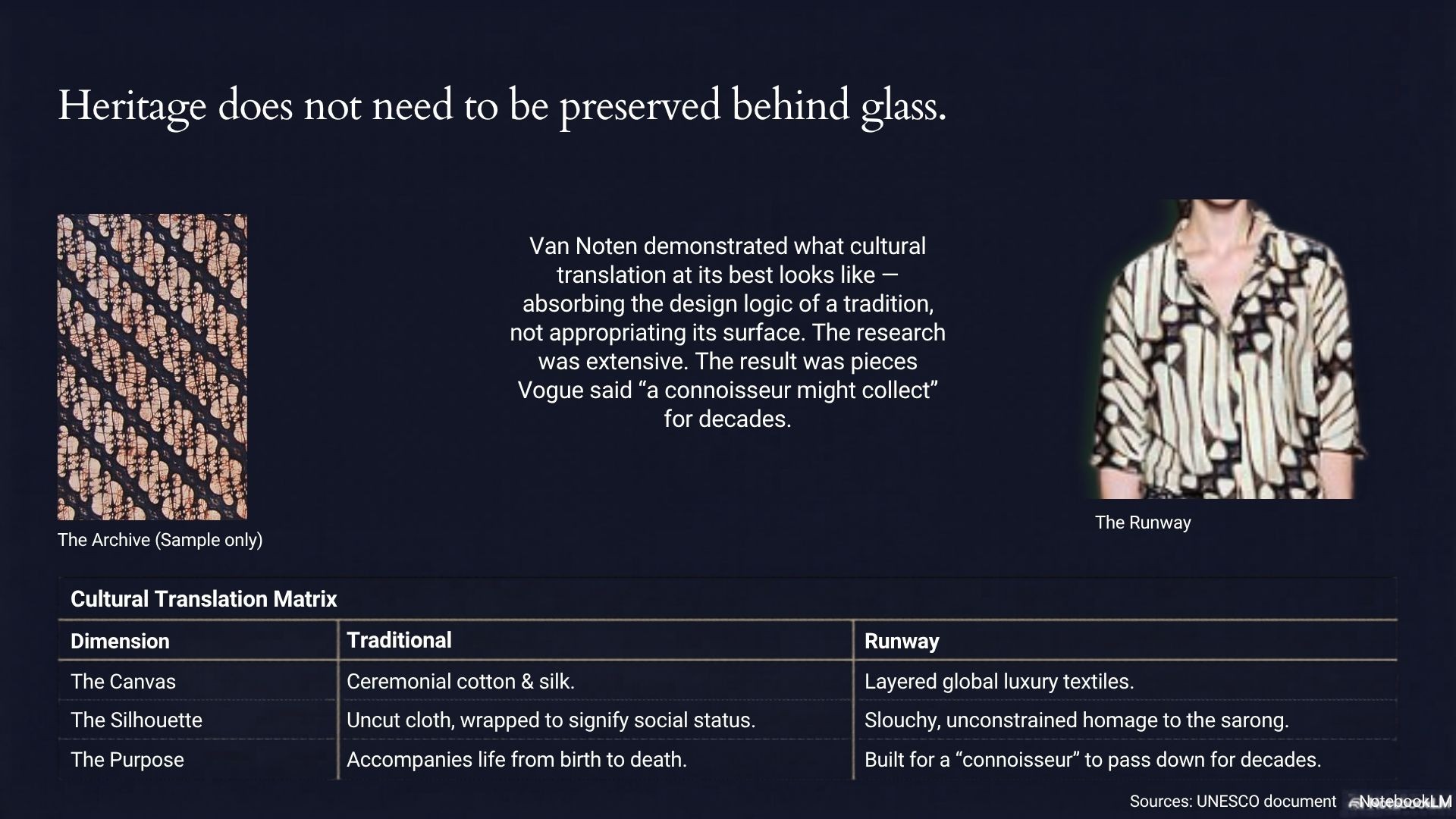
Van Noten's genius in the SS2010 collection was to work with batik's design logic — its density, layering, and graphic confidence — without treating the source as a costume to be reproduced. The blazers that walked his runway did not replicate specific batik ceremonial cloths; they spoke the same visual language in a new register. The sarong skirts referenced the wrap format of traditional Indonesian dress while moving through a contemporary silhouette that a person might, as Van Noten intended, "wear everywhere, all over the world, in every street."
A runway commentator captured it cleanly: "He obviously was hugely inspired by Malaysia and Indonesia and the ikat prints and the batiks, and I thought he just made it into a very very modern collection." Another described the clothes as things "a connoisseur might collect — somebody in decades to come would whip them out of a trunk. I'd hang it on my wall."
This is the distinction between appropriation and translation. Translation requires deep study — the extensive research that Van Noten's team undertook is evident in every choice. It requires creative intelligence capable of finding what is universal in what is particular. And it requires conviction: the willingness to stand in front of the fashion world and argue that a wax-resist dyeing tradition from Indonesia is not merely interesting anthropology, but one of the great visual languages of human civilization.
What the DVN Moment Means for Brands Today
The SS2010 collection is now fifteen years old. The lesson it contains is more relevant today than it was in 2009.
Consumers have developed a sophisticated appetite for cultural authenticity. They want to know where things come from — not in the narrow sense of supply chain transparency, but in the deeper sense of cultural provenance. A product that carries a genuine heritage connection carries meaning that cannot be manufactured by a trend report or a mood board. It carries the weight of time, practice, and human creativity accumulated across generations.
The question facing brands is not whether to engage with cultural heritage. The evidence — from Van Noten to global luxury houses to independent designers — is that engagement with living heritage traditions is one of the most powerful creative and commercial strategies available. The question is how to do so with the intelligence, rigour, and respect that the source material demands.
ARTiSTORY as the Bridge
This is the precise space ARTiSTORY was built to occupy. As a cultural content and intellectual property company, ARTiSTORY connects the custodians of heritage — museums, cultural institutions, UNESCO-recognised traditions — with the brands and designers who want to translate that heritage into contemporary products, campaigns, and experiences.
The work is not decoration. It is not the application of a pattern to a product. It is the kind of deep creative research that Van Noten's team undertook before a single metre of batik textile was sourced: understanding the cultural logic of the source material, identifying what translates, and shaping that translation into something that is both commercially effective and culturally honest.
The DVN SS2010 collection demonstrated, in one runway season, that Indonesian batik is a global design language. ARTiSTORY exists to help brands access that language — and the hundreds of others held in the world's heritage traditions — with the same quality of attention.
Cultural heritage in fashion is not a trend. It is a permanent source of meaning, available to brands willing to approach it seriously. ARTiSTORY is the bridge.
FAQ
Q: What is batik, and why does it matter?
Batik is a traditional Indonesian textile art in which craftspeople apply hot wax to cotton or silk in precise patterns using a tool called a canting, then dye the cloth so that waxed areas resist the color. The process is repeated for each color layer. The resulting patterns carry centuries of cultural meaning, absorbing influences from Arabic, Chinese, Indian, Japanese, and European design traditions. Batik is a living practice — actively transmitted across generations within Indonesian families and communities — which is why UNESCO formally recognised it as Intangible Cultural Heritage of Humanity on October 2, 2009 (Nomination File 00170).
Q: When exactly was Indonesian batik inscribed by UNESCO, and what does that mean?
Indonesian Batik was inscribed onto the UNESCO Representative List of the Intangible Cultural Heritage of Humanity on October 2, 2009, at the Committee's fourth session in Abu Dhabi (Decision 4.COM 13.44). UNESCO Intangible Cultural Heritage status recognises living practices — traditional knowledge, performing arts, social customs, craftsmanship — that communities consider part of their cultural heritage and commit to transmitting to future generations. The designation places international attention and protective obligation on the tradition, without restricting its use or evolution.
Q: What was Dries Van Noten's SS2010 collection, and what made it significant?
Dries Van Noten's Spring/Summer 2010 ready-to-wear collection debuted on October 3, 2009 — one day after the UNESCO batik inscription — at Paris Fashion Week, staged inside an old bank in Paris. The collection featured batik blazers, sarong skirts, wrapped dresses, coats, and boxy jackets in traditional batik textiles and ikat weaves sourced from Uzbekistan, India, and Southeast Asia. Vogue's Tim Blanks reviewed it as a standout of the season. Fashion commentators have since cited it as a turning point that demonstrated batik's place on the world's top-tier runways — not merely in heritage or ethnographic contexts.
Q: How can brands work with cultural heritage without being exploitative?
Responsible engagement with cultural heritage requires: (1) deep research into the source tradition, its history, and its meaning within the originating community; (2) clear attribution and credit to the cultural source; (3) creative translation rather than direct reproduction — working with the design logic of the tradition to create something new rather than simply copying its surface aesthetics; and (4) ideally, commercial relationships that benefit or recognise the heritage community itself. Specialists who understand both cultural context and commercial application — like ARTiSTORY — are essential partners in this process, ensuring that the result carries genuine meaning rather than superficial reference.
Q: What does ARTiSTORY do, and how does it work with brands?
ARTiSTORY is a cultural content and intellectual property company that serves as a bridge between heritage institutions and modern commercial brands. ARTiSTORY works with museums, cultural organisations, and UNESCO-recognised traditions to make their cultural IP available to brands across fashion, retail, hospitality, publishing, and other sectors. The company's work involves deep cultural research, creative development, and licensing frameworks that allow brands to bring genuine heritage connections to their products and communications — with the rigour and respect that the source material demands.
Q: What is the connection between cultural heritage fashion and ARTiSTORY's mission?The DVN SS2010 × Indonesian Batik convergence is a perfect illustration of ARTiSTORY's founding premise: that the world's cultural heritage traditions are living design languages, not historical footnotes. When a UNESCO inscription and a Paris fashion show arrive on consecutive days at the same conclusion — that batik is one of humanity's great aesthetic achievements — they affirm that heritage and contemporary creativity are not in tension. They are in conversation. ARTiSTORY exists to facilitate and amplify that conversation for brands ready to participate in it thoughtfully.

Connecting cultures through meaningful brand collaborations and authentic storytelling that drives both impact and revenue.
" height="15.00095079498291px" id="KzAesqen_" width="15.887237074279785px"/></svg>)
" height="40px" id="PdXwlesgs" width="40px"/></svg>)
" height="16.6667px" id="bN179avM0" width="16.66250000000001px"/></svg>)
" height="40px" id="sK1n39Y12" width="40px"/></svg>)
" height="13.333300000000001px" id="e3sm3FX65" width="16.662000000000006px"/></svg>)
" height="40px" id="BlhXMiVl0" width="40px"/></svg>)
" height="16.666358956956856px" id="WrXlTUAw7" width="16.668330260537772px"/></svg>)
" height="40px" id="nKu2x0iOq" width="40px"/></svg>)
Services
© 2026 ARTiSTORY. All rights reserved.
Privacy Policy
Terms of Service
Cookie Policy