
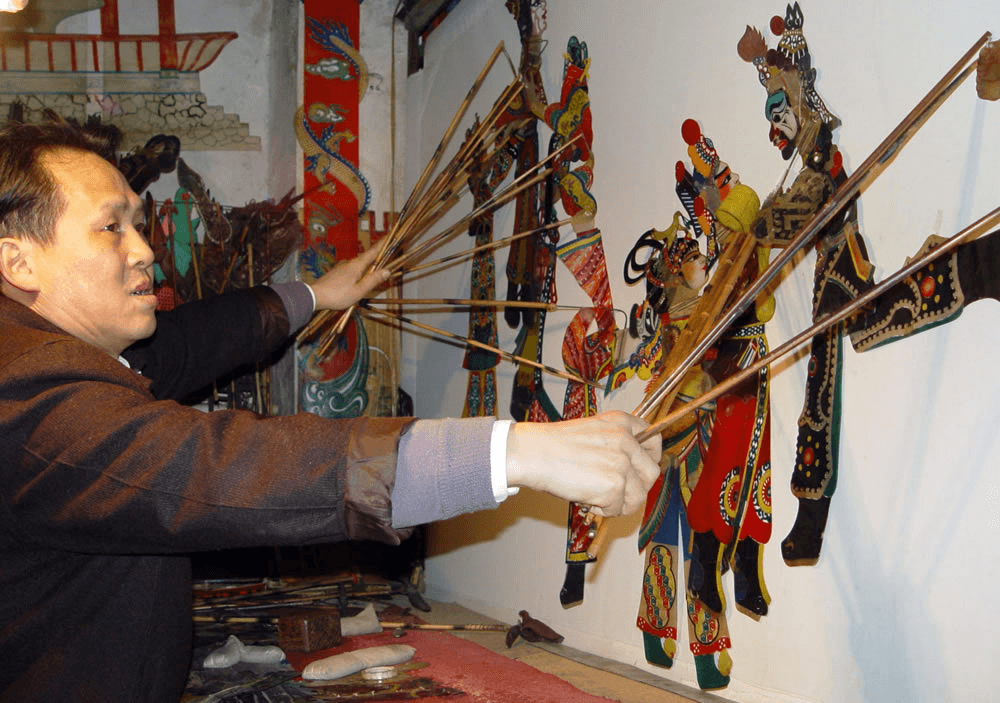
Cross-Material Symbiosis: Hermès × Wallpaper China
Key Takeaway
The February 2026 collaboration between Wallpaper China* and Hermès — "Realizing Chinese Living Cultural Heritage" — is the most explicit and methodologically rigorous example of luxury × Living Cultural Heritage co-creation in recent memory. By offering its iconic equestrian motif as a creative prompt (not a commission) to masters of shadow puppetry, Jingdezhen ceramics, and paper cutting, Hermès activated a model of reinterpretation that generates genuine cultural objects, not branded artefacts. The project's concept — cross-material symbiosis — names something that has been possible for decades but rarely attempted with this clarity or ambition.
About the Author
ARTiSTORY offers a demand-driven portfolio of art and cultural IP, empowering brands, retailers, and venues to create authentic, culture-rich products and experiences. With access to over 170 million artifacts and artworks, as well as 30+ UNESCO-recognized intangible cultural heritages, we help our partners attract consumers drawn to art, culture, and meaning. Please refer to Our Works to see what ARTiSTORY worked with Dunhuang Mogao Cave and fashion brand Levi's.
News
ARTiSTORY Staff
• 6 minute read
Cross-Material Symbiosis: The Full Story of Hermès × Wallpaper China's ICH Collaboration
A Brief That Began in 1837
Thierry Hermès opened his harness workshop on the rue Basse-du-Rempart in Paris in 1837. His clients were the stables of European nobility. His product was the equipment of equestrian life — the tack, the bridle, the saddle — and his symbol, from the very beginning, was the horse.
Nearly two centuries later, that founding image crossed a different kind of distance. In early 2026, Wallpaper China* — in a special feature titled "Realizing Chinese Intangible Cultural Heritage" — gave the Hermès equestrian motif, as it appears on the brand's iconic silk scarves, to a group of six Chinese artisans from three UNESCO-inscribed craft traditions. The instructions were clear and, for the world of luxury brand collaboration, genuinely unusual: reinterpret the image through your own craft language. Do not reproduce it.
What followed is a documented case study in what the project calls "cross-material symbiosis" — and it may be the most important collaboration framework in the luxury × heritage space today.
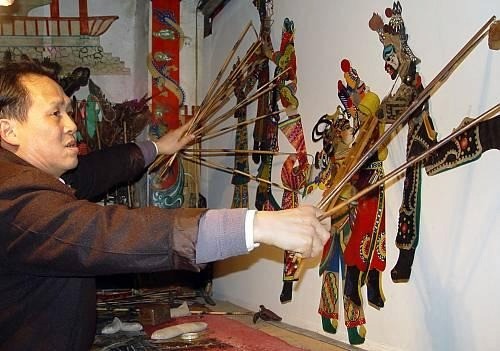
Chinese shadow puppetry — artisan creating leather silhouette figures.
Credit: © China Puppet and Shadow Art Society, 2009 / UNESCO ICH. Source: ich.unesco.org
The Methodology: Invitation, Not Commission
To understand why this project is significant, it helps to understand what it is not. It is not a licensing arrangement. It is not a brand campaign using heritage imagery as aesthetic texture. It is not a reproduction exercise.
Wallpaper China* framed the collaboration around a specific intellectual premise: that Chinese intangible cultural heritage is a "living system" — not a fixed archive to be accessed, sampled, or replicated, but an active, adaptive body of practice that responds to creative prompts with its own intelligence.
The Hermès equestrian motif — the galloping horse of the silk scarf — was offered as exactly that: a prompt. Six artisans from three traditions received the same image and were asked to do with it what their craft tradition does: transform material into meaning.
The outcomes were entirely distinct. The same horse, rendered in three material vocabularies that share nothing except the cultural authority of their practitioners.
Tradition One: Laoqiang Shadow Puppetry — Li Jian, Shaanxi
The Tradition
Chinese shadow puppetry is among the oldest theatrical forms in the world. In Shaanxi province, the dominant tradition is Laoqiang — rooted in Qin opera, the ancient musical and dramatic form of northwestern China. The craft of shadow puppetry involves carving figures from treated leather or paper, articulating each puppet with up to twenty-four moveable joints, and animating them against a translucent illuminated screen.
The imagery of shadow puppetry is precise and codified — animal forms, human figures, architectural elements — all rendered in a visual language that has evolved across centuries of performance. UNESCO inscribed Chinese shadow puppetry on the Representative List of Intangible Cultural Heritage of Humanity in 2011, recognising its cultural depth and the urgency of its transmission.
The Work
Li Jian, a Laoqiang shadow puppetry practitioner, received the Hermès horse and carved it in leather. The image did not simply translate — it was reborn in a form-language that the original silk scarf motif could never anticipate. The articulations of the puppet's body, the treatment of its surface, the relationship between positive and negative space: all of these reflect Li Jian's craft intelligence, not Hermès's design vocabulary.
The result is a shadow puppet that carries the symbolic weight of the horse but communicates through the aesthetic system of Laoqiang. It is, simultaneously, an Hermès image and a masterwork of Shaanxi craft.
Tradition Two: Jingdezhen Ceramics — Feng Shaoqiang, Yu Xiaoxia, Xu Jijiang, Yu Qiuping
The Tradition
Jingdezhen, in Jiangxi province, has been the centre of China's ceramic tradition for 1,700 years. Designated the "Porcelain Capital of China," the city's workshops and kilns produced the imperial wares of successive dynasties and the export porcelain that defined Western ideas of Chinese aesthetic achievement for centuries. The Jingdezhen tradition encompasses every aspect of ceramic mastery — clay preparation, forming, glazing, firing — and its practitioners represent one of the world's most technically evolved craft lineages.
The Work
Four ceramicists — Feng Shaoqiang, Yu Xiaoxia, Xu Jijiang, and Yu Qiuping — received the equestrian motif and worked with it through the processes of Jingdezhen ceramic production. The horse was glazed and fired — transformed by the specific material logic of clay, mineral oxide, and heat. The kiln does not reproduce. It transforms. What enters the kiln as one thing emerges as another, and the ceramicist's mastery lies precisely in understanding and directing that transformation.
The Jingdezhen horses produced in this collaboration carry the equestrian energy of the Hermès source motif but are expressed entirely through the material and aesthetic language of a tradition that has been developing its vocabulary for seventeen centuries.
Tradition Three: Chinese Paper Cutting — He Xia, Gansu
The Tradition
Chinese paper cutting is one of the most widely practised folk art traditions in the country, present across ethnic groups and geographic regions. UNESCO inscribed it on the Representative List of Intangible Cultural Heritage in 2009, noting its role as a "key part of Chinese social life" — used for interior decoration, ceremony, festival, and ritual. The tradition is notably transmitted from mother to daughter, carried through generations of domestic and communal life.
In Gansu province — the northwestern region through which the Silk Road once passed — paper cutting maintains its own regional character: bold forms, strong contrasts, figures drawn from both Han and minority cultural traditions.
The Work
He Xia, working in this Gansu tradition, received the Hermès horse motif and rebuilt it in cut paper. Paper cutting does not trace or reproduce — it constructs through absence. The artist works by removing material, and the image emerges in the negative space. He Xia's horse is, in this sense, a horse made of what is not there — a reconstruction of the source motif through the specific discipline of a tradition that has always understood how to make meaning from the edge of a blade on paper.
What Cross-Material Symbiosis Actually Means
The term "cross-material symbiosis" is precise and worth taking seriously. Symbiosis implies mutual benefit — each party gives something and receives something. In this collaboration:
Hermès gives its founding symbol to traditions it cannot replicate
Each ICH tradition receives a visual prompt that challenges and extends its formal vocabulary
The resulting objects belong fully to both — they are neither pure Hermès nor pure ICH, but something new that each created through genuine encounter
This is the opposite of appropriation. It is also the opposite of the neutral "inspiration" language that often lets brands off the hook for surface-level heritage engagement. Cross-material symbiosis requires genuine creative authority on both sides — and that requires trust, clear framing, and structures that protect the integrity of the craft tradition.
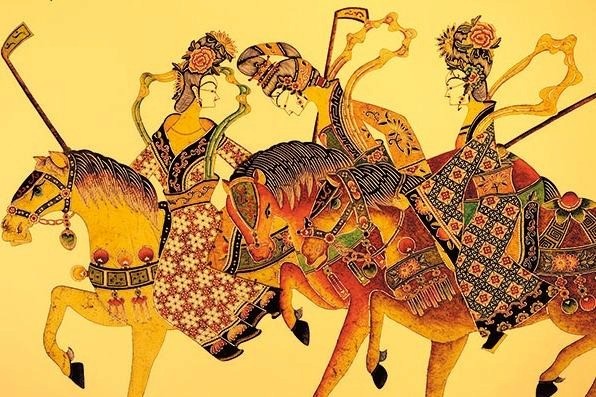
Chinese shadow puppetry heritage — performance and craft tradition.
Credit: © China Daily. Source: chinadaily.com.cn
Hermès's History in China and What This Extends
Hermès has maintained a serious, long-term commitment to Chinese creative culture. Its 2007 collaboration with artist Ding Yi — a landmark in luxury × Chinese contemporary art — is well documented. The brand has continued to stage artist-led projects at its Shanghai Maison across the intervening years. The Wallpaper China* collaboration is not an isolated initiative. It is the latest expression of a sustained engagement strategy — and it is the most methodologically explicit of them all.
The ARTiSTORY Framework
At ARTiSTORY, we build the infrastructure that makes the Hermès model available beyond a single luxury brand with decades of China experience and the resources to curate a project of this ambition.
Curated ICH access means identifying and building relationships with practitioners who have both the mastery and the collaborative appetite this work requires. Ethical frameworks mean structuring the engagement so that artisan creative authority is protected, attributed, and fairly compensated. Storytelling infrastructure means giving every collaboration the narrative depth it deserves — across every platform, in every market.
The Hermès × Wallpaper China* collaboration is proof of concept. The horse has already made three journeys — through leather, through fire, through paper. The living heritage system is ready to travel further.
What image does your brand carry? And who do you trust to give it new life?
→ ARTiSTORY connects brands with living ICH traditions. Contact us to explore your cross-material collaboration.
FAQ
Q: What is the Hermès × Wallpaper China "Realizing Chinese Intangible Cultural Heritage" project?
A: It is a special feature published by Wallpaper China* in February 2026, in which six Chinese ICH artisans from three UNESCO-inscribed traditions — Laoqiang shadow puppetry, Jingdezhen ceramics, and paper cutting — were invited by Hermès to reinterpret the brand's equestrian silk scarf motif through their own craft languages.
Q: What does "cross-material symbiosis" mean?
A: It is the project's term for the process by which a single visual motif is transformed — not reproduced — by multiple distinct material traditions, each producing a culturally specific interpretation that belongs fully to its own craft system while retaining a recognisable relationship to the source image.
Q: Who are the artisans involved?
A: Li Jian (Laoqiang shadow puppetry, Shaanxi); Feng Shaoqiang, Yu Xiaoxia, Xu Jijiang, and Yu Qiuping (Jingdezhen ceramics, Jiangxi); and He Xia (paper cutting, Gansu).
Q: When were Chinese shadow puppetry and paper cutting inscribed as UNESCO ICH?
A: Chinese shadow puppetry was inscribed on UNESCO's Representative List of Intangible Cultural Heritage of Humanity in 2011. Chinese paper cutting was inscribed in 2009.
Q: What is Jingdezhen's significance in Chinese ceramic history?
A: Jingdezhen is known as the "Porcelain Capital of China" and has a ceramic heritage spanning approximately 1,700 years. Its kilns produced imperial wares across multiple dynasties and export porcelain that shaped global perceptions of Chinese craft.
Q: How does this collaboration model differ from typical heritage brand partnerships?
A: Most brand-heritage partnerships involve licensing, reproduction, or aesthetic inspiration. The Hermès × Wallpaper China* model gives creative authority to the ICH artisan — the brand's imagery is a prompt, not a template. The artisans reinterpret, and the resulting works reflect their own craft intelligence, not the brand's design vocabulary.

ARTiSTORY helps brands turn the right cultural source into validated concepts, production-ready design assets and market-ready storytelling.
" height="15.00095079498291px" id="KzAesqen_" width="15.887237074279785px"/></svg>)
" height="40px" id="PdXwlesgs" width="40px"/></svg>)
" height="16.6667px" id="bN179avM0" width="16.66250000000001px"/></svg>)
" height="40px" id="sK1n39Y12" width="40px"/></svg>)
" height="13.333300000000001px" id="e3sm3FX65" width="16.662000000000006px"/></svg>)
" height="40px" id="BlhXMiVl0" width="40px"/></svg>)
" height="16.666358956956856px" id="WrXlTUAw7" width="16.668330260537772px"/></svg>)
" height="40px" id="nKu2x0iOq" width="40px"/></svg>)
Services
© 2026 ARTiSTORY. All rights reserved.
Privacy Policy
Terms of Service
Cookie Policy