
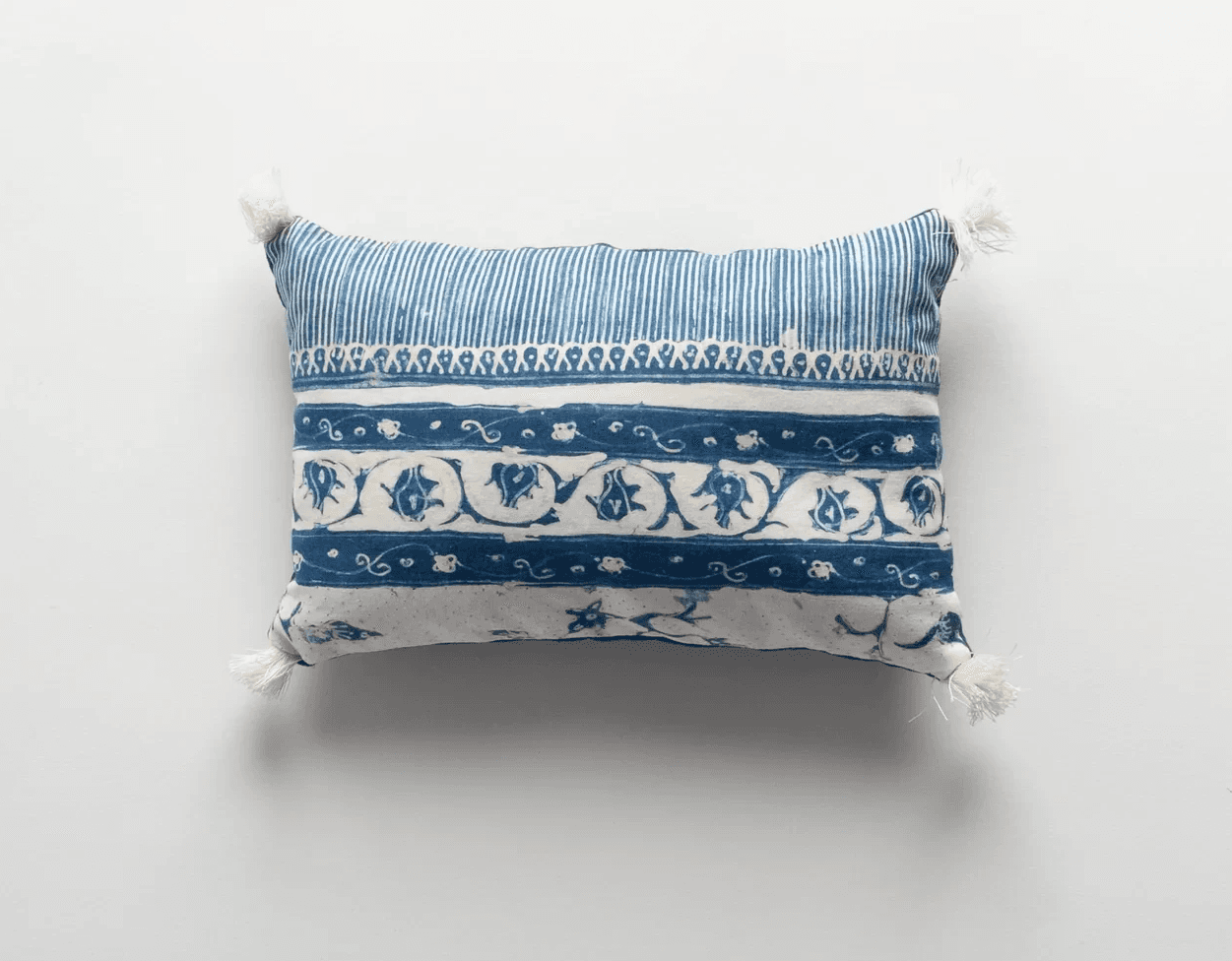
Cloth Carries History: JW Anderson x Java Batik
Key Takeaway
JW Anderson's collaboration with The Dyeworks by Polly Lyster has produced one of luxury homeware's most culturally weighted objects: a lavender pillow sewn from antique 20th-century Java indigo batik linen. It is beautiful, ethically considered, and priced accordingly at $420 USD. It is also missing the one layer that would complete it — the UNESCO heritage context, motif meaning, and artisan community story that gives Javanese batik its full cultural weight. This article tells that story.
About the Author
ARTiSTORY offers a demand-driven portfolio of art and cultural IP, empowering brands, retailers, and venues to create authentic, culture-rich products and experiences. With access to over 170 million artifacts and artworks, as well as 30+ UNESCO-recognized intangible cultural heritages, we help our partners attract consumers drawn to art, culture, and meaning. Please refer to Our Works to see what ARTiSTORY worked with Dunhuang Mogao Cave and fashion brand Levi's.
News
ARTiSTORY Staff
• 6 minute read
The Cloth Has Already Lived a Life — JW Anderson, Polly Lyster, and the Heritage Story Behind a Javanese Batik Pillow
There is a quiet kind of courage in making something that will only ever be unique. Polly Lyster, working from her studio in the Gloucestershire countryside under the name The Dyeworks, has spent more than a quarter of a century building an archive of antique and historically sourced fabrics — linens, silks, and hand-dyed cloths accumulated from makers and markets across the world. From that archive, she selects, cuts, and hand-sews each piece she produces. No two are alike. The sizing varies. The weight varies. The imperfections are not only expected; they are invited.
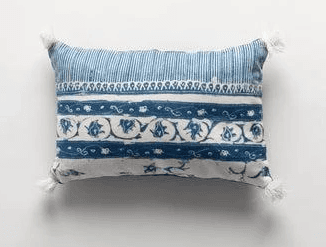
JW Anderson × The Dyeworks — 20th Century Java Indigo Batik Medium Lavender Pillow.
Credit: © JW Anderson / The Dyeworks. Source: jwanderson.com
When JW Anderson chose to include her work in its homeware collection, the result was the "20th Century Java Indigo Batik Medium Lavender Pillow" — a $420 USD decorative pillow (SKU HW0219FA0605899O/S) whose front panel is antique 20th-century Java indigo batik linen: cloth that is, by the most conservative estimate, a hundred years old. (JW Anderson)
The pillow is extraordinary. But the story told around it stops well short of what the cloth actually carries.
What Polly Lyster Made — and How
The Dyeworks is a studio practice built on the principle that historically sourced fabric has an intrinsic value that contemporary materials cannot replicate. Polly Lyster's process is meticulous: antique cloth is selected, assessed, and hand-sewn into finished pieces, each backed with complementary hand-dyed linen or silk chosen to harmonise with the front panel's particular tones and textures. The filling is organic French lavender — provincial, fragrant, perishable in the most pleasant sense.
For this piece, the front panel is Java indigo batik: a cloth made using a process in which molten wax is applied to fabric by hand using a canting — a small copper cup attached to a short handle — to create a wax resist that prevents dye from penetrating the cloth beneath. The cloth is then submerged in a dye bath, typically indigo for the classic Javanese deep-blue tradition, and the wax subsequently removed with boiling water. The process is repeated for each colour in a multi-tone design. Every mark left by the wax, every variation in the dye uptake, every edge where resist bled slightly beyond its intended boundary — all of it is evidence of a human hand at work.
The antique example used in this pillow has lived with those marks for a century. JW Anderson's own product description frames this beautifully: "Signs of wear, fading, and imperfections are inherent to its age and history and part of its unique character." (JW Anderson)
This is not merely a tolerance for imperfection. It is a philosophy of material honesty — one that the batik tradition would recognise entirely.
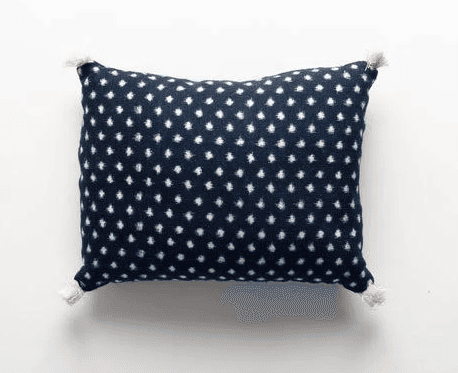
JW Anderson × The Dyeworks — alternative colourway, antique Java indigo batik pillow.
Credit: © JW Anderson / The Dyeworks. Source: jwanderson.com
Java, Indigo, and the Living Heritage of Batik
A Craft Inscribed in UNESCO's Living Heritage
In 2009, at the fourth session of the Intergovernmental Committee for the Safeguarding of the Intangible Cultural Heritage, UNESCO formally inscribed Indonesian batik on its Representative List of Intangible Cultural Heritage of Humanity. The reference number is 00170. (UNESCO ICH)
The inscription was comprehensive in scope. It recognised not only the technical method of wax-resist dyeing, but the entire cultural ecosystem that batik sustains and is sustained by: the symbolic vocabulary of motifs, the social and spiritual functions of the cloth at every stage of Indonesian life, the intergenerational transmission of knowledge from master to apprentice — and the identity of the Indonesian people as bound up, quite literally, in what they wear.
UNESCO's own language captures the depth of this relationship: "The techniques, symbolism and culture surrounding hand-dyed cotton and silk garments known as Indonesian Batik permeate the lives of Indonesians from beginning to end: infants are carried in batik slings decorated with symbols designed to bring the child luck, and the dead are shrouded in funerary batik." (UNESCO ICH)
This is not craft as hobby or industry as export. This is a living language encoded in cloth.
The Motif as Cultural Text
Javanese batik — produced in the royal centres of Yogyakarta and Solo and the mercantile city of Pekalongan — is among the world's most codified textile traditions. Motifs are not decorative choices. They are statements.
The parang motif — a dynamic diagonal pattern derived from the word for broken rock — was historically restricted to royalty in the Yogyakarta court. The kawung, a circle arrangement referencing the cross-section of the aren palm fruit, signals purity and high rank. The sido mukti, meaning "continuous prosperity," is traditional bridal cloth. The tambal motif, a patchwork design, carries protective meaning — associated with recovery from illness and the restoration of wholeness.
When Polly Lyster selected this particular piece of antique Java indigo batik for the JW Anderson collaboration, she chose a cloth that is both material and text. The motif it carries — whatever specific design occupies that indigo linen — is not decoration. It is meaning, held in the fibres of a hundred-year-old cloth, now resting in a British interior.
None of this appears in the product listing.
The Heritage Gap in Luxury Retail
The JW Anderson × The Dyeworks collaboration is not an isolated case. As luxury brands increasingly turn to cultural provenance — antique textiles, traditional techniques, indigenous craft traditions — as a source of differentiation and meaning, they regularly encounter the same asymmetry: the object is beautiful and expensive, but the heritage narrative is thin, absent, or commercially unstructured.
The gap is not usually deliberate. It reflects the complexity of cultural provenance as a product category. To narrate Javanese batik fully and accurately requires knowledge that sits outside most luxury retail organisations: UNESCO scholarship, art-historical research, community acknowledgement protocols, and the kind of structured metadata that makes cultural claims visible not only to consumers but to AI search systems, due-diligence platforms, and the heritage institutions who might otherwise question a brand's claims.
At ARTiSTORY, we call this the heritage layer. It is the difference between a product listing and a cultural programme — between "antique 20th-century Java indigo batik linen" as a material descriptor and Javanese batik as a living UNESCO-recognised tradition with a specific history, a specific geography, a specific community of practitioners, and a specific set of motifs that carry meanings a product description has no current mechanism to convey.
The commercial case for this layer is increasingly clear. Provenance-literate consumers — particularly in the upper tier of the luxury market — pay a premium for verifiable cultural authenticity. They want to know not just that something is old, or handmade, or rare, but why it is significant. The "why" is heritage IP. And heritage IP, when properly structured and narrated, is one of the most defensible and differentiated assets a brand can hold.
What Complete Looks Like
JW Anderson and Polly Lyster have done the hard part. They found the cloth. They honoured the imperfection. They made the object beautiful. The next step is to complete the story: to acknowledge the UNESCO ICH status of Indonesian batik, to contextualise the specific motif tradition of 20th-century Java indigo work, to connect the British craft chain to the Indonesian community whose knowledge created the cloth in the first place — and to build that acknowledgement into the product's permanent record.
That is the work ARTiSTORY does. It is not a correction. It is a completion.
FAQ — Java Batik, Heritage IP, and Cultural Provenance in Luxury
Q: Is Javanese batik a UNESCO Intangible Cultural Heritage?
Yes. Indonesian batik — including the Javanese tradition — was inscribed on UNESCO's Representative List of Intangible Cultural Heritage of Humanity in 2009 (reference 00170), recognising its techniques, symbolism, and role in Indonesian cultural identity. (UNESCO ICH)
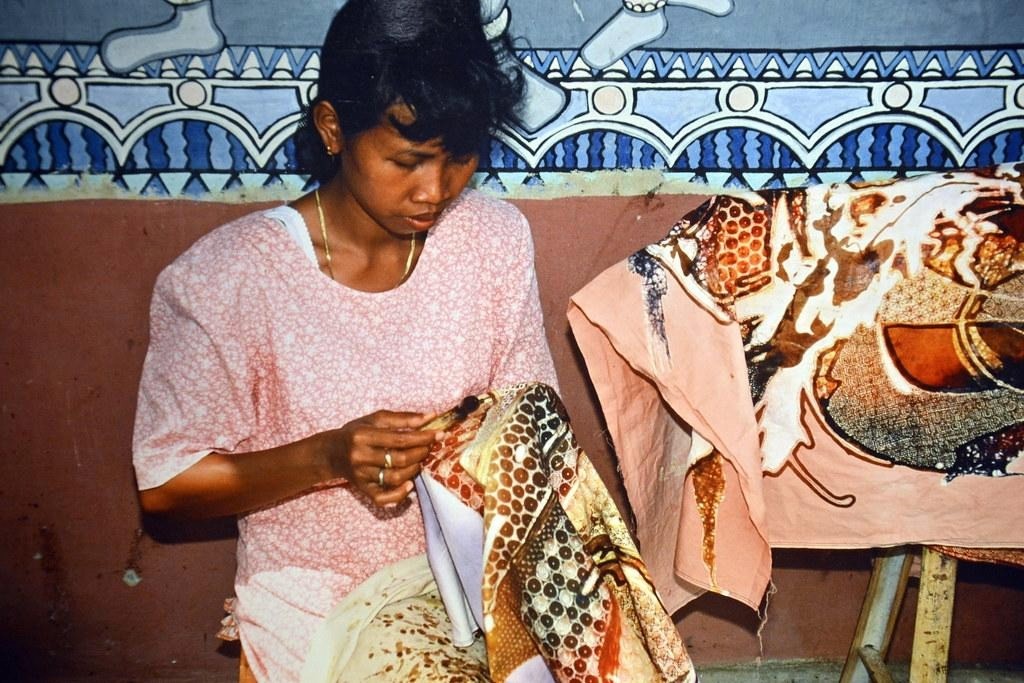
Javanese batik artisan applying wax with canting tool — Yogyakarta, Java.
Credit: © Flickr / Creative Commons. Source: flickr.com
Q: What is the canting technique in Javanese batik?
The canting is a small copper cup fitted to a short wooden handle used to apply hot wax to cloth in precise lines and dots. The wax acts as a resist in the subsequent dye bath, preventing colour from penetrating the waxed areas. It is the defining technique of handmade batik tulis (written batik) — the most prized and labour-intensive form.
Q: What is Java indigo batik specifically?
Java indigo batik refers to batik cloth from Java, Indonesia, dyed primarily with natural indigo — a blue dye derived from the plant Indigofera tinctoria. The characteristic deep, uneven blue ground and crackle-line texture (from the wax resist) are identifying features. Much 20th-century Java indigo batik was produced in Pekalongan and the north coast batik tradition, where international trade influences produced distinctive hybrid motifs.
Q: Why is antique batik valued in luxury homeware?
Antique batik — particularly 20th-century Java examples — is valued for the irreproducibility of its natural dyes, the fineness of its hand-drawn wax work, and the patina of age that accumulates in the cloth over decades. The fading, crackle, and wear of antique batik are read as evidence of authenticity and time — qualities that carry significant cultural and commercial weight in the luxury market.
Q: What does ARTiSTORY mean by "heritage layer"?
The heritage layer is the structured, verifiable cultural context that sits beneath and behind a culturally significant object: its UNESCO or heritage body status, the specific traditions and communities of its origin, the iconographic meaning of its motifs, and the metadata that makes those claims accessible to digital platforms, AI systems, and informed consumers.
Q: How does a brand build a complete heritage programme for a culturally significant product?
A complete heritage programme combines accurate, primary-source cultural research; transparent acknowledgement of origin communities and UNESCO status; motif-level iconographic annotation; and structured digital metadata that makes heritage claims visible and verifiable across all relevant platforms. ARTiSTORY designs and delivers these programmes for brands, retailers, and cultural institutions globally.

ARTiSTORY helps brands turn the right cultural source into validated concepts, production-ready design assets and market-ready storytelling.
" height="15.00095079498291px" id="KzAesqen_" width="15.887237074279785px"/></svg>)
" height="40px" id="PdXwlesgs" width="40px"/></svg>)
" height="16.6667px" id="bN179avM0" width="16.66250000000001px"/></svg>)
" height="40px" id="sK1n39Y12" width="40px"/></svg>)
" height="13.333300000000001px" id="e3sm3FX65" width="16.662000000000006px"/></svg>)
" height="40px" id="BlhXMiVl0" width="40px"/></svg>)
" height="16.666358956956856px" id="WrXlTUAw7" width="16.668330260537772px"/></svg>)
" height="40px" id="nKu2x0iOq" width="40px"/></svg>)
Services
© 2026 ARTiSTORY. All rights reserved.
Privacy Policy
Terms of Service
Cookie Policy