
Museums as Lifestyle Superbrands | ARTiSTORY USA
Key Takeaway
Museum licensing has evolved from passive souvenirs to active storytelling. To capture the Gen Z/Alpha market in 2026, brands must prioritise reinterpretation over reproduction, blending high-culture heritage with high-street trends in fashion, gaming, and experiential retail.
About the Author
ARTiSTORY offers a demand-driven portfolio of art and cultural IP, empowering brands, retailers, and venues to create authentic, culture-rich products and experiences. With access to over 170 million artifacts and artworks, as well as 30+ UNESCO-recognized intangible cultural heritages, we help our partners attract consumers drawn to art, culture, and meaning. Please refer to Our Works to see what ARTiSTORY worked with Dunhuang Mogao Cave and fashion brand Levi's.
News
ARTiSTORY Staff
• 3 minute read
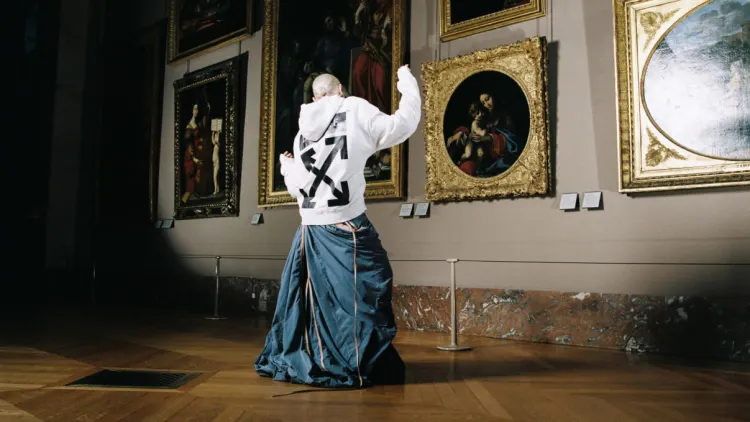
For centuries, the museum was a temple of silence—a place where history was observed, not touched. The "gift shop" was an afterthought, a repository for pencils and postcards that offered a mere shadow of the masterpieces within. But the narrative has shifted. The museum is no longer just a destination for observation; it has become a dynamic participant in the zeitgeist, where the solemnity of the Louvre or the Met now intersects with the vibrancy of pop culture.
The "Why Now?"
We are currently witnessing the maturation of a trend that began with unexpected pioneers—like the Oreo x Metropolitan Museum of Art collaboration highlighted in your source. In 2026, this shift has accelerated into a dominance of "Retailtainment."
According to recent 2026 market projections, Gen Z and Gen Alpha have officially surpassed Millennials as the leading demographic in licensed product purchasing. These cohorts do not want passive souvenirs; they crave "authenticity and virality." The success of recent activations—such as the Van Gogh Museum x Pokémon partnership or the surge in "Location-Based Experiences" (LBE) in 2025—proves that audiences are seeking to inhabit the story, not just view it. The "Why Now" is simple: culture is no longer something you visit; it is something you wear, eat, and play.
The ARTiSTORY Commercial Angle
For brands and retailers, this represents a pivotal moment to "unlock" cultural IP. The opportunity lies in moving away from literal reproduction (a painting on a tote bag) towards reinterpretation.
At ARTiSTORY, we analyse the "narrative DNA" of an artifact. It is not about slapping a logo on a biscuit; it is about finding the shared values between a centuries-old institution and a modern product. The Oreo campaign worked not because it was high art, but because it was playful—it democratised the exclusive. Brands today must treat museum IP as a design language, using distinct motifs, colour palettes, and historical context to create modern collections that stand on their own merit, even without the museum label.
Sector Opportunities
Fashion & Streetwear: Move beyond the "exhibition tee." Utilise archival botanical prints or abstract architectural sketches for all-over prints on puffer jackets, trainers, and techwear.
Home & Lifestyle: "Smart" decor. Think Frame TVs that default to specific curators' collections, or smart-lighting systems that replicate the colour temperature of a specific Impressionist sunset.
Beauty & Fragrance: Synesthesia marketing. Develop scents based on the history of a painting (e.g., the smell of oil paint, old wood, and French lilies) rather than the visual itself.
Digital & Gaming: Skins and environments. Allow players in open-world games to "loot" historical artifacts or wear armour inspired by medieval collections.
Conclusion
The museums that survive the next decade will not be those with the quietest halls, but those with the loudest cultural resonance. By treating heritage not as a static relic but as a living design asset, brands can create products that offer consumers something rare in the mass market: a soul. The legacy of the past is the most potent fuel for the commerce of the future.
ARTiSTORY offers a demand‑driven portfolio of art and cultural IP, empowering brands, retailers, and venues to create authentic, culture‑rich products and experiences. With access to over 170 million artifacts and artworks, as well as 30+ UNESCO‑recognized intangible cultural heritages, we help our partners attract consumers drawn to art, culture, and meaning. Contact ARTiSTORY to learn more about how you may tap into UNESCO-ICH for your next product line.

ARTiSTORY helps brands turn the right cultural source into validated concepts, production-ready design assets and market-ready storytelling.
" height="15.00095079498291px" id="KzAesqen_" width="15.887237074279785px"/></svg>)
" height="40px" id="PdXwlesgs" width="40px"/></svg>)
" height="16.6667px" id="bN179avM0" width="16.66250000000001px"/></svg>)
" height="40px" id="sK1n39Y12" width="40px"/></svg>)
" height="13.333300000000001px" id="e3sm3FX65" width="16.662000000000006px"/></svg>)
" height="40px" id="BlhXMiVl0" width="40px"/></svg>)
" height="16.666358956956856px" id="WrXlTUAw7" width="16.668330260537772px"/></svg>)
" height="40px" id="nKu2x0iOq" width="40px"/></svg>)
Services
© 2026 ARTiSTORY. All rights reserved.
Privacy Policy
Terms of Service
Cookie Policy