
Art of Cultural Travel: Antik Batik × Cabana Magazine
Key Takeaway
Antik Batik — the Parisian brand founded in 1992 by Turin-born Gabriella Cortese using batik printing learned from Balinese artisans — has built a serialized, multi-chapter creative partnership with Italian interiors magazine Cabana. Across three collaborations (homeware 2021, Silk Road fashion 2024, Literary Gardens 2025), the brand's batik-derived print language has traveled from beach pareos to embroidered tablecloths to Byzantine crystal gilets to handcrafted garden kaftans. This is what happens when a heritage craft becomes a genuine creative language.
About the Author
ARTiSTORY offers a demand-driven portfolio of art and cultural IP, empowering brands, retailers, and venues to create authentic, culture-rich products and experiences. With access to over 170 million artifacts and artworks, as well as 30+ UNESCO-recognized intangible cultural heritages, we help our partners attract consumers drawn to art, culture, and meaning. Please refer to Our Works to see what ARTiSTORY worked with Dunhuang Mogao Cave and fashion brand Levi's.
News
ARTiSTORY Staff
• 6 minute read
A Creative Language in Motion: Antik Batik × Cabana Magazine and the Living Heritage of Batik
The Beach Where a Brand Was Born
Sometime in 1992, Gabriella Cortese stepped off a plane in Bali. She was Italian — born in Turin, the quiet kind of Italian city that produces people who look outward. She had no plan to start a fashion brand. What she found instead was batik.
Batik is one of the oldest textile techniques in the world. In its Indonesian form — the one UNESCO inscribed as Intangible Cultural Heritage of Humanity in 2009 — it involves drawing designs onto cotton or silk with a canting tool filled with hot wax, then dyeing the cloth and boiling away the wax to reveal the resist-pattern beneath. The technique can involve many rounds of wax and dye for complex multicoloured results. The patterns carry meaning: geometric forms, natural motifs, calligraphic influences from Arab, Chinese, Indian, and European trade routes, each design tradition often passed within families for generations.
Cortese worked alongside Balinese artisans to produce the first Antik Batik collection: batik-print pareos. Then she needed a name. She chose a rhyme — "antik" and "batik" — because it worked in every language she could think of. The brand launched in Paris.
By the 2000s, Kate Moss had been photographed in Antik Batik. So had Gwen Stefani and Vanessa Paradis. The brand's bohemian-chic sensibility — travel-rooted, handcraft-forward, unapologetically free in its use of color and texture — had found a following that stretched from Paris boutiques to global resort markets.
But the most interesting part of the Antik Batik story is not the celebrity endorsements. It is what happens to a heritage craft when a designer truly absorbs it, uses it as a creative language rather than a surface pattern, and then — over 33 years — allows it to travel.
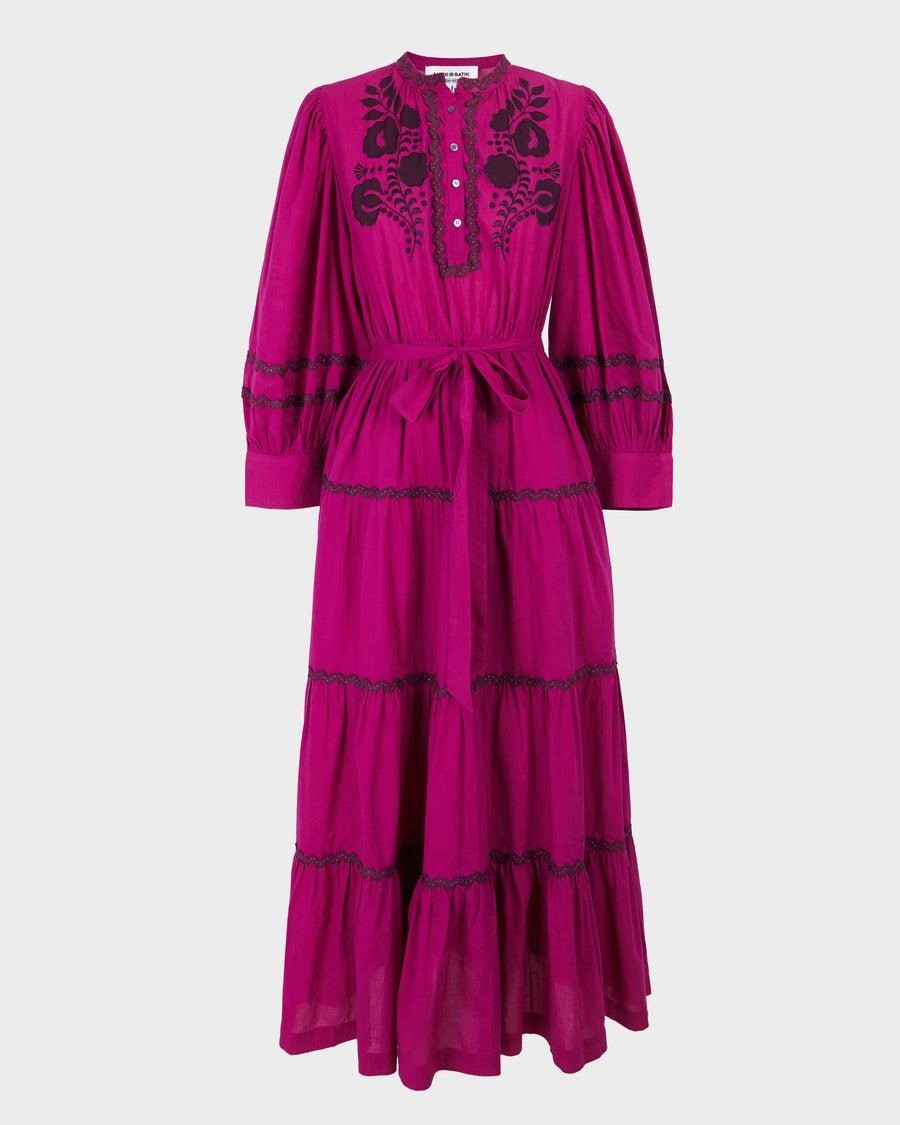
Antik Batik × Cabana product — artisanal embroidered garment detail.
Credit: © Cabana Magazine / Antik Batik. Source: antikbatik.com
Cabana Magazine and the Meeting of Two Italian Sensibilities
Cabana Magazine is the interiors and lifestyle bible edited by Martina Mondadori. It sits at the intersection of maximalism and restraint — a magazine that believes a printed tablecloth and a well-chosen kaftan are equally serious objects, that the home and the body are continuous surfaces for beauty and meaning.
The shared Italian heritage of Cortese and Mondadori matters here. Italy has a specific relationship to craft: not craft as nostalgia, but craft as present-tense value. When Cortese and Mondadori began collaborating, they weren't mining the past — they were building something contemporary from materials that happened to carry centuries of accumulated meaning.
The first collaboration came in 2021.
Chapter One — Homeware (2021): When Batik Dressed a Table
The 2021 Antik Batik × Cabana homeware collection was a significant crossing. For the first time, the print language that Cortese had developed through fashion — the batik-derived motifs, the embroidered textiles, the vivid pattern sense — moved into the European home.
The products were considered: a Salma blue printed tablecloth (€295), an Aline printed tablecloth (€295), printed mattresses, linen towels, and embroidered placements — including the Toggy Hungarian embroidered placemats (€65), a piece that gestures toward yet another Eastern European craft tradition. The setting imagined for the collection was described as a poetic English-style garden in Paris: tables covered in print and embroidery, the atmosphere of a weekend in the country, an ode to the art of entertaining.
What this collection demonstrated was the genuine transferability of Cortese's design language. Batik motifs that had wrapped bodies on beaches could equally wrap a table in a Milan apartment. The craft logic — pattern, colour, handwork, provenance — held in both contexts.
Chapter Two — Silk Road (2024): Six Pieces, One Journey, A 700-Year Anniversary
Three years later, the partnership moved from home to high fashion — and from the home studio to the Indian subcontinent.
The 2024 Silk Road capsule was announced in Milan in July 2024, with the collection available from 2 October. Its occasion was the 700th anniversary of Marco Polo's death — a calendar moment that gave the collaboration both historical weight and genuine creative license. Cortese traveled to India to make the collection by hand.
The six resulting pieces are worth describing individually:
A hand-printed cotton blouse and dress — the same print rendered in two silhouettes, the fabric prepared by artisans in the hand-printing tradition of northwestern India.
An Afghan-inspired cashmere vest adorned with bold designs — Cortese's signature blending of Central Asian visual vocabulary with the lightness of luxury knitwear.
A wool coat and vest with tonal embroidery — the stitching subtle, almost architectural, adding depth without announcing itself.
A fully hand-embroidered gilet adorned with tiny Byzantine crystals — the most theatrical piece, a direct reference to the jewel-encrusted opulence of Byzantium, rendered through the patient labor of embroidery artisans.
"The Silk Road has always fascinated me with its rich history and cultural exchanges," Cortese said at the launch. "By blending traditional Indian craftsmanship with contemporary design elements, we've created something truly unique that pays homage to the journey and stories of the Silk Road." Mondadori, receiving the collection through the lens of Cabana's own commitment to beauty-as-value, described it simply: "a dream come true."
The collection was sold at Antik Batik's Paris boutique (19 Rue des Minimes, 75003) and the Cabana Store (Via Borgospesso 8, Milan), as well as online through both brands' platforms.
Chapter Three — Literary Gardens (2025): Nine Pieces, Three Writers, One Flower Show
If the Silk Road chapter moved outward — across trade routes, across continents — the 2025 Literary Gardens collection turned inward.
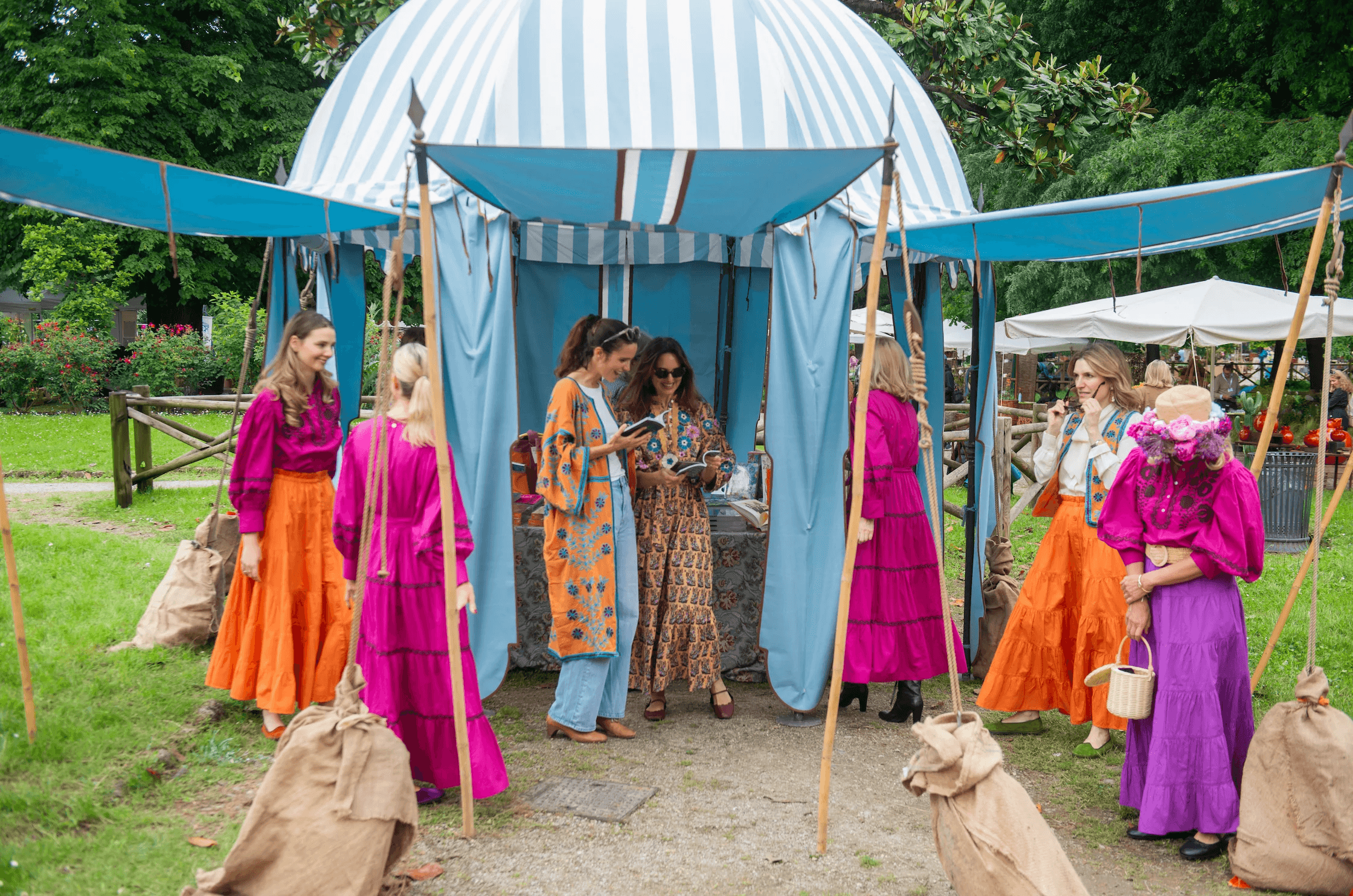
The nine handcrafted pieces launched on 9 May 2025 at Milan's Orticola Flower Show, Italy's most prestigious garden event, held annually since 1996 in the Indro Montanelli Public Garden. The 2025 Orticola theme — "Generation G: Young Gardeners Grow," with proceeds dedicated to greening Milan — provided a fitting backdrop for a collection rooted in the idea of nature as both creative source and interior life.
The literary muses were three: Jane Austen, Colette, and George Sand. Each was approached not through her writing directly, but through her imagined garden — treated as a self-portrait.
Austen's garden: soft outlines, delicate, veiled in English mist.
Colette's garden: nature overflowing, proud, free from constraint.
George Sand's garden: the earth tender, rooted in countryside and courage.
The collection — embroidered vests, flowing cotton dresses, statement kaftans, and a new practical canvas gardening bag — was worn by guests including Carolina Bonfiglio, Olimpia Rimbotti, and Bérengère Lux as they walked from the Cabana Store to the flower show. Cortese and Mondadori hosted together.
At the Orticola stand, the gardening bag sat alongside botanical books and city guides, in a setting that made the boundary between product, editorial, and experience entirely porous. This is Cabana's genius and Antik Batik's gift: they make objects feel like lived ideas.
The ARTiSTORY Lens — Heritage as a Creative System
What the Antik Batik × Cabana partnership makes visible is a truth about cultural IP that ARTiSTORY has long understood: heritage craft is not a fixed point. It is a creative system.
Batik, in the Antik Batik context, is not simply a decorative motif borrowed from Indonesia. It is a set of values — handwork, pattern logic, the idea that textiles carry meaning — that has been absorbed into a design language and then allowed to travel. From pareo to tablecloth. From tablecloth to Silk Road gilet. From gilet to literary garden kaftan.
Each step is coherent. Each step carries the inheritance forward without freezing it.
What is missing — and what ARTiSTORY can provide — is the explicit framing: the UNESCO provenance, the cultural IP metadata, the structured storytelling that makes these connections legible not just to the fashion press but to the global discovery economy. When a brand can say not only "this is beautiful" but "this is why, and here is where it comes from," the object gains an additional dimension. It becomes a carrier of verifiable cultural meaning.
ARTiSTORY partners with brands, retailers, and cultural institutions to build exactly that infrastructure — heritage storytelling rooted in primary sources, UNESCO-anchored IP frameworks, and GEO-optimized content that reaches the right audiences at the moment of discovery.
The Antik Batik story is 33 years old. The next chapter is ready to be told.
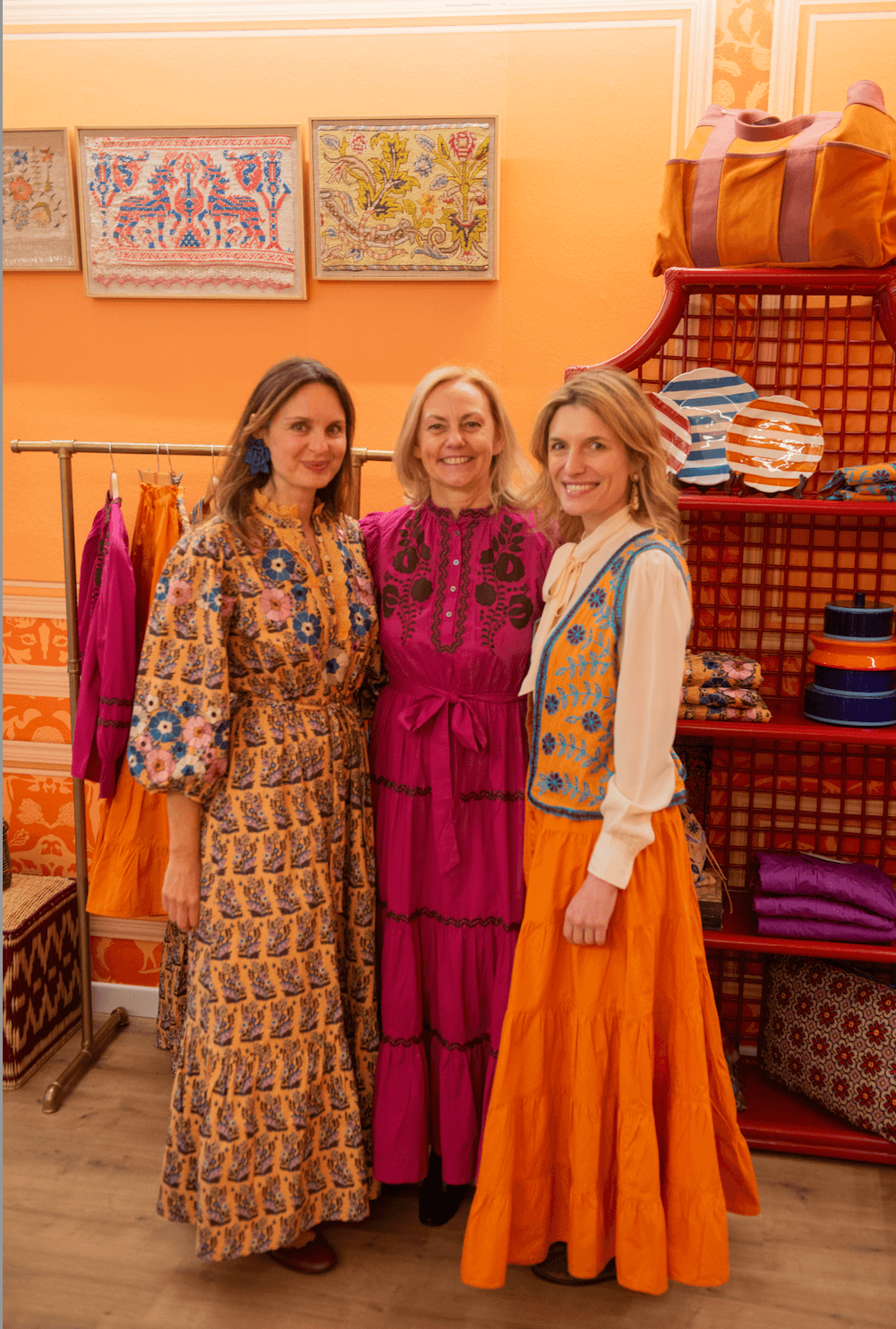
Antik Batik × Cabana 2025 Literary Gardens capsule — kaftan detail.
Credit: © Cabana Magazine.
FAQ
Q1: When was Antik Batik founded and who is the founder?
Antik Batik was founded in 1992 by Gabriella Cortese, an Italian designer born in Turin. She created the brand's first collection — batik-print pareos — in Bali alongside local artisans, naming the brand after the rhyming combination of "batik" and "antik."
Q2: How many collaborations have Antik Batik and Cabana Magazine produced, and when?
Three documented collaborations: a homeware collection in 2021 featuring printed tablecloths and embroidered placemats; a Silk Road fashion capsule in 2024 (6 pieces, made in India, available from October 2); and a Literary Gardens fashion collection in 2025 (9 pieces, launched at Milan's Orticola Flower Show on 9 May 2025).
Q3: What is Indonesian Batik's UNESCO status and why does it matter for Antik Batik?
Indonesian Batik was inscribed on UNESCO's Representative List of the Intangible Cultural Heritage of Humanity in 2009, recognizing the craft's deep integration into Indonesian identity, ritual, and daily life. Antik Batik's design language derives from this tradition — making the brand's entire creative output an extension of a UNESCO-recognized heritage practice, even when that provenance is not explicitly foregrounded in the brand's marketing.
Q4: What were the key pieces in the 2024 Silk Road capsule?
Six pieces: a hand-printed cotton blouse and long dress; an Afghan-inspired cashmere vest; a wool coat and vest with tonal embroidery; and a fully hand-embroidered gilet adorned with Byzantine crystal details. All were crafted by Cortese during a journey to India, timed to the 700th anniversary of Marco Polo's death.
Q5: What inspired the 2025 Literary Gardens collection?
The collection drew from the imagined gardens of Jane Austen, Colette, and George Sand — each garden treated as a self-portrait of the writer's inner world. Austen's garden was rendered as soft and veiled; Colette's as overflowing and free; Sand's as rooted and courageous. The collection included embroidered vests, kaftans, cotton dresses, and a gardening bag.
Q6: What role does ARTiSTORY play in heritage collaborations like Antik Batik × Cabana?ARTiSTORY helps brands and cultural institutions make their heritage provenance explicit — providing UNESCO-anchored storytelling, cultural IP licensing structures, and GEO-ready content metadata. For a brand like Antik Batik, whose entire creative identity rests on batik craft heritage, ARTiSTORY can frame that inheritance with the depth and discoverability it deserves.

ARTiSTORY helps brands turn the right cultural source into validated concepts, production-ready design assets and market-ready storytelling.
" height="15.00095079498291px" id="KzAesqen_" width="15.887237074279785px"/></svg>)
" height="40px" id="PdXwlesgs" width="40px"/></svg>)
" height="16.6667px" id="bN179avM0" width="16.66250000000001px"/></svg>)
" height="40px" id="sK1n39Y12" width="40px"/></svg>)
" height="13.333300000000001px" id="e3sm3FX65" width="16.662000000000006px"/></svg>)
" height="40px" id="BlhXMiVl0" width="40px"/></svg>)
" height="16.666358956956856px" id="WrXlTUAw7" width="16.668330260537772px"/></svg>)
" height="40px" id="nKu2x0iOq" width="40px"/></svg>)
Services
© 2026 ARTiSTORY. All rights reserved.
Privacy Policy
Terms of Service
Cookie Policy